
 Follow Us on Google Discover
For decades, the upper floors of Nigeria’s corporate world were built in the image of men.
Boardrooms across the Nigerian Exchange Group (NGX), from banking to manufacturing and energy, remained overwhelmingly male, with women often confined to supporting executive roles rather than the chief executive seat where the most consequential decisions are made.
But a quiet shift has been unfolding.
Across some of Nigeria’s most profitable publicly listed companies, a new generation of female corporate leaders is not merely participating in the economy; they are helping define it.
Other News
From trillion-naira banking empires to hospitality giants and diversified conglomerates, these women are steering institutions that collectively generated more than N1.23 trillion in profit after tax (PAT) in the 2025 financial year.
This list, ranked by PAT, tells a story of resilience, hard work, dedication, and the Nigerian story of sheer perseverance.
Some climbed steadily through the ranks over decades, navigating institutions long before corporate Nigeria became comfortable with women occupying top executive offices. Others emerged from backgrounds spanning consulting, law, human resources, finance, and operations, bringing with them a blend of technical expertise and boardroom resilience sharpened across local and international institutions.
Not every influential female executive in the NGX made this list. Folake Ogundipe, the Interim MD & Finance Director, Cadbury, West Africa, for instance, led the company to a profit after tax of N8.97 billion during the period under review, but was excluded because this ranking focuses strictly on chief executive roles, CEOs.
Likewise, Nneka Onyeali-Ikpe was omitted because Fidelity Bank Plc had yet to release its full financial results at the time of compilation.
At a time of inflationary pressure, rising operational costs, and one of the toughest economic climates Nigerian businesses have faced in recent years, these executives delivered profits measured not in millions, but in billions — and in some cases, trillions — of naira.
Here are the women leading some of Nigeria’s most profitable listed companies.
Mayowa Olaniyan — CEO Chams Holdings Plc(PAT:N417.09 million)
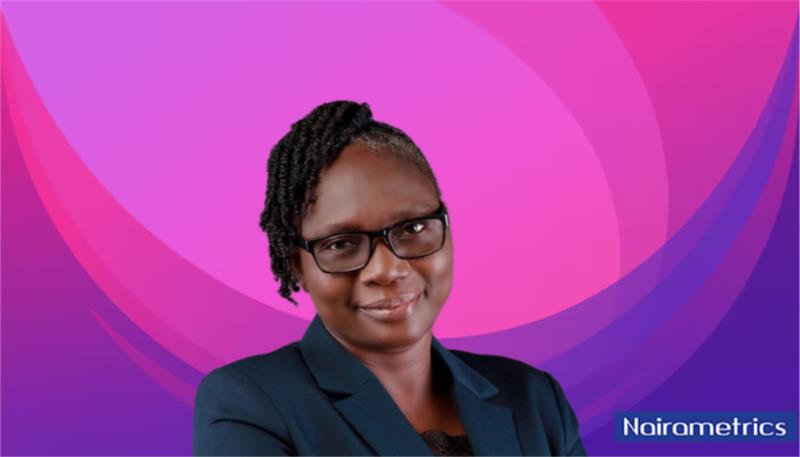
Some executives arrive at the top through high-profile recruitment. Others spend years building their authority quietly from within, understanding every layer of a company before eventually leading it.
Mayowa Olaniyan belongs firmly to the latter category.
Her story at Chams Holding Company Plc is one of institutional continuity, gradual ascent, and deep operational familiarity.
By the time she became Group Managing Director and CEO in December 2022, following the retirement of Gavin Young, she had already spent years inside the Chams ecosystem, moving through finance, audit, risk management, corporate services, and digital operations.
That layered experience now places her at the helm of one of Nigeria’s long-standing indigenous technology and identity management companies during a period when digital transformation has become central to both public and private sector growth.
- Under the period reviewed, Chams posted a profit after tax of N417.09 million, maintaining profitability while operating within Nigeria’s increasingly competitive technology and digital services environment.
Yet Olaniyan’s career story begins long before Chams.
- A Chartered Accountant with nearly three decades of professional experience, she started her career in 1994 as an Audit Trainee at Bolaji Finnih before joining SCOA Nigeria Plc, where she spent 13 years steadily rising through managerial positions.
Those early years helped shape what colleagues often describe as her disciplined and governance-oriented leadership style — one grounded in financial control, operational accountability, and strategic patience.
- After SCOA, she moved to Tranter International Ltd as Group Finance and Administration Manager before eventually joining the Chams Group, where her career would take its defining shape.
- Inside Chams, she moved through a succession of increasingly influential roles. She served as Assistant General Manager of Corporate Services at Supercard Ltd, a Chams subsidiary, before becoming Group Head of Internal Audit and Risk Management. She later held positions as General Manager of Finance and Accounts, General Manager of Special Duties and Chief Financial Officer, Executive Director, and eventually Managing Director of ChamsMobile Limited.
At ChamsMobile, she helped drive the company’s expansion within mobile and digital financial services, a critical area in Nigeria’s rapidly evolving fintech ecosystem.
- Her academic and professional credentials reflect a strong financial foundation. She is a Fellow of both the Institute of Chartered Accountants of Nigeria and the Association of Chartered Certified Accountants, while also holding an MBA from Edinburgh Business School.
Idu C. Okwuosa-Okeahialam — CEO, Royal Exchange Plc (PAT: N851.43 million)
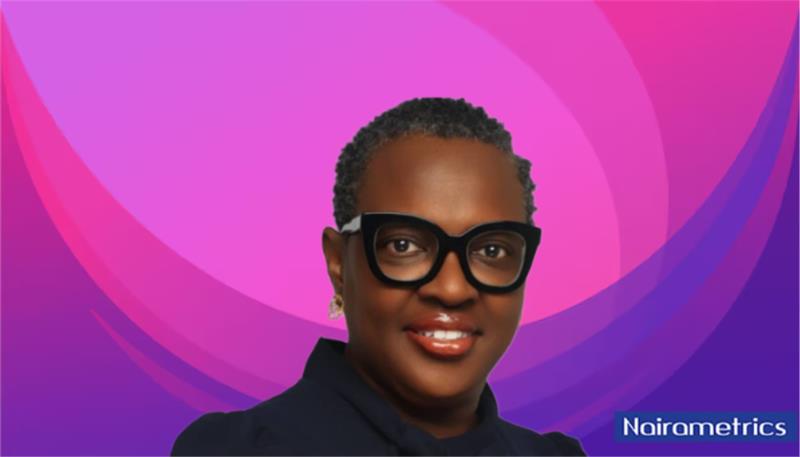
Corporate leadership often rewards specialization. But every so often, an executive emerges whose career has been shaped not by a single discipline, but by the ability to move across industries, geographies, and institutional systems with unusual versatility.
That is the kind of trajectory that defines Idu C. Okwuosa-Okeahialam.
When she was appointed Managing Director and Chief Executive Officer of Royal Exchange Plc in May 2025, the decision reflected more than a routine executive transition. It signalled the company’s confidence in a leader whose career combines governance, compliance, pension administration, risk oversight, banking, and social entrepreneurship.
- Under the period reviewed, Royal Exchange posted a profit after tax of N851.43 million, positioning the company among the profitable female-led firms on the Nigerian Exchange during a period of broader economic strain.
Yet Okwuosa-Okeahialam’s professional identity extends far beyond quarterly numbers.
With more than 15 years of experience across oil and gas, banking, pensions, and financial services, she belongs to a class of executives whose expertise sits at the intersection of operational leadership and governance oversight.
Her career spans client relationship management, funds administration, compliance systems, risk management, customer experience, and institutional strategy — a breadth increasingly valuable in a financial sector where regulation and trust have become inseparable from profitability.
Her journey has also carried an international dimension.
- In the United States, she worked with State Street Corporation and Brown Brothers Harriman in Boston, handling portfolio administration, corporate actions, compliance, and risk management. Those experiences exposed her to global financial systems before she returned to Nigeria and immersed herself in the country’s evolving pension and banking industries.
- Back home, she held several senior leadership positions, including Head of the Public Sector Group at Stanbic IBTC Bank, Chief Compliance Officer at Stanbic IBTC Pensions Limited, Chief Executive Officer at Oceanic Pension Fund Custodian, and Head of Operations at Diamond Pension Fund Custodian Limited.
Within Nigeria’s pension industry, she also became a visible advocate for reform and financial inclusion through her work with the Pension Operators Association of Nigeria, popularly known as PenOp, where she championed awareness initiatives around the Micro Pension Scheme.
But perhaps what most distinguishes Okwuosa-Okeahialam is the way her professional life extends beyond finance.
- Outside the corporate world, she has devoted significant energy to environmental sustainability and youth development. She co-founded SFQ Ventures Limited, also known as LasGidis Recyclers, a recycling enterprise focused on addressing plastic pollution through sustainable innovation. She also co-founded Save Our Sons Foundation and No Boy Left Behind, initiatives dedicated to mentoring and rehabilitating young boys.
Ngozi Chukwu — CEO, Infinity Trust Mortgage Bank (PAT: N2.70 billion)

In Nigeria, mortgages remain inaccessible to millions, homeownership continues to sit beyond the reach of many middle-class families, and the country’s housing deficit has become one of its most persistent economic and social challenges.
Yet within that difficult terrain, institutions like Infinity Trust Mortgage Bank occupy a critical role, serving as financial bridges between aspiration and ownership.
At the centre of that responsibility is Ngozi Chukwu, who was appointed the CEO of Infinity Trust Mortgage in July 2024.
Her rise to the top of the mortgage institution did not follow the conventional trajectory of many banking executives. It began instead in media, inside the world of advertising and communication, where she worked as an advertising executive at Nigerian News World magazine.
It was there, perhaps, that she first learned the mechanics of persuasion, audience engagement, and strategic messaging — skills that would later become instrumental in her transition into banking and business development.
- Over time, Chukwu built a reputation not simply as a marketer, but as a growth strategist capable of translating ideas into commercial performance. Her ability to drive business development and expand institutional reach steadily elevated her through the ranks until she became Group Head of Business Development, a role that eventually paved the way for her appointment as Acting MD/CEO.
- Now leading Infinity Trust Mortgage Bank, she oversees a company that reported a profit after tax of N2.70 billion during the period under review, reflecting the bank’s continued profitability within Nigeria’s highly competitive mortgage finance space.
But the numbers only tell part of the story.
Under her leadership, the bank has pursued a more forward-looking operational approach, focusing on innovation, stronger positioning within the mortgage industry, and expanding its relevance as a national primary mortgage institution.
Her professional development reflects that orientation toward continuous growth. Over the years, she has participated in several local and international programmes focused on housing finance systems, behavioural intelligence, credit administration, and risk management — disciplines central to the evolving mortgage banking ecosystem.
- Academically, her journey spans multiple institutions, including the University of Uyo, Ahmadu Bello University, and Nile University. She is also currently pursuing a PhD in Finance, a reflection of the intellectual rigor that increasingly characterises a new generation of Nigerian financial executives.
Catherine Nwosu —CEO, Africa Prudential Plc (PAT: N2.72 billion)
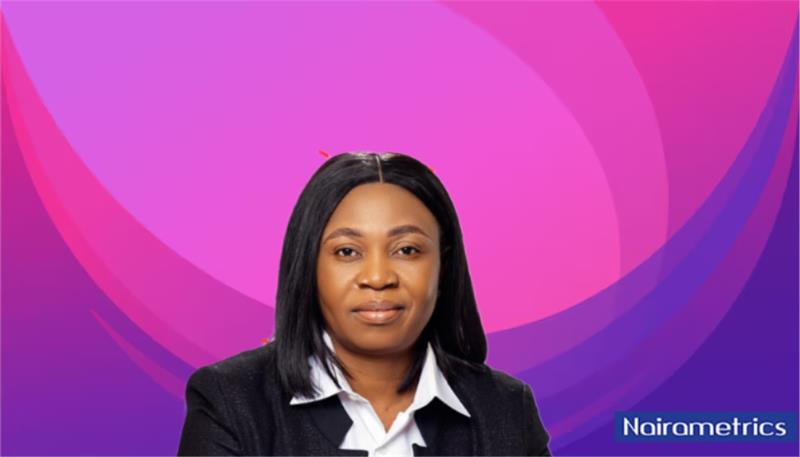
Few executives understand a company quite like the people who helped build it from the beginning.
For Catherine Nwosu, her leadership of Africa Prudential Plc is not the story of an outsider stepping into an established institution. It is the story of someone who grew alongside the company itself.
When she became the company’s first female CEO in March 2024, following the resignation of Obong Idiong, the appointment carried a certain institutional symmetry. Nwosu had been part of Africa Prudential’s journey since its inception in 2006, witnessing its evolution from a growing registrar business into one of Nigeria’s most recognised technology-driven registrar firms.
- Under the period reviewed, the company posted a profit after tax of N2.72 billion from N1.81 billion recorded in the prior year, underscoring its sustained profitability within Nigeria’s capital market services sector.
But beyond the financial performance lies a career defined by continuity, operational depth, and long-term institutional memory.
After joining Africa Prudential in its early years, Nwosu steadily climbed through the ranks, eventually serving as Chief Operating Officer (COO) from 2010 to 2022. Those years coincided with some of the most transformative periods in Nigeria’s capital market ecosystem, including the push toward digitalisation, improved shareholder engagement systems, and evolving regulatory expectations.
Her role placed her at the operational heart of the company during that transformation.
She later moved to BUA Group as Head of Stakeholders Engagement, broadening her executive experience beyond registrar operations before eventually returning to Africa Prudential as CEO.
That return appears to have reinforced a leadership style deeply rooted in institutional familiarity but sharpened by broader corporate exposure.
- Today, Nwosu also serves as the 2nd Vice President of the Institute of Capital Market Registrars, positioning her among the influential voices shaping conversations around shareholder services and capital market operations in Nigeria.
- Professionally, she is a Fellow of the Institute of Capital Market Registrars and an Associate Member of the Institute of Chartered Accountants of Nigeria, credentials that reflect both technical competence and industry recognition.
- Her academic background spans Business Administration and an MBA, while her executive development includes the Senior Management Programme at Lagos Business School.
Adaobi Nwakuche —CEO, Veritas Kapital Assurance Plc (PAT: N4.02 billion)

Insurance, perhaps more than most industries in Nigeria, is built on trust.
It is an industry where leadership demands more than salesmanship or corporate visibility. It requires the ability to anticipate risk, build long-term confidence, negotiate uncertainty, and convince individuals and businesses alike to invest in futures they cannot yet see.
For Adaobi Nwakuche, those demands have shaped a career spanning more than 25 years inside Nigeria’s insurance sector.
Now leading Veritas Kapital Assurance Plc, a position she was appointed to in December 2023, Nwakuche sits at the centre of a company navigating one of the most competitive and rapidly evolving segments of Nigeria’s financial services industry.
- Under her leadership, Veritas Kapital delivered a profit after tax of N4.02 billion during the period under review, reflecting growing operational strength and improved profitability within the company.
- Pretax profit, according to its unaudited financial statement for Q1 2026, has already grown to N1.8 billion.
But behind the numbers lies an executive whose career has been shaped by decades spent understanding the mechanics of insurance from multiple angles — underwriting, commercial strategy, partnerships, business development, and corporate governance.
Before joining Veritas Kapital, she served as the pioneer Managing Director and Chief Executive Officer of Heirs Insurance Limited, helping lay the foundation for one of Nigeria’s newer insurance brands within the rapidly expanding Heirs Holdings ecosystem.
- Her professional journey also cuts across several established insurance institutions, including Equity Assurance Plc, STACO Insurance Plc, and Standard Alliance Insurance Plc, where she built a reputation for combining technical expertise with commercial execution.
- Academically, her background reflects both administrative and technical depth. She studied Government and Public Administration at Abia State University before obtaining an MBA from ESUT Business School. She later earned a doctorate in Insurance, Risk Management, and Corporate Governance from the European American University.
Her executive education also spans globally recognised institutions, including the Harvard Kennedy School and Lagos Business School.
Bolarin Okunowo —CEO, Chemical and Allied Products Plc (PAT: N5.74 billion)
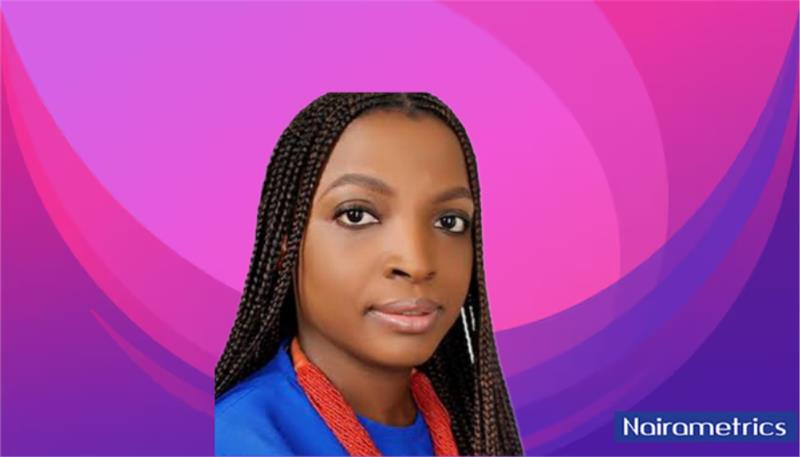
For decades, paint companies in Nigeria occupied a quiet corner of the corporate world — essential to construction and real estate, yet rarely commanding the kind of public attention reserved for banks, telecom firms, or oil giants.
But beneath the surface, the business of paint has always been deeply tied to the rhythm of the economy itself. When cities expand, estates rise, offices multiply, and infrastructure projects accelerate, companies like Chemical and Allied Products Plc move with them.
It is this intersection between industry, infrastructure, and strategy that Bolarin Okunowo now oversees.
Since assuming office as MD/CEO of CAP Plc in December 2021, Okunowo has emerged as one of the most influential women in Nigeria’s manufacturing and industrial products sector, bringing with her a career shaped not only by finance, but by mergers, restructuring, investment strategy, and corporate transformation.
- Under the period reviewed, CAP Plc posted a profit after tax of N5.74 billion, reinforcing its resilience within a manufacturing environment strained by inflationary pressure, rising raw material costs, and foreign exchange volatility.
- For the full 12 months of 2025, the company generated revenue of N44.8 billion, up 23.36% from N36.3 billion the previous year.
Yet Okunowo’s route to the top of CAP Plc did not begin in manufacturing plants or paint factories. It was built in boardrooms, investment portfolios, and high-level corporate finance.
- A trained Chartered Accountant, she studied Commerce at the University of Birmingham before earning a Master’s degree in Information Systems from the London School of Economics and Political Science — an academic blend that mirrors the analytical and strategic temperament that has defined much of her career.
Before joining CAP Plc, she served as Managing Director of Portland Paints and Products Nigeria Plc, where she led one of the company’s most consequential transitions: the successful merger with CAP Plc. The transaction was more than a corporate consolidation; it was a restructuring effort that demanded financial discipline, operational coordination, and delicate stakeholder management.
Long before that, Okunowo had already built an expansive career across some of Nigeria’s most recognisable corporate institutions, including UAC of Nigeria Plc, Stanbic IBTC Capital, ARM Investment Managers, and PricewaterhouseCoopers.
- At UAC, she managed investments across paints, logistics, and real estate businesses, working closely with management teams on strategic direction and commercial performance. At Stanbic IBTC Capital, she headed Energy and Infrastructure Finance, overseeing debt portfolios tied to oil and gas, power, and infrastructure — sectors that form the backbone of Nigeria’s industrial economy.
That exposure appears to have shaped her into the kind of executive comfortable operating simultaneously across finance, operations, and corporate strategy.
Beyond the executive office, Okunowo also belongs to an influential network of boardroom leaders shaping Nigeria’s corporate landscape. She sits on the boards of Livestock Feeds Plc and Wema Bank Plc as a Non-Executive Director, further extending her influence across agriculture, finance, and manufacturing.
Dukor Anderline Ndidi —CEO, MeCure Healthcare Plc (PAT: N6.46 billion)
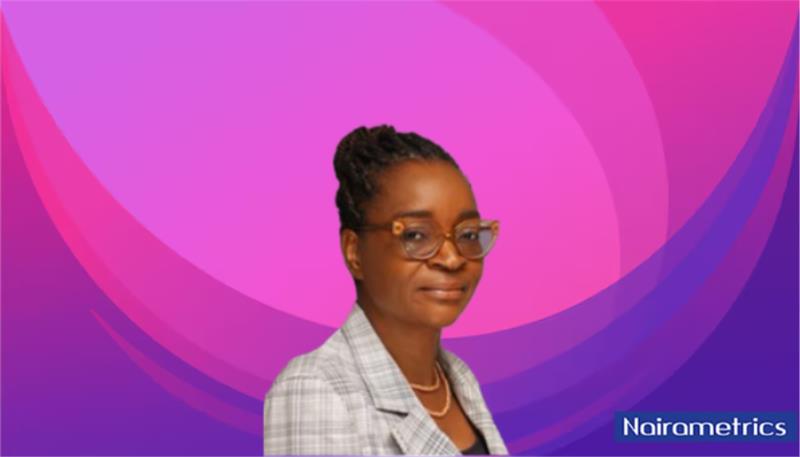
Unlike banking or oil, pharmaceutical manufacturing rarely produces ‘celebrity executives’ in Nigeria. Its work happens mostly behind laboratory doors, inside production plants, and within the quiet but high-stakes world of healthcare regulation.
Yet for Dukor Anderline Ndidi, the pharmaceutical industry has become the foundation upon which she has built more than two decades of leadership.
As Co-Chief Executive Officer of MeCure Healthcare Limited, Ndidi now helps oversee one of Nigeria’s most prominent healthcare and pharmaceutical companies, an institution that has steadily expanded its influence within a country aiming to focus on local drug manufacturing and healthcare self-sufficiency.
- During the period under review, MeCure posted a profit after tax of N6.46 billion, further cementing its status as one of the most valuable healthcare companies listed on the Nigerian Exchange.
- But Ndidi’s rise to the company’s top leadership was not abrupt. It evolved through years spent inside the technical and regulatory core of pharmaceutical operations.
- Her relationship with MeCure dates back to 2006 when she joined the company as Superintendent Pharmacist and Regulatory Affairs Manager, roles that placed her directly within the highly sensitive world of pharmaceutical compliance, product regulation, and operational oversight.
For seven years, she worked at the intersection of medicine and governance before eventually rising to Director of Pharmaceutical Operations, a position she held for a decade. There, she became instrumental in strengthening operational systems and refining the company’s pharmaceutical processes at a time when healthcare quality assurance was becoming increasingly critical within Nigeria’s pharmaceutical sector.
- Even before MeCure, her career had already been rooted in pharmacy practice and regulatory affairs. She worked at Renaissance Pharmaceuticals Limited between 1998 and 2006 and earlier served at St. Nicholas Pharmacy, experiences that grounded her deeply within Nigeria’s healthcare ecosystem long before she entered executive management.
What makes Ndidi’s leadership story particularly compelling is how technical expertise evolved into corporate leadership. Unlike executives whose careers are built primarily around finance or administration, hers was forged from the scientific and operational backbone of healthcare delivery itself.
- Academically, she pursued both clinical and public health dimensions of medicine, earning a Master of Science in Clinical Pharmacy from the University of Lagos and a Master of Public Health from the Lagos State University College of Medicine.
- Today, she leads MeCure’s Lagos operations while helping drive the company’s broader mission of expanding access to quality healthcare services and pharmaceutical innovation in Nigeria.
Adenike Aboderin —CEO, Skyway Aviation (PAT: N9.74 billion)

Behind the delicate aviation sector, every successful takeoff and landing lies an intricate ecosystem of logistics, coordination, safety, and timing — an operation so precise that even the slightest disruption can ripple across an airport.
It is within that often invisible but indispensable ecosystem that Adenike Aboderin now operates.
- When she assumed office as Managing Director and Chief Executive Officer of Skyway Aviation Handling Company Plc in February 2024, she stepped into one of the most operationally demanding segments of Nigeria’s aviation industry.
- Under the period reviewed, SAHCO delivered a profit after tax of N9.74 billion, up from N4.83 billion from the year before.
Yet Aboderin’s journey to the top of the aviation handling company did not begin on the runway.
Her career has unfolded across an unusually broad spectrum of Nigeria’s public and private sectors, moving fluidly between banking, policy advisory, consulting, infrastructure, and public finance. Before arriving at SAHCO, she served as Director of Finance and Accounts at the Federal Airports Authority of Nigeria, where she oversaw critical directorates spanning finance, budgeting, accounts, and credit control until December 2023.
That role placed her at the heart of Nigeria’s airport administration system during a period when the aviation sector was grappling with currency pressures, infrastructure demands, and post-pandemic recovery realities.
Earlier in her career, she moved through some of Nigeria’s major financial institutions, including Citibank Nigeria, Skye Bank Plc, now Polaris Bank, Commerce Bank, and Premium Securities Limited. The breadth of those experiences appears to have shaped a leadership profile that combines financial discipline with institutional adaptability.
But Aboderin’s story is also deeply tied to public policy and governance.
- Between 2011 and 2014, she served as Special Adviser to the Governor of Ogun State on Trade and Investments while supervising the state’s Economic Planning Department, a role that exposed her to the difficult balancing act between economic ambition and public administration. In 2015, she chaired the Sub-Committee on Social Issues of Nigeria’s Presidential Transition Committee, further cementing her reputation as a policy-oriented executive with national relevance.
Her experience cuts across oil and gas, transportation, infrastructure, marine operations, manufacturing, and financial advisory — sectors that rarely intersect in one career path.
Academically, she belongs to the generation of Nigerian executives whose credentials stretch across both local institutions and global executive programmes. She studied Finance and Banking at the University of Lagos, attended executive programmes at Harvard Business School and Lagos Business School, and is currently pursuing a master’s degree in Sustainable Development at the University of Sussex.
Uzoamaka Oshogwe —CEO, Transcorp Hotels Plc (PAT: N21.85 billion)
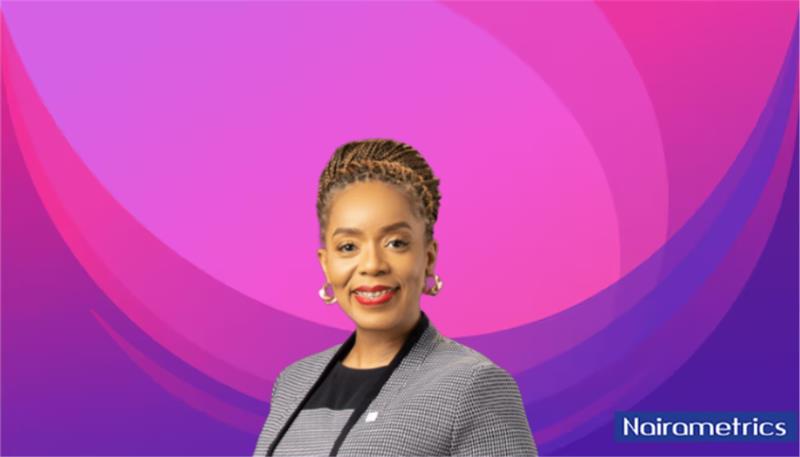
Few sectors reveal the mood of an economy quite like hospitality.
This is because when uncertainty like insecurity, or even inflation, deepens, luxury often becomes one of the first casualties. It is this delicate intersection between commerce, travel, investment, and national perception that Uzoamaka Oshogwe now oversees at Transcorp Hotels Plc, the hospitality subsidiary of Transnational Corporation Plc.
- Oshogwe assumed office as MD/CEO of the hospitality company on January 1, 2025, taking charge of one of Nigeria’s most recognisable hotel brands, best known for the iconic Transcorp Hilton Abuja.
By the time she arrived, she was already regarded as one of Nigeria’s most accomplished real estate and corporate executives, having built a career spanning more than three decades across consulting, banking, technology, and property development.
Her résumé carries the unmistakable imprint of a globally exposed executive class. She worked at Ford Motor Company, J Sainsbury Plc, and Accenture before returning to Nigeria, where she also spent time at United Bank for Africa Plc.
- Before taking over at Transcorp Hotels, Oshogwe served as MD/CEO of Afriland Properties Plc, where she earned a reputation for driving transformative property and infrastructure projects.
- Now leading Transcorp Hotels, she presides over a company that generated a profit after tax of N21.85 billion in the 2025 financial year.
- Her educational background reflects the multidimensional nature of her career. She studied Chemistry at Ambrose Alli University before earning a master’s degree in Information Systems Design from the University of Westminster. She later attended executive programmes at Harvard Business School, Lagos Business School, and IESE Business School.
Professionally, she occupies a rare intersection between business strategy and mediation, serving as a RICS-accredited Civil and Commercial Mediator while also holding fellowships across several professional institutes.
Owen Omogiafo —CEO, Transcorp Plc (PAT: N135.91 billion)
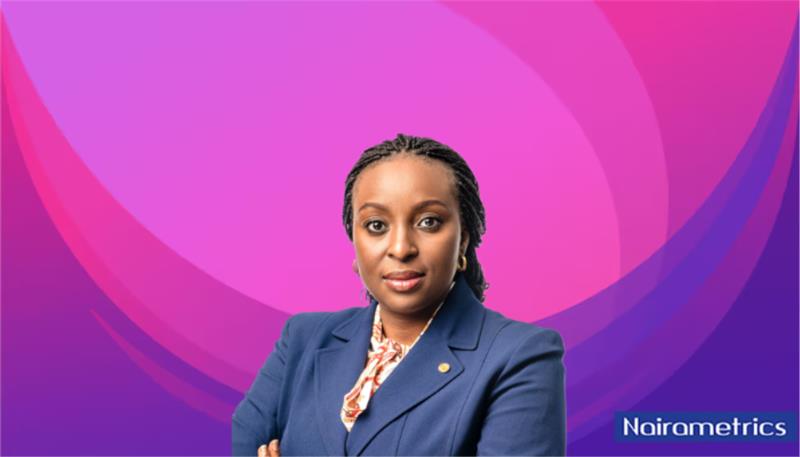
At 39, Owen Omogiafo became the first woman to lead Transnational Corporation Plc, one of Nigeria’s most visible conglomerates with interests spanning power, hospitality, and energy.
It was a defining appointment, not just because of her age or gender, but because she inherited a company sitting at the intersection of some of Nigeria’s most complex industries.
- Under her leadership, which she assumed in 2020, Transcorp delivered a profit after tax of N135.91 billion in the 2025 financial year, rising from N94.09 billion in the previous year.
The scale of that performance reflects more than favourable market conditions. It mirrors the aggressive expansion and operational consolidation that have characterised Transcorp’s recent evolution, particularly in the power sector where the company has expanded its strategic relevance to Nigeria’s fragile energy landscape.
Interestingly, Omogiafo’s path to corporate prominence did not begin in energy or hospitality.
- A graduate of Sociology and Anthropology from the University of Benin, she later earned a master’s degree in Human Resource Management from the London School of Economics and Political Science, a combination that perhaps explains her reputation as both a people-focused and systems-oriented executive.
- Her early career at Accenture placed her inside the world of organisational transformation and change management before she moved into banking at United Bank for Africa Plc, serving as HR adviser to the group managing director.
- She would later play strategic leadership roles within Heirs Holdings and the Tony Elumelu Foundation, experiences that helped sharpen the executive temperament she now brings to Transcorp.
Omogiafo also sits on the boards of several major companies, including Transcorp Power, TransAfam Power, Afriland Properties, and Abuja Electricity Distribution Company.
Adaora Umeoji — CEO, Zenith Bank Plc (N1.04 trillion)

When Adaora Umeoji was appointed Group Managing Director and Chief Executive Officer of Zenith Bank Plc in June 2024, history quietly unfolded inside one of Nigeria’s most powerful financial institutions.
For the first time since the bank’s establishment, a woman would occupy the top executive office of the banking giant.
- But Umeoji’s ascension was not the story of an outsider breaking into unfamiliar territory. It was the culmination of a career built patiently within Zenith’s own walls, a journey that began 26 years ago in 1998 when she joined the bank as a youth corps member. Yet, she would rise, navigating the machinery of one of Africa’s most profitable banks, to become the company’s CEO.
Long before the corner office, she had already become deeply woven into the institution’s corporate architecture. She led the marketing group at the bank’s Maitama branch in Abuja, rose to become deputy zonal head of the Abuja Zone, and later served as executive director overseeing Abuja and the Middle Belt operations — roles that exposed her to both the operational intricacies and political sensitivities of Nigeria’s banking ecosystem.
Now at the helm, she oversees a financial institution whose scale mirrors the enormous responsibility attached to her office.
- Under the bank’s 2025 financial performance, Zenith Bank posted N1.04 trillion profit after tax, the highest on this list, cementing its place among Nigeria’s most profitable corporate institutions. The bank also recorded revenues running into trillions of naira while it grew its total assets to N31.4 trillion from N29.9 trillion in 2024.
Yet beyond the numbers lies a leader whose academic pursuit appears almost relentless.
- Umeoji’s résumé reads like the map of a lifelong intellectual expedition. She studied Sociology at the University of Jos, earned another degree in Accounting, graduated with first-class honours in Law from Baze University, obtained a Master of Laws from the University of Salford, and completed an MBA at the University of Calabar.
Her executive education cuts across some of the world’s most prestigious institutions, including Harvard Business School, Wharton Business School, and the MIT Sloan School of Management.

Dear Nairametrics,
Thank you for publishing such a beautiful and inspiring story about Nigerian corporate ladies. This encouraging piece helps to counter the negative narratives constantly being spread about young Nigerian women. At a time when unpleasant stories are being told both in Nigeria and even in Ghana about our girls, your publication comes as a great relief and a source of hope.
Your story serves as a strong reminder that there are many hardworking, intelligent, and successful Nigerian women making positive impacts in the corporate world. It is also an encouragement for us as a nation to place greater emphasis on the education and empowerment of the girl child.
I believe both the government and corporate individuals should take this responsibility more seriously in order to build a better corporate Nigeria and raise a new generation of outstanding women leaders.
Thank you once again for this thoughtful publication.
Thanks for sharing