Follow Us on Google Discover
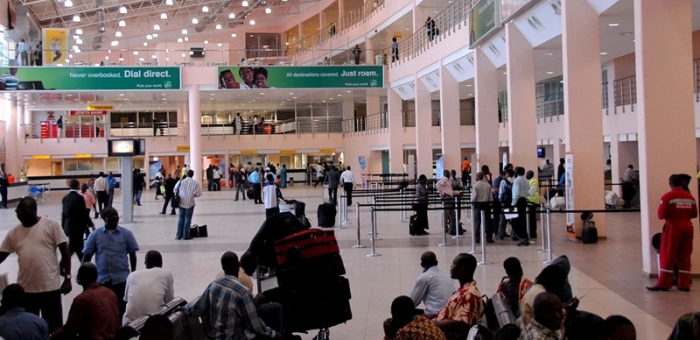
The cost of relocating abroad from Nigeria has declined by between 2% and 19% in naira terms over the past year, driven by the strengthening of the local currency against major foreign currencies.
This is according to the State of Japa 2026 Q3 report published by Japa Calculator, which examined relocation costs across 21 countries.
The report found that although visa fees and immigration requirements have increased in several destinations, the naira’s appreciation has reduced the estimated local currency cost of relocating.
According to the findings, the naira strengthened by approximately 8% against the US dollar and British pound and 11% against the euro over the review period.
Also Read
However, the report noted that the reduction in naira-denominated costs does not necessarily mean that relocation has become cheaper in foreign currency terms, as visa fees and other expenses remain elevated.
Japa cost falls across 21 countries
The report estimated that relocating from Nigeria currently costs between N2.8 million and N22.1 million, depending on the destination and immigration pathway.
The calculations covered visa and government fees, proof of funds where required, a one-way flight from Lagos and three months’ accommodation.
- South Africa emerged as one of the least expensive destinations, with an estimated relocation cost of N2.8 million, compared with N2.9 million a year earlier.
- Turkey recorded the largest percentage decline, with estimated costs falling by 19% from N4.1 million to N3.3 million.
- Other destinations also recorded reductions. Canada remained the most expensive destination among the 21 countries assessed, although its estimated relocation cost declined from N24.1 million to N22.1 million.
The report attributed these reductions primarily to exchange-rate movements rather than lower immigration or living expenses abroad.
Naira appreciation reduces relocation costs
The decline in relocation costs comes amid a sustained recovery in the naira over the past year, supported by improved foreign exchange liquidity, rising external reserves and increased capital inflows.
- According to Nairametrics’ report on the naira’s October 2025 performance, the currency closed the month at N1,427.50/$, recovering from N1,602/$ in April 2025, when it recorded one of its weakest levels of the year. The recovery coincided with improvements in foreign exchange liquidity and external reserves, which reached $43.17 billion by the end of October.
- The appreciation continued into 2026. Nairametrics reported that the naira closed June 2026 at N1,376/$, compared with N1,532/$ in June 2025, representing a year-on-year gain of approximately 10.2%. The improvement was linked to stronger foreign portfolio inflows, diaspora remittances and foreign exchange market reforms.
- By September 2026, the currency had strengthened further to N1,329.50/$, although it subsequently weakened to N1,346/$ at the end of October. Comparing the October 2025 and October 2026 closing rates, the naira appreciated by approximately 5.7% against the dollar over the 12-month period, despite renewed volatility towards the end of the review period.
The recovery was also recognised by the World Bank, which identified the naira among Africa’s more resilient currencies in the second quarter of 2026, with its maximum depreciation limited to 2.6% despite broader currency pressures across the continent.
Rising Visa fees offset currency gains
In March 2026, Nairametrics reported that the United Kingdom announced increases in visa and citizenship fees, effective April 8. Under the revised charges, the Skilled Worker visa fee for stays of up to three years increased from £769 to £819, while the student visa fee rose from £524 to £558.
- More recently, the UK announced another increase in proof-of-funds requirements for international students, with applicants studying in London expected to demonstrate access to at least £14,130 in living expenses from November 30, 2026, excluding tuition and other visa-related costs.
- Similarly, Nairametrics reported in September that Australia introduced tighter immigration rules affecting international students, skilled workers and visitors, as the government moves to reduce net overseas migration and prioritise occupations experiencing labour shortages.
In the United States, routine visa processing was moved exclusively to Lagos from August 1, 2026, following the suspension of services at the US Embassy in Abuja. The development raised concerns about additional transportation and accommodation expenses for applicants travelling from other parts of Nigeria.