Follow Us on Google Discover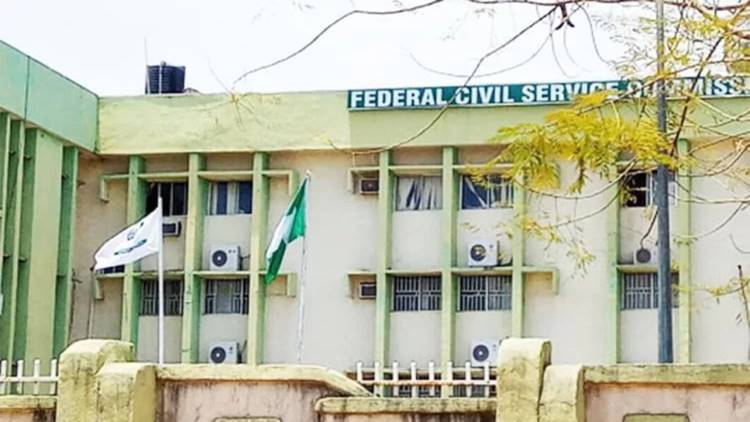
The Federal Civil Service Commission has warned Nigerians against unauthorised recruitment messages and links circulating on social media, WhatsApp groups, and unofficial websites.
The service stressed that genuine federal civil service recruitment is never conducted through private agents, middlemen, or individuals claiming to influence shortlisting or secure appointments.
The commission issued the warning in a statement by its Head of Press and Public Relations, Ibraheem Zakariyya, on Friday in Abuja.
It warned that the use of the commission’s name, logo, or branding in a recruitment message does not make it genuine, and that no officer can be appointed into the Federal Public Service without an authorised establishment and the requisite recruitment waiver from the Office of the Head of the Civil Service of the Federation where applicable.
What the commission is saying
The FCSC said recruitment into the federal civil service is a regulated, structured process governed by the Public Service Rules, and outlined how genuine vacancies are advertised to help the public distinguish official announcements from fraudulent ones.
- Under Rule 020102(i) of the Public Service Rules 2021, appointments to positions on GL 07 to 17 are made as vacancies arise and following due advertisement, published in three national newspapers and on the commission’s official website, with a specified deadline for applications.
- Rule 020206 of the Public Service Rules requires applicants to meet prescribed eligibility conditions, including relevant qualifications contained in the approved Schemes of Service.
- The commission issued specific warnings on financial fraud tied to fake recruitment exercises.
It warned the public against anyone demanding money in exchange for recruitment forms, shortlisting, employment, appointment letters, preferential treatment, or assistance in securing positions in the federal civil service.
It advised applicants never to submit personal information or make payments in response to messages circulated by individuals, social media accounts, WhatsApp groups, blogs, or unofficial websites.
- Where online applications are required, applicants should access the designated recruitment portal only through links provided in official FCSC announcements, and not through alternative links sent via unsolicited messages or individuals claiming to be recruitment agents.
- The commission said false declarations, forged certificates, or fraudulent documentation during an application could lead to disqualification and other consequences under applicable rules.
It urged prospective applicants to carefully study official vacancy announcements for available positions, qualifications, eligibility requirements, application procedures, and closing dates before applying.
Get up to speed
Recruitment fraud targeting government job seekers has remained a persistent problem in Nigeria, with fraudsters exploiting the high demand for public-sector jobs through fake vacancy announcements, application fees and counterfeit appointment letters.
- In February 2025, the Nigeria Immigration Service (NIS) warned Nigerians against fraudulent recruitment advertisements, saying no recruitment exercise was ongoing at the time. The service said fraudsters were exploiting its name to mislead prospective applicants.
- In October 2025, the Nigeria Customs Service (NCS) raised a similar alarm over fake appointment letters circulating online during its recruitment exercise. The service said it had not begun issuing appointment letters and urged applicants to disregard the fraudulent documents.
- More recently, in August 2026, the Nigerian Upstream Petroleum Regulatory Commission (NUPRC) warned against fake and AI-generated employment letters being circulated in its name.
The commission also cautioned against fraudsters demanding money from job seekers under the guise of helping them secure jobs at the regulator.
What you should know
Earlier this year, Nairametrics reported that the National Pension Commission (PenCom) issued a strong warning to Nigerians about a rising recruitment scam, urging them to be cautious and avoid falling victim.
PenCom cautioned the public against individuals who may attempt to gather personal information under the guise of offering job opportunities.
The commission disclosed that the scammers are using various communication channels and personal phone numbers to reach out to unsuspecting victims, urging them to urgently share personal details for job placements.