Follow Us on Google Discover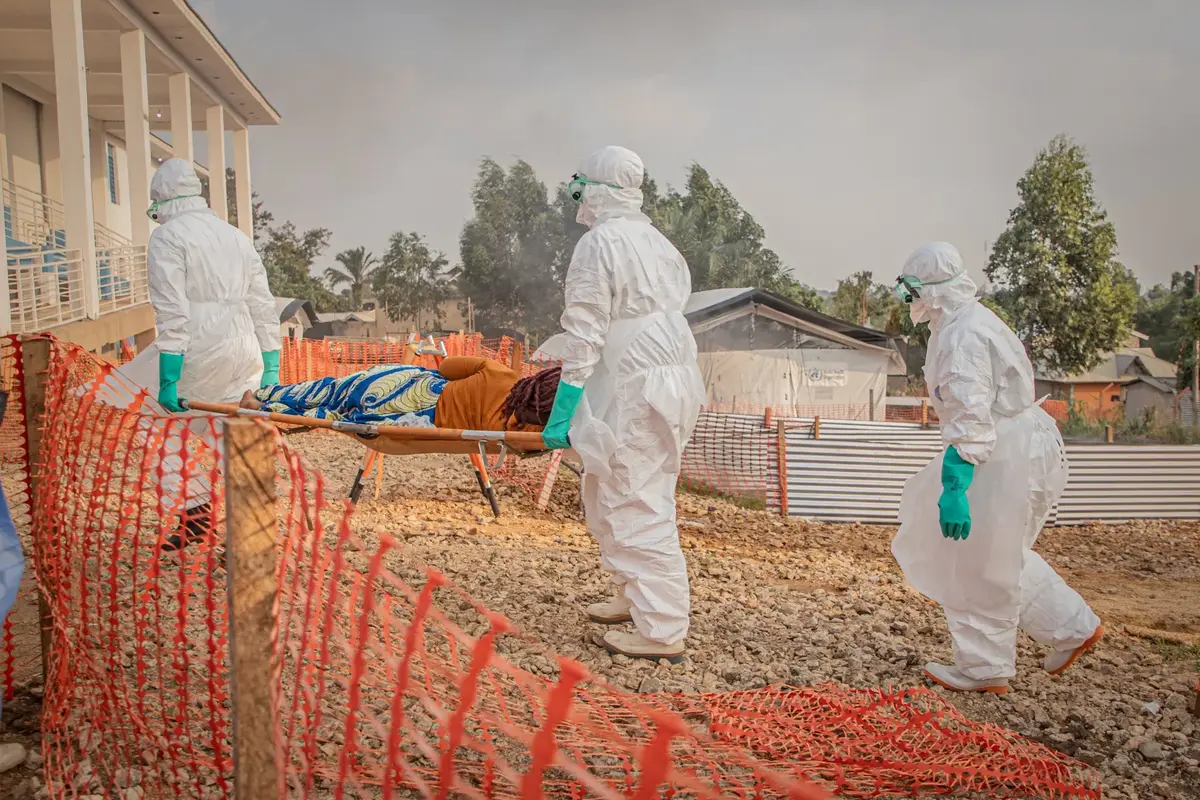
The World Health Organization (WHO) has rejected the programmatic rollout of the Ervebo Ebola vaccine against the Bundibugyo strain currently driving the Democratic Republic of Congo’s deadliest Ebola outbreak, saying available evidence remains insufficient to establish whether the vaccine provides meaningful protection against the virus.
WHO made the recommendation in its updated emergency guidance on the use of licensed Ebola vaccines during Bundibugyo virus disease outbreaks, published on its official website.
The guidance follows a review of additional scientific evidence by WHO’s Strategic Advisory Group of Experts on Immunization (SAGE), which met on August 19 to assess whether Ervebo could be deployed more broadly as the rapidly expanding outbreak continues to cause high mortality in the Democratic Republic of Congo.
The Bundibugyo strain, which has now killed 2,911 people and affected more than 6,000, currently has no approved vaccine.
What WHO is saying
WHO said its decision was based on the limited and inconclusive evidence available on whether Ervebo, which was developed for a different Ebola virus species, can provide clinically meaningful protection against Bundibugyo virus disease in humans.
The agency noted that animal studies have suggested some potential protection against death, while human studies have found evidence of cross-reactive immune responses. However, these responses were weaker than those produced against the Zaire Ebola virus, and no human vaccine efficacy data against Bundibugyo have yet been generated.
WHO also said anecdotal reports involving previously vaccinated health workers were too limited and unreliable to establish whether Ervebo protects people against infection, severe illness or death from the Bundibugyo strain.
- “The evidence available to date remains insufficient to support the programmatic use of Ervebo® for the prevention of BDBV disease,” WHO said. “Therefore, at this time, Ervebo® should only be used for BDBV within the context of a research protocol.”
WHO said a well-designed ring randomised controlled trial would provide the most reliable way to determine whether Ervebo is effective against the Bundibugyo strain, adding that every effort should be made to ensure the trial is implemented quickly and maintains scientific integrity.
Get up to speed
The latest guidance marks a significant development in the global response to the Bundibugyo outbreak, particularly after efforts intensified earlier this year to identify vaccines and treatments for the strain.
- In early July, Nairametrics reported that patients infected with the Bundibugyo strain of Ebola had begun receiving experimental treatments in a new clinical trial aimed at improving care for the rare but deadly virus.
- Later, on July 31, the Coalition for Epidemic Preparedness Innovations (CEPI) committed up to $8.5 million to accelerate the manufacturing of a vaccine candidate against the Bundibugyo strain.
Ervebo, meanwhile, is currently the only licensed Ebola vaccine available. It is approved to protect adults and children aged one year and older against Ebola virus disease caused by the Zaire Ebola virus, scientifically known as Orthoebolavirus zairense.
- It is not licensed for use against Bundibugyo virus, meaning its deployment against the strain would constitute off-label use.
- The distinction is important because Bundibugyo virus and Zaire Ebola virus, although capable of causing clinically similar Ebola disease, are genetically and antigenically distinct.
In early August, the advisory group recommended that the existing approved Ebola vaccine, Ervebo (rVSV-ZEBOV), should be prioritised for inclusion in a Phase 3 trial during the ongoing Bundibugyo outbreak.
What you should know
The outbreak is already the deadliest in the Democratic Republic of Congo’s history.
- The number of confirmed Ebola cases in the Democratic Republic of Congo has crossed 6,000, with the death toll rising to 2,911 as the country continues to battle its worst outbreak of the disease in history.
- International agencies have responded with additional funding and preparedness measures.
- In June, WHO and the Africa Centres for Disease Control and Prevention launched a $518 million, six-month response and preparedness plan covering the DRC and Uganda while strengthening readiness in neighbouring countries.
- The United Nations has also made up to $60 million available through emergency financing to support Ebola response operations in the DRC and preparedness activities in nearby countries.
However, containing the outbreak remains difficult, particularly in eastern DRC, where insecurity, population displacement and limited access to some communities have complicated contact tracing, treatment and other public health interventions.
Beyond the immediate health emergency, a wider spread of the outbreak could carry significant economic consequences for Africa.
The United Nations Development Programme has estimated that an Ebola outbreak spreading beyond its current hotspots could cost the continent up to $3.6 billion in economic output and lead to more than 328,000 job losses.