Follow Us on Google Discover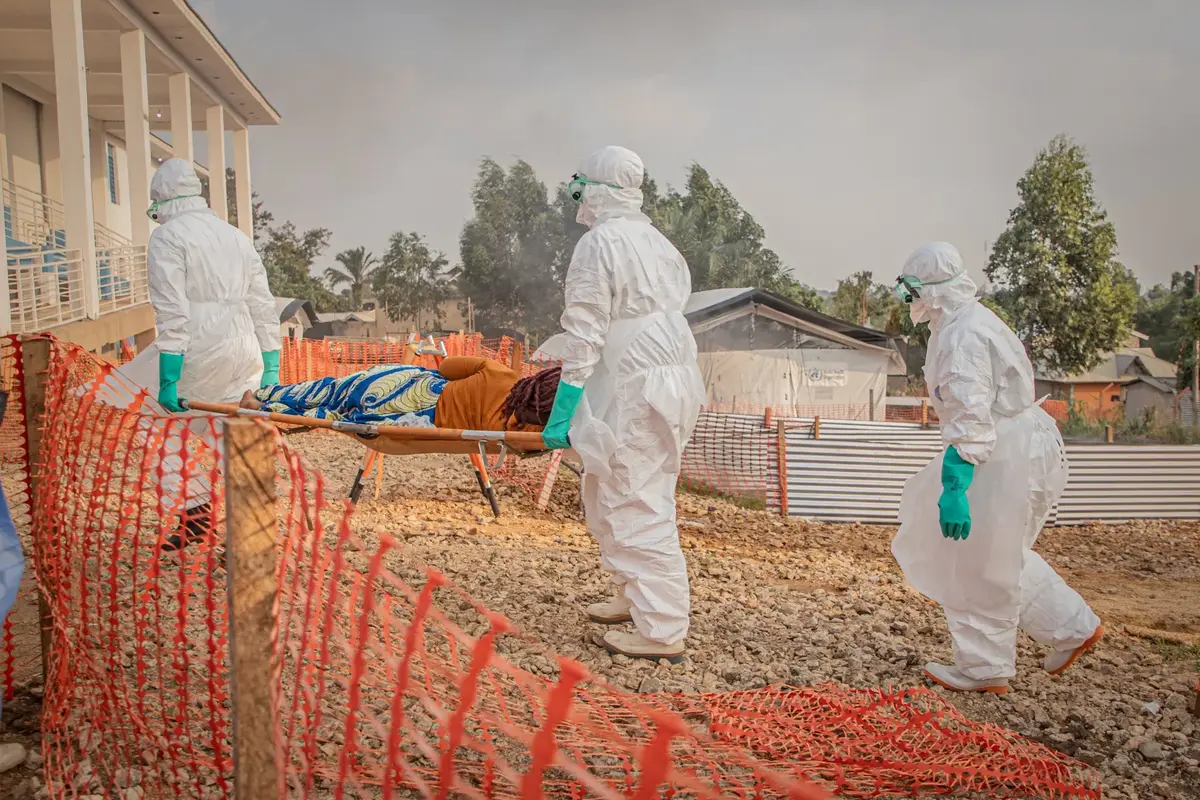
The number of confirmed Ebola cases in the Democratic Republic of Congo (DRC) has crossed 6,000, with the death toll rising to 2,911 as the country continues to battle its worst outbreak of the disease in history.
The latest figures were disclosed on Monday, August 31, 2026, by the DRC Ministry of Communication and Media in an update on the country’s Ebola response.
The outbreak, which is caused by the Bundibugyo strain of the Ebola virus, has become the largest and deadliest Ebola outbreak recorded in the DRC.
The strain is particularly concerning as there are currently no approved vaccines or treatments specifically available for Bundibugyo virus.
What they are saying
The DRC government said the outbreak has so far resulted in 6,041 confirmed infections, with 1,366 patients recovering and 2,911 people dying from the disease.
- “6,041 confirmed cases, including 1,366 recoveries and 2,911 deaths. 619 patients are in isolation or hospitalized, and contact tracing has reached 82.4%,” the ministry said.
The government added that the response is currently active across six provinces and 60 affected health zones, with no additional health zones reporting infections in the previous 24 hours.
Get up to speed
In mid-August, the Ebola outbreak in the Central African country became the deadliest in the DRC’s history after the government reported that 2,325 people had died from the disease.
The current outbreak is the country’s 17th and had already become its largest by number of infections after confirmed cases surpassed the previous national record in late July.
- At the time, the outbreak had also become the second-deadliest Ebola epidemic ever recorded globally, behind the 2014–2016 West Africa outbreak, which infected 28,616 people and killed 11,310 across Guinea, Liberia and Sierra Leone.
The DRC formally declared its latest Ebola outbreak on May 15, 2026, after laboratory tests confirmed the presence of the Bundibugyo virus in Ituri Province.
Two days later, on May 17, the World Health Organization (WHO) classified the Ebola outbreak in the DRC and Uganda as a Public Health Emergency of International Concern (PHEIC).
What you should know
The rapid escalation of the outbreak has raised concerns about the ability of already stretched health systems in affected parts of Africa to contain the disease, particularly as the fatality rate has remained high.
- International agencies have responded with additional funding and preparedness measures. In June, the WHO and the Africa Centres for Disease Control and Prevention launched a $518 million, six-month response and preparedness plan covering the DRC and Uganda, while also strengthening readiness in neighbouring countries.
The United Nations has also provided emergency financing for the response. The UN Office for the Coordination of Humanitarian Affairs made up to $60 million available to support Ebola response operations in the DRC and preparedness activities in nearby countries.
However, containing the outbreak remains difficult, particularly in eastern DRC, where insecurity, population displacement and limited access to some communities have complicated contact tracing, treatment and other public health interventions.
- Community mistrust has also emerged as a challenge, potentially making it harder for response teams to identify contacts and ensure that infected people receive timely care.
Beyond the immediate health impact, a wider spread of the outbreak could have significant economic consequences for the continent.
The United Nations Development Programme has estimated that an Ebola outbreak spreading beyond its current hotspots could cost Africa up to $3.6 billion in economic output and lead to more than 328,000 job losses.