Follow Us on Google Discover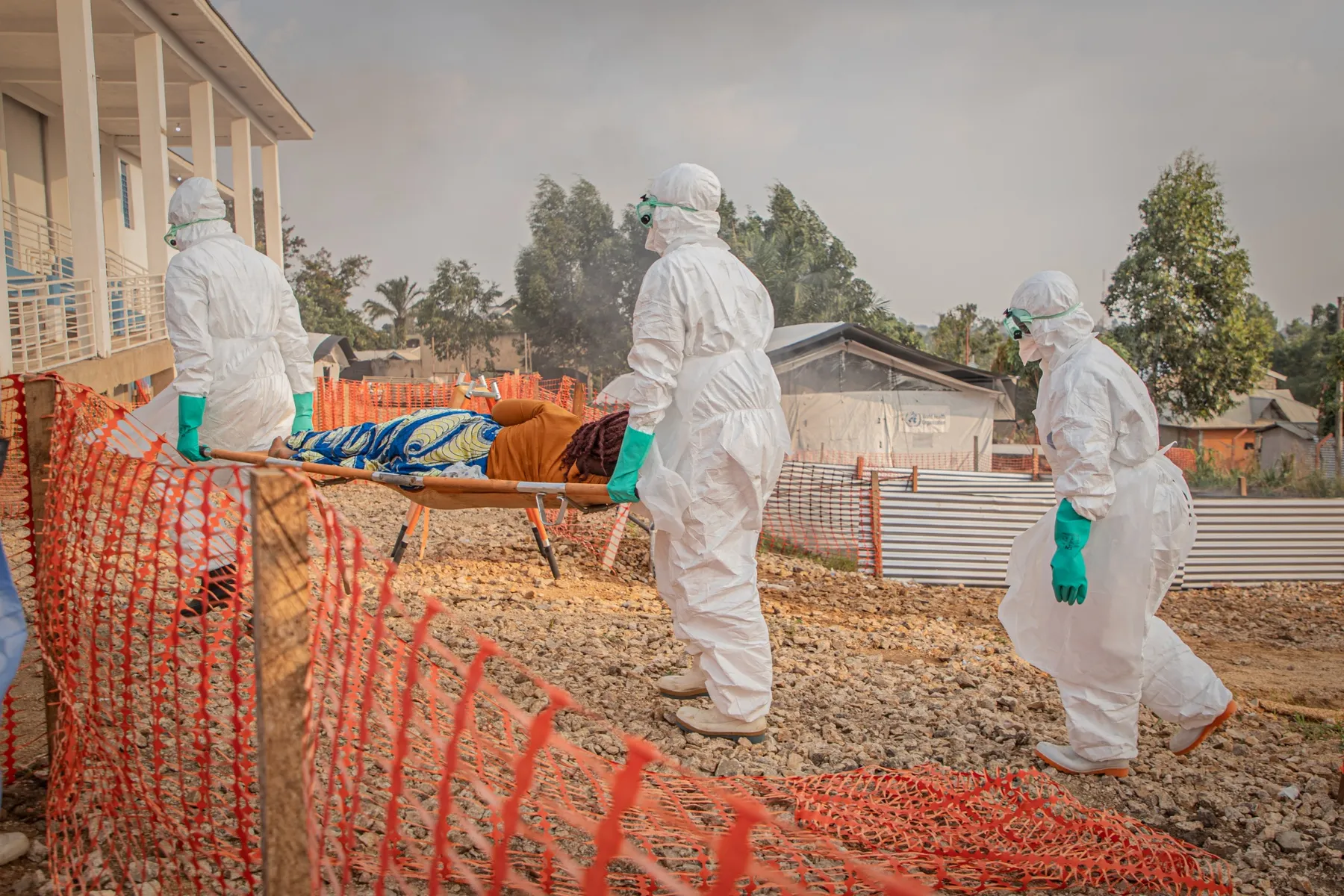
The Ebola outbreak in the Democratic Republic of Congo (DRC) has killed 2,325 people, making it the deadliest Ebola outbreak in the country’s history, according to the latest government data.
Congo’s public health institute disclosed the figures on Sunday, August 16, 2026, reporting that confirmed infections had risen to 4,945, including 101 new cases recorded in the previous 24 hours.
The death toll has now surpassed the 2,299 deaths recorded during Congo’s 2018-2020 Ebola outbreak, which was previously the country’s deadliest.
The current outbreak, Congo’s 17th, had already become the country’s largest by number of cases after infections crossed the previous record in late July. It is now the second-deadliest Ebola outbreak ever recorded globally, behind the 2014-2016 West African epidemic, which recorded 28,616 cases and 11,310 deaths across Guinea, Liberia and Sierra Leone.
What they are saying
Congo’s public health institute said confirmed Ebola cases have reached 4,945, with 101 additional infections identified in the 24 hours covered by its latest report. The rapid increase in infections has come alongside a sharp rise in the proportion of confirmed patients who die from the disease.
The case fatality ratio, which measures the proportion of confirmed patients who die, has risen from about 20% in early June to 46%. That means nearly one in every two confirmed patients is now dying.
- “Since the beginning of the epidemic through August 15, 2026, the Democratic Republic of Congo has recorded 4,945 confirmed cases, including 2,325 deaths, representing a fatality rate of 47.0%,” the statement reads in part.
Health experts, however, say the increase does not necessarily mean the Bundibugyo virus has become more lethal. Instead, it reflects persistent problems with surveillance, late diagnosis and access to treatment.
- “Normally, as an outbreak progresses, the case fatality ratio should fall as contact tracing improves and patients are identified and treated earlier,” Reuters quoted Thomas Parisch, a public health specialist recently deployed to the DRC with Médecins Sans Frontières.
- “Instead, we’re still seeing many cases detected very late, when treatment is less likely to succeed, with many identified only after they die in the community.”
The current outbreak is caused by the Bundibugyo species of Ebola, for which there are currently no approved vaccines or specific treatments. Experimental vaccines and therapies are being evaluated, but available evidence remains limited.
Get up to speed
The outbreak was formally declared by Congo on May 15, 2026, after laboratory testing confirmed the Bundibugyo virus in Ituri Province. Two days later, on May 17, the World Health Organization (WHO) classified the outbreak in Congo and Uganda as a Public Health Emergency of International Concern (PHEIC).
- The WHO said the international emergency designation reflected the risk posed by cross-border transmission, population movement, insecurity and weak healthcare infrastructure in affected areas. The absence of approved Bundibugyo-specific vaccines or therapeutics further complicated efforts to contain the outbreak.
The outbreak subsequently spread across several provinces in Congo and into neighbouring Uganda, with authorities struggling to keep pace with transmission.
- On July 31, Nairametrics reported that the Coalition for Epidemic Preparedness Innovations (CEPI) had committed up to $8.5 million to Hilleman Laboratories to accelerate the development and manufacture of an experimental Bundibugyo Ebola vaccine for clinical trials.
The funding is intended to support production of vaccine doses for early-stage human trials, with the longer-term aim of scaling manufacturing if the candidate proves successful.
What you should know
While the virus continues to spread in Congo, the outbreak that crossed into neighbouring Uganda has been brought under control. Uganda recorded 20 confirmed cases and two deaths before declaring the outbreak over last month.
- The regional response has involved substantial international funding. In early June, WHO and the Africa Centres for Disease Control and Prevention launched a $518 million six-month preparedness and response plan aimed at supporting Congo and Uganda and strengthening preparedness in neighbouring countries.
- The United Nations also committed emergency funding. The UN Office for the Coordination of Humanitarian Affairs allocated up to $60 million to support the Ebola response in Congo and preparedness measures in neighbouring countries.
Despite these interventions, the outbreak has continued to put pressure on already fragile health systems, particularly in eastern Congo, where insecurity, displacement, community mistrust and difficulties accessing affected communities have complicated efforts to trace contacts and provide timely treatment.
The economic consequences could also extend beyond the immediate health crisis. The United Nations Development Programme has warned that, if the outbreak spreads beyond its current hotspots, it could cost Africa as much as $3.6 billion in economic output and result in more than 328,000 job losses.