Follow Us on Google Discover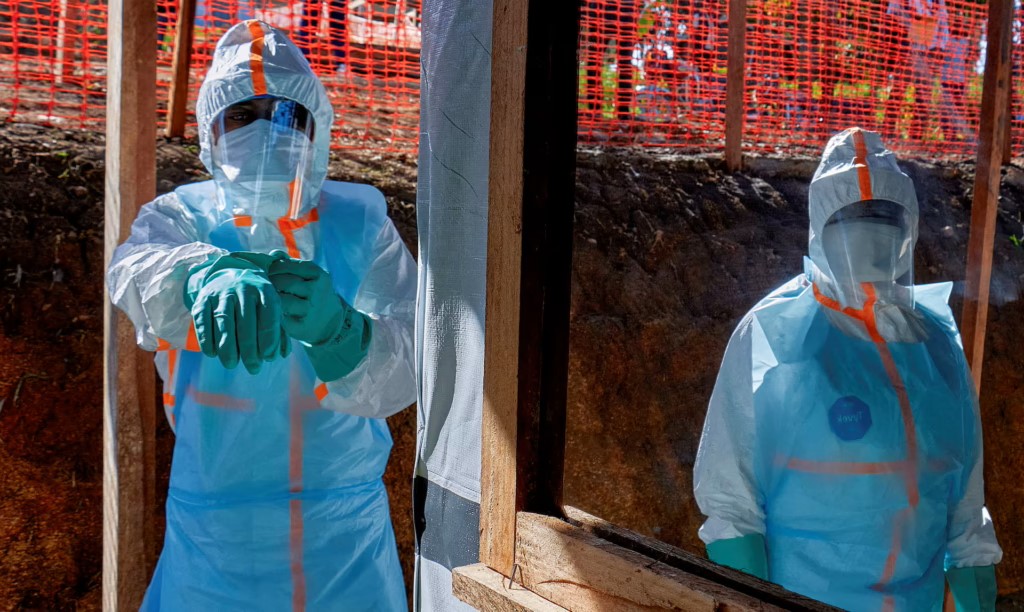
The United Nations has warned that the ongoing Ebola outbreak in Central and East Africa could cost the continent as much as $3.6 billion in economic output and wipe out more than 328,000 jobs if the virus spreads beyond its current hotspots.
The warning was issued on Tuesday by the United Nations Development Programme (UNDP) during the release of a new assessment on the potential economic impact of the Ebola outbreak.
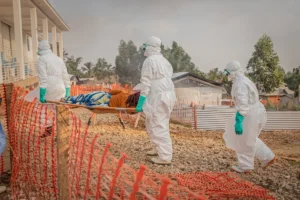
The alert comes as the Democratic Republic of Congo (DRC) continues to battle the Bundibugyo strain of Ebola, for which there is currently no approved vaccine or proven treatment.
Since the outbreak was declared on May 15, more than 1,300 people have been infected, and over 370 have died, underscoring the growing public health emergency.
What they are saying
According to the UNDP, the economic consequences of the outbreak will depend largely on how quickly health authorities are able to contain the virus.
In its best-case scenario, where the outbreak remains largely confined to the Democratic Republic of Congo and Uganda, the epidemic is projected to shave about $1 billion off the DRC’s gross domestic product.
However, the agency warned that the economic fallout could become far more severe if the virus spreads into additional countries.
Under its worst-case scenario, Ebola extends into neighbouring countries such as Rwanda and Angola while coinciding with higher global fuel prices linked to geopolitical tensions in the Middle East. In that event, Africa’s economy could lose as much as $3.6 billion in GDP, while an estimated 328,000 jobs would be lost across the continent.
Damien Mama, the United Nations Development Programme’s Resident Representative in the Democratic Republic of Congo, stressed that a stronger international response could still prevent the worst outcomes.
- “If we have the resources and we step up, we can contain this outbreak and prevent further losses,” he said.
Mama cautioned that failure to act decisively could transform the health emergency into a much broader socio-economic crisis.
- “If we do not, this health emergency risks becoming a much deeper and prolonged development crisis across the region and potentially the continent,” he added.
Get up to speed
The latest data released by the Africa Centres for Disease Control and Prevention (Africa CDC) on June 29 shows that the outbreak remains concentrated in the Democratic Republic of Congo but has also spread to Uganda and France.
- As of June 27, the DRC had recorded 1,274 confirmed Ebola cases and 360 confirmed deaths.
- Uganda had reported 20 confirmed cases, two confirmed deaths, one probable case and one probable death as of June 29.
- France has also confirmed one imported case involving a doctor who recently returned from a humanitarian mission in the DRC, highlighting the continued risk of international transmission.
Across the three affected countries, Africa CDC has recorded a total of 1,295 confirmed cases and 362 confirmed deaths, alongside one probable case and one probable death.
What you should know
Health authorities continue to race against time to contain the outbreak despite funding shortages, operational constraints and the absence of an approved vaccine for the Bundibugyo strain currently driving infections.
- To reduce the risk of wider transmission, the Congolese government has introduced travel restrictions requiring passengers flying from Ituri to Kinshasa to refrain from onward travel for 21 days.
- According to Africa CDC Director-General Dr. Jean Kaseya, the approved Ebola response plan initially required $518 million. Although international donors have pledged about $910 million, only 13% of those commitments have so far been released.
Meanwhile, the United States is strengthening its own preparedness against the outbreak.
President Donald Trump’s administration recently asked Congress to approve more than $1.4 billion in emergency funding to bolster Ebola preparedness, prevent the virus from reaching the United States and support the treatment and evacuation of Americans exposed to the disease abroad.