Follow Us on Google Discover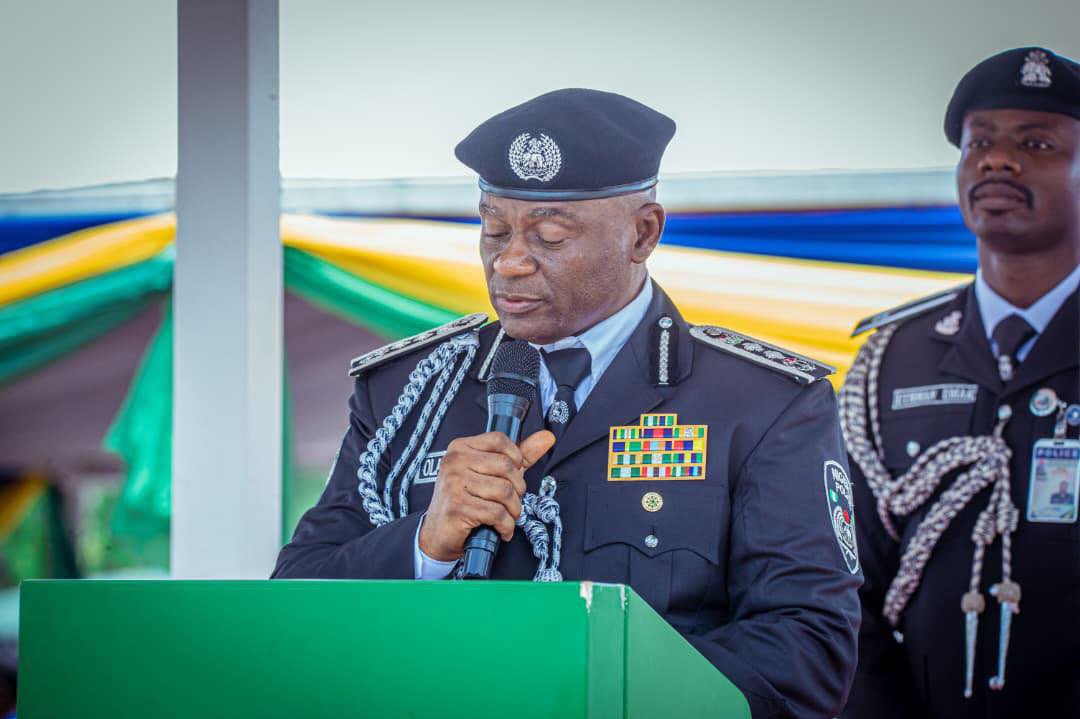
The Inspector-General of Police (IGP), Olatunji Disu, has ordered that tactical teams across Nigeria be limited to a maximum of five per state and three per division.
The directive was announced in a statement issued by the Nigeria Police on Sunday via its official X account.
This clarification comes amid online reports falsely claiming that the IGP had disbanded all police units nationwide.
What they are saying
The Police explained that the directive is part of an effort to restructure and rationalize tactical teams across state and divisional commands. The proliferation of multiple tactical units by some Commissioners of Police and Heads of formations has, in some cases, drained manpower from regular Police Divisions and Posts, contributing to complaints about misconduct and inefficiency.
Also Read
- To address this, the IGP set limits for tactical teams at different command levels:
- “The IGP directed the reduction of the tactical teams at Zonal and State Command levels to a maximum of five, and Area Command and Divisional levels to a maximum of three.
- “This can be achieved by merging or disbanding teams, at the Heads of formations’ discretion.”
The statement clarified that state government-created outfits, such as Lagos’ Rapid Response Squad, Oyo’s SRS, and Bayelsa’s Operation DOO-AKPOR, are not affected.
The restructuring aims to free officers for regular duties, strengthen supervision, improve accountability, and reduce complaints, supporting a people-friendly, efficient police force.
More insights
The IGP’s directive aligns with previous initiatives to correct manpower imbalances in the Police.
In November 2025, President Bola Tinubu ordered the withdrawal of police officers attached to VIPs nationwide, redeploying them to core policing duties. VIPs were instructed to request armed escorts from the NSCDC instead, a move expected to free thousands of officers for frontline service.
- By December, President Bola Tinubu ordered that ministers and senior officials must obtain presidential approval before requesting police escorts for official duties.
- These measures aim to address chronic personnel shortages in rural and semi-urban communities.
President Tinubu highlighted declining police visibility in remote areas and the need for robust community-level policing.
Both the IGP’s restructuring of tactical teams and the VIP security redeployment reflect a shared goal: to improve police supervision, enhance community safety, and free officers for regular policing.
What you should know
Recently, IGP Olatunji Disu disbursed N2.4 billion to families of police officers who died in active service, reinforcing efforts to support their welfare and honour their sacrifices.
- The disbursement took place during a cheque presentation ceremony in Abuja last Wednesday and was executed under the Group Life Assurance and I-G Family Welfare Schemes.
- The N2.4 billion covers 1,075 beneficiaries, including next of kin of deceased officers, spanning multiple policy years 2018/2019 through 2025/2026.
- Part of the disbursement includes recoveries from insurance obligations that had remained unpaid for years.
- Delays or non-payment of benefits to families of deceased officers have historically been a challenge within the Nigeria Police Force and broader civil service.
In 2022, Nairametrics reported on the family of late Superintendent Emmanuel Akpoke, who died in 1992 while in active service.
After years of failed attempts to access his entitlements, the family sought legal redress in 2013, resulting in a 2015 court judgment ordering the payment of his gratuity, other benefits, N5 million in general damages, and additional costs.