
 Follow Us on Google Discover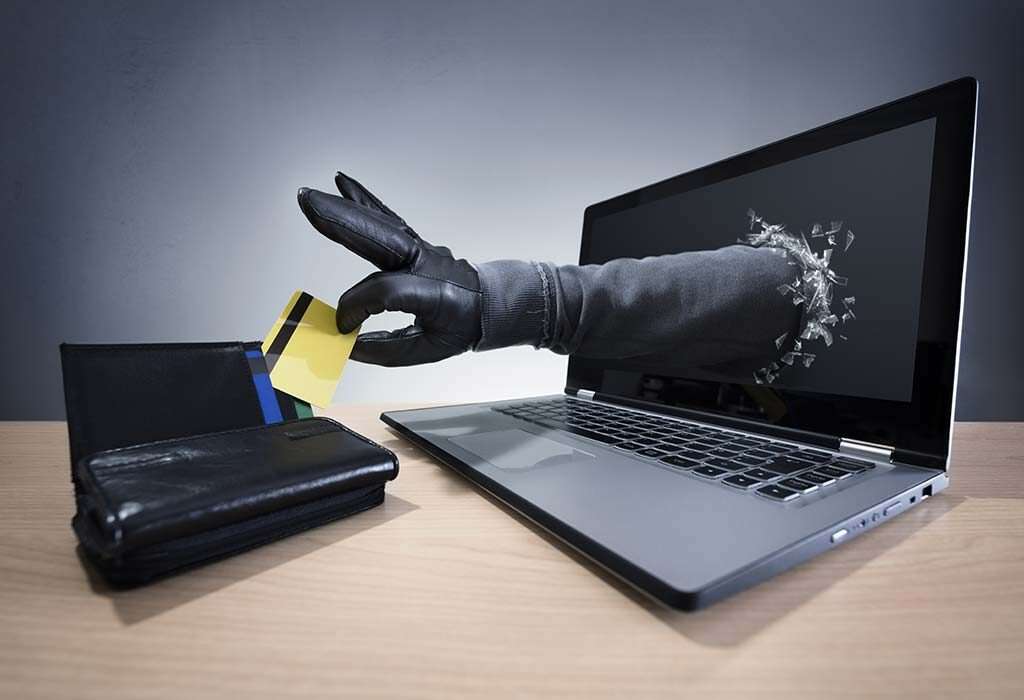
Like many other industries, the eCommerce and retail landscape has also witnessed transformation, following the increase in internet penetration in Nigeria. Consumers now shop online, causing more people to take their businesses online, either through owned websites or online stores via social media.
According to Statista, in 2019, the number of online shoppers in Nigeria reached 76.6 million. Unfortunately, this rapid increase in online shoppers has also led to an increase in online shopping scams.
READ: How scammers use SIM card, phone numbers to rob your bank accounts
Online shopping scams involve fraudsters pretending to be legitimate online sellers, either with a fake website or a fake social media account. While many online sellers are legitimate, scammers use the anonymous nature of the internet to rip off unsuspecting shoppers. They open these online stores for a short time, often selling fake branded clothing or jewellery pictures stolen from other pages or the internet. They typically sell at much lower prices than the normal prices sold by other legitimate sellers to lure unsuspecting victims. After making a number of sales, the stores disappear.
Also Read
If you have been scammed by an online vendor, there are still ways that you can recover your money.
READ: Scam websites and how to identify them before inputting your card details
How to recover your money after being scammed
- Take a screenshot of the conversation you had with the online vendor on social media (Instagram, Facebook and Twitter).
- Copy out the full name and account details of the vendor who scammed you.
- If you made the transfer via your mobile app or SMS, go to your transaction history and copy out the “Transaction ID Number” of that transaction.
- All banks have a team in charge of online fraud. Send an email to your bank’s E-fraud team as well as the online scammer’s bank, with proof of the transactions and forward a copy of the mail to CBN FRAUD DESK. This will help the bank to place the scammers account on hold.
- With this, the scammer will not be able to carry out any transaction until they visit the bank.
- If you don’t have their email address, you can walk into your bank or the scammer’s bank, and speak to the customer service in charge of fraud to file a complaint.
- Your bank will direct you on the steps to recover your money.
- Report to the police and also speak to a lawyer to file an expert court order. With a court order, the bank will release the information of your scammer to the police to help track them and recover your money.
READ: How to protect your Crypto assets from thefts, hacks, and frauds
While these steps will help you recover your money, it is also advisable to protect yourself from online scams on social media.
- You can look out for reviews on the page before shopping.
- Avoid vendors that have a no-refund policy.
- Scammers also defraud people online through giveaways on their pages that ask you to send money before getting the item that you won. Avoid such giveaways.
Why this matters
Social media platforms have become major targets for scammers. It is necessary for people to take precautionary steps before shopping online to avoid falling prey to online shopping scams.



Thanks Janet John for this alarma and educative write-up. Keep on with the good works.
PAYBACKREFUND.COM HAS NEVER DISAPPOINT
This happened to me recently someone got my wallet hacked and my BTC was stolen, I contacted 2 tech but they took my money.This might had Happened To you or IF anyone or someone you know has been scammed, it is crucial to notify the proper authorities as soon as possible to help to recover lost funds and to prevent others from being victimized. Just After many trials , I Hired {PAYBACK REFUND . COM} ..What Ap +1980 216 4893.They Investigated,Track and traced it back to the wallet where my USDT went through. I thought that was the end but fortunately for me, I got it back real quick with the help of {PAYBACK REFUND} , COM He is legit and very diligent with his work. Hire their service & Thank me later.
F U N D R E S T O R E R (@) G M I L () C 0 M has the best cryptocurrency recovery software to retrieve your lost, missing or stolen cryptocurrency assets from tricky website. This team can help you unfreeze your locked wallet and save you from worries. They were able to recover my stolen 105,000 USDT from a fake broker and fixed my compromised wallet. They are the best and most reliable
Recovery is absolutely possible, you can recover your lost bitcoin from a scammer with the help of a legit expert recovery firm. All you need to do is to file your report with a recovery company, i was once a victim got stuck but i was recommended to ASSET FIX RECOVERY NETWORK . NET they were very transparent in their process and they carried me along every step of the way, their customer service is highly recommended.
Thanks for this Janet. I hope you don’t mind me doing a rider on this.
I just want to expatiate a bit on some assumptions in the writeup so we can advise others too as the sheer number of these incidents these days is quite alarming.
The major assumption here is that the scammer runs a legitimate bank account that can be flagged in the event of fraud for recovery or whose details can be traced easily from his KYC records with the bank. Facts however present a different story.
*Most* frauds of this kind are done using what we call *‘Wallet accounts’* which can be opened in any bank. The account type came from an initiative of the CBN and the industry in a bid to deepen financial inclusion. Account is opened only using a phone line and nothing else. Yes, nothing else is required as none of the information provided is verified. This means one can open a Wallet account with the name of Wole Soyinka(Well maybe the system of some banks might flag such a name) or Shina Peters; just about any name can be used.
The accounts require no BVN, no passport photograph, no ID card etc but can only be operated using USSD as long as the transaction threshold(N50,000.00) is not exceeded. Typically the withdrawals can only be made in tranches of N20,000.
Well, maybe we’d look at the pros and cons of this account type another day but let’s stay within the framework of the discussion-online vendor fraud.
If you’re scammed by anyone using these accounts, the steps outlined would hardly be of help unless you were fast enough(like within seconds of your transfer) to get in touch with the bank and report the fraud. Who discovers a fraud seconds after really?
So what advice would I give? Shopping online…
• Once the product being purchased or service being paid for is less than 50,000 let your *fraud alert be on Red*. One would have thought the higher the value the more you should worry but like I said in the context of our discussion the opposite is the case. If the funds go beyond 50k, then the receiver must have BVN which is at least a step forward. If you can risk following up with the anti-fraud unit of a bank that receives thousands of reports or with the police that gets countless reports of this sort then you can lower your alert flag.
• How well do you know this vendor i.e. did recommendations come from friends who know him/her? Convenience of online shopping here will have to be weighed against losing your hard earned cash. It’s better to let the deal go than lose the cash and the deal all together.
• Try the phone number on Truecaller and see if the result is the same as the identity the person is selling to you.
• Check if there’s a payment gateway such as Interswitch or Swiftpay etc on the seller’s site or page, where that is present then you can move up your trust gear.
• Be very ‘very’ careful when you are asked to pay into another account for one reason or the other. While someone may have an issue and request such in genuineness it’s a flag you shouldn’t ignore until you are totally convinced. Why would Jumia ask you to pay into an agent or staff account?
• There’s much more but in all don’t ignore that inner feeling that tells you it’s too good to be true.
You’d notice I didn’t say anything about getting your money back. Yes, that’s because in most cases where such accounts are used, you likely would not.
God bless you and may wisdom guide you.
Very true.
I find your perspective much more logical and realistic approach to avoiding being scammed online
Personally, I insist on payment on delivery in most of my online shopping. There are a few exceptions though and that’s I took some time to do my research and read reviews before opting for such options.
I had an experience about two months ago where a vendor in Lagos refused the payment on delivery option. He gave all manner of reasons why he wouldn’t send the item to me in Abuja without first receiving the money. I even suggested to him to instruct the driver who will be bringing the item down to Abuja not release the item until he gets a call from him to do so. The vendor said no. Then it just dawned on me that this guy may be upto some time. So later it occurred to me that I had another consignment about to delivered to me from Lagos in 2 days from that time, so I requested this vendor to give me his address so that someone can visit his office and receive the item on my behalf, pay and then send it plus the other stuff I was expecting all together to me. Guess what? That was the end. He never came through.
So, we all have to smart with our money whenever we intend to shop online. These online fraudsters are not joking. They are smart enough to cover their tracks, even to point of publishing fake reviews, just to attract the attention of unsuspecting victims. My advice will be patronise vendors that already known plus you can request payment on delivery. That way you have some peace.
Thank you for your advice to me is a very good method and i sincerely appreciate what you did
please.
We are very grateful with this information.???
Thanks a lot, but our banks in Nigeria will not comply as I was told “since I was the one who made the payment to the scammer’s account it is not regarded as fraud”. I followed the steps above and nothing happened since march or so.
My take is be careful because you are simply on your own.
Why wldnt d banks say so barring d numerous attacks on dem recently. Anyways, what is fraud? Yes, u paid into d scammers acct but dey u receive d items or service u asked for, no! Dats fraud.
Thanks for the info;I was a victim last year I followed the stated steps nothing good came out am of the opinion that both the police and bankers are beneficiary of the proceeds from the fraud so they make it difficult to recover such money police collected #160k last year March and refounded #50k to me this last week Tuesday stating that they can not get the fraudsters
Useful information.
Why wldnt d banks say so barring d numerous attacks on dem recently. Anyways, what is fraud? Yes, u paid into d scammers acct but dey u receive d items or service u asked for, no! Dats fraud.
Nice write up.
However, the sad reality is that Nigerian Banks do not comply not even the CBN fraud desk.
Send a mail, and it’s either you get a mailer daemon that the destination mail box is full and can no longer receive messages or the messages are never being attended to.
I’m typing this from experience. So, the above step is just and effort in futility.
Well, until such a time when fraud issues are taken seriously, it’s just another wasted time and data.
Even the fraud help desk contact lines are almost never reachable. It’s just a corporate facade.
My was happened last year 2020 and I reported it to Police done not to it. I should I reopened d Case again, follow it lawyer.