Follow Us on Google Discover
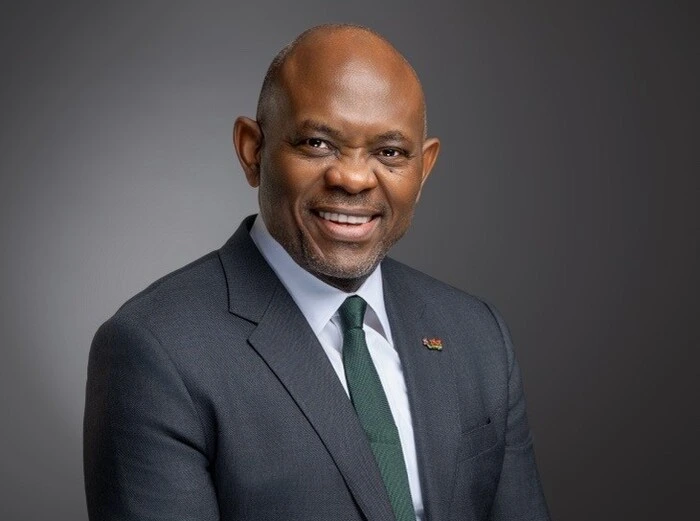
Tony Elumelu, chairman of Heirs Holdings and Transcorp Group, has urged President Bola Tinubu to keep electricity at the centre of his economic reform agenda, saying transparent rules would make Nigeria’s power sector more attractive to investors.
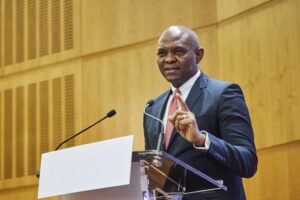
Elumelu made the call at the WOC Justice Summit in Abuja on Thursday, November 19, 2026, where he encouraged the president to build on the removal of fuel subsidies, exchange rate unification and the signing of tax reform laws.
He argued that clear and consistently applied rules would help attract private capital into an electricity sector whose performance affects households, factories and public institutions.
Elumelu calls for transparent power sector
His message to the president was direct: “Keep the focus on power.”
Also Read
Elumelu said the investment potential of Nigeria’s electricity sector depends significantly on the transparency and consistency of the rules governing its operations.
Speaking as an investor with interests in electricity generation, oil and gas, he maintained that a predictable regulatory environment would encourage businesses to commit capital to the sector.
- “A power sector that operates transparently is a power sector that becomes investable, an investable power sector will light homes, power factories, create growth and support hospitals, schools and universities,” Elumelu said.
- “Rules that apply to everyone is the rule of law in economic form.”
- “The contract I sign on Monday is still the contract on Friday. The rule that binds me also binds my competitor. When the government changes, the contract doesn’t,” he added.
Elumelu argued that investors consider both economic opportunities and the institutions responsible for protecting their investments.
According to him, businesses need confidence that agreements will remain enforceable even when political leadership changes.
They also expect competitors to operate under the same obligations rather than face different regulatory conditions.
He maintained that applying rules consistently would strengthen the investment case for electricity generation and related infrastructure.
For Elumelu, attracting capital into the power sector requires more than identifying demand for electricity; it also requires confidence in how the industry is governed.
Elumelu links reforms to investor confidence
Elumelu placed his appeal for electricity reform within the context of the Tinubu administration’s earlier economic policy decisions.
He said the previous system of multiple exchange rates encouraged arbitrage, while discretionary subsidy allocations and negotiated tax collection weakened the consistent application of rules.
Elumelu credited the president with implementing reforms despite opposition, while acknowledging their immediate impact on Nigerians.
- “I know the cost has been borne by ordinary Nigerians, and I know you know it too,” he told Tinubu.
- “When we invested in Transcorp, in power, in oil and gas, each time we were making a judgement call on the Nigerian courts as well as on the Nigerian economy,” he said.
- “Capital goes where it’s safe and stays where it’s respected.”
The businessman argued that investment decisions depend partly on confidence in the institutions responsible for enforcing agreements.
He said the same principle applies to electricity investments, where companies need assurance that contractual terms will remain credible beyond the date an agreement is signed.
According to him, predictable rules are essential for businesses considering long-term financial commitments in Nigeria.
Elumelu maintained that the administration’s economic reforms should be followed by measures that strengthen investor confidence in the electricity sector.
His remarks linked the prospects for increased private investment in power generation to the consistent application of laws and contractual obligations.
Nigeria tackles N729 billion power debt
One issue affecting electricity investors in Nigeria is the ability of power generation companies and gas suppliers to recover payments for services already provided.
- In October 2026, Nigerian Bulk Electricity Trading Plc began a N729 billion debt settlement for electricity generation companies and gas suppliers.
- The settlement followed two federal bond issuances that raised approximately N1.23 trillion under the power-sector debt reduction programme.
- NBET said clearing longstanding arrears would give operators greater capacity to maintain plants and invest in electricity generation.
By April 2026, 15 states had assumed regulatory oversight of their electricity markets under the framework established by the Electricity Act 2023.
Lagos State recently estimated its electricity requirements at approximately 12,000 megawatts and sought private investment in embedded generation, off-grid power and distribution infrastructure.
The expansion of state electricity regulation has also raised questions about tariff-setting and the cost of electricity supplied through the national grid.
Following Enugu State’s decision to reduce tariffs for some customers in 2025, the Nigerian Electricity Regulatory Commission said states relying on the national grid must account for wholesale supply costs or subsidise the difference.
These developments highlight the payment, regulatory and investment issues facing Nigeria’s electricity sector.
They also provide context for Elumelu’s argument that transparent rules and enforceable agreements are necessary to attract sustained private investment in power.