
 Follow Us on Google Discover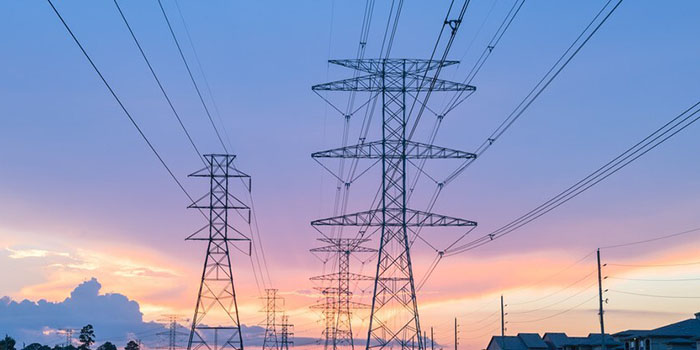
In recent months, millions of Nigerians have grappled with electricity challenges, as the country witnessed power interruptions largely linked to a shortage of gas supply to power generation companies.
This year, Nigeria, Africa’s most populous nation, has experienced at least two major national grid collapses, the first on January 23, and the second four days later, plunging a population of over 200 million people into darkness.
But this pattern of gas shortages to power plants and recurring grid collapses is not new.
In 2024, reports showed that the country’s national grid collapsed up to 12 times, averaging one collapse each month. The trend continued in 2025, with several collapses also recorded.
Also Read
Attempts to address Nigeria’s deteriorating and inefficient electricity sector led the Senate in 2022 to remove power generation, transmission, and distribution from the Exclusive Legislative List to the Concurrent List.
This created the legal framework, through the Electricity Act signed by President Bola Tinubu in June 2023, that now empowers states across the country to make laws regulating electricity.
However, nearly three years after the bill was signed into law, only 15 states, out of 36, including the Federal Capital Territory, have transitioned to regulating their own electricity markets, according to a new update by the Nigerian Electricity Regulatory Commission, established under the Electricity Act 2023.
Here are the states and when they adopted their State Electricity Regulators (SERs):
Enugu — October 22, 2024
Enugu was one of the pioneers in transitioning to State Electricity Regulators (SERs).
On October 22, 2024, the South-East state took full regulatory oversight of its electricity market from the Nigerian Electricity Regulatory Commission. The power to regulate, generate, and transmit electricity in the state was vested in the newly formed Enugu State Electricity Regulatory Commission.
To lay the foundation for regulating the electricity sector in the state, Peter Mbah, Governor of Enugu, signed the state electricity bill into law on September 8, 2023.
Ekiti — October 22, 2024
To establish the legal framework that would empower Ekiti State to regulate its own power sector, Governor Biodun Abayomi Oyebanji signed the Ekiti State Electric Power Sector Law, 2023 (Law No. 11 of 2023), on October 16, 2023.
The law enabled the state to generate, transmit, and distribute electricity independently, in alignment with the federal Electricity Act of 2023.
In March of the following year, the South-West state established the State Electricity Regulatory Bureau (SERB) as the apex regulator of electricity matters, ensuring standards across various market segments. It became the first state in the geopolitical region to do so.
On October 22, 2024, just like Enugu State, the Nigerian Electricity Regulatory Commission relinquished its regulatory oversight to the state.
Ondo — October 23, 2024
Following suit in establishing its own state electricity regulatory body was Ondo, which, on October 23, 2024, transitioned the responsibility for overseeing the generation, transmission, and distribution of power within the state to the Ondo State Electricity Regulatory Bureau (OSERB).
However, Ondo had been one of the early movers in decentralising Nigeria’s electricity sector, having passed its state power law in 2020 and established OSERB in 2021.
Recently, the government granted power generation and distribution licences to Ore Power Limited and ASB Valiant Electricity Limited in a bid to improve electricity supply in the state.
Imo — December 31, 2024
Imo State, another South-East state, joined the group of states regulating their power sector on December 31, 2024.
The bill that empowered the state to take charge of its electricity market was signed into law by Hope Uzodimma, Governor of Imo, in May 2024. This paved the way for the establishment of the Imo State Electricity Regulatory Commission (ISERC), the independent regulatory authority created under the Imo State Electricity Reforms Law 2024.
Oyo — February 5, 2025
Oyo State transitioned to regulating its electricity market on February 5, 2025, following earlier groundwork laid in 2024 when the state received regulatory oversight approval from the Nigerian Electricity Regulatory Commission (NERC).
The legal foundation was established through the Oyo State Electricity Law, which enabled the creation of the Oyo State Electricity Regulatory Commission (OSERC), tasked with licensing and regulating intrastate electricity operations.
In terms of investment, the state has focused on restructuring distribution through the Ibadan Electricity Distribution Company (IBEDC), which created a subsidiary to operate within the state under OSERC’s supervision. This is expected to unlock embedded generation and improve supply reliability across industrial clusters in Ibadan and surrounding areas.
Edo — February 20, 2025
Edo State formally assumed regulatory control of its electricity market on February 20, 2025, after receiving early transition approval as far back as August 2024.
The Edo State Electricity Law established the Edo State Electricity Regulatory Commission (ESERC), empowering the state to oversee generation, distribution, and licensing.
The state has been positioning itself as a power investment hub, with a focus on modular and off-grid solutions. Its collaboration with private sector operators, particularly through Benin Electricity Distribution Company (BEDC), is aimed at strengthening last-mile distribution and attracting independent power producers into the state’s electricity ecosystem.
Kogi — March 12, 2025
Kogi State transitioned on March 12, 2025, building on its earlier regulatory transfer in September 2024.
The Kogi State Electricity Regulatory Commission (KSERC) was established following the passage of the state’s electricity law, giving it authority over intrastate electricity markets.
Kogi’s strategy has leaned toward leveraging its geographic position within the Abuja Electricity Distribution Company (AEDC) network. The state is working with AEDC’s sub-company structure to improve electricity distribution and expand access to underserved communities, particularly in rural areas.
Lagos — June 4, 2025
In December 2024, NERC announced the transfer of regulatory oversight of the electricity market in Lagos State to the newly established Lagos State Electricity Regulatory Commission (LASERC).
Lagos, Nigeria’s commercial hub, fully transitioned on June 4, 2025, after passing one of the most ambitious subnational electricity laws in the country.
In terms of investment, Lagos has taken the lead nationally, attracting private capital into gas-fired and renewable energy projects. The state is actively restructuring its electricity market to reduce dependence on the national grid and improve power supply to industrial zones such as Ikeja, Lekki, and Apapa.
Ogun — June 23, 2025
Ogun State transitioned on June 23, 2025, after completing regulatory transfer arrangements in December 2024.
The Ogun State Electricity Law established the Ogun State Electricity Regulatory Commission (OGERC), giving the state oversight of electricity generation and distribution.
The state has focused heavily on industrial power supply, leveraging its proximity to Lagos. Through partnerships with multiple distribution companies, including IBEDC, Ikeja Electric, and Eko DisCo, Ogun is building a framework to support manufacturing clusters with more stable and dedicated power solutions.
Niger — July 9, 2025
The Niger State Government enacted the Niger State Electricity Law 2024 to empower its regulatory body, the Niger State Electricity Regulatory Commission (NSERC).
In January 2025, NERC issued a transfer order, with the full transition of regulatory authority from NERC to NSERC officially concluding on July 9, 2025.
The state has significant investment potential due to its hydropower assets, including proximity to major dams.
It has also seen growing activity in mini-grid and solar hybrid systems, particularly in rural electrification projects supported by private developers.
Plateau — September 12, 2025
Plateau State assumed regulatory control on September 12, 2025, following its transition framework established earlier in March 2025.
The Plateau State Electricity Regulatory Commission (PSERC) now oversees electricity operations within the state.
The state’s approach has focused on strengthening its partnership with the Jos Electricity Distribution Company (JED), with plans to expand embedded generation and improve supply stability in Jos and surrounding urban centers.
Abia — December 24, 2025
Governor Alex Otti signed the Abia State Electricity Bill into law on March 17, 2025, establishing the legal basis for state regulation. NERC subsequently issued a transfer order, which set the deadline for the full transfer of regulatory oversight to the Abia State Electricity Regulatory Authority (ASERA) on December 24, 2025.
Recent development: Following the transition, the Abia State Government has actively pursued new power solutions. It has granted a license to a private company to build an embedded 100-megawatt (MW) gas-fired power plant in the Aba area, a major step towards improving industrial power supply.
A key highlight is the Aba integrated power initiative, which has positioned Abia as one of the few states with a relatively stable, ring-fenced electricity system driven by private sector participation. This model is expected to be scaled across other parts of the state.
Anambra — January 1, 2026
Anambra State’s transition began with the enactment of the Anambra State Electricity Law (ANEL). Following the inauguration of the Anambra State Electricity Regulatory Commission (ASERC), NERC issued an order transferring regulatory oversight of the electricity market, effective January 1, 2026.
The ASERC started by issuing an interim license to First Power Electricity Company Limited, a subsidiary of the Enugu Electricity Distribution Company (EEDC), to act as an electricity distributor in the state.
Nasarawa — February 3, 2026
Nasarawa State is one of the more recent states to receive approval. In August 2025, NERC issued an order to transfer regulatory oversight to the Nasarawa State Electricity Regulatory Commission (NASERC), with all transfers completed on February 3, 2026.
The state government has already demonstrated its commitment to the reform by inaugurating the board and management of NASERC.
A critical part of the transition plan requires the Abuja Electricity Distribution Company (AEDC) to establish a subsidiary (AEDC SubCo) to manage electricity supply within Nasarawa, which will then be licensed by NASERC
Bayelsa — February 20, 2026
Bayelsa State is the most recent state to join the list. After meeting all legal requirements, including enacting a state electricity law, NERC, on August 25, 2025, issued an order to transfer regulatory oversight to the Bayelsa State Electricity Regulatory Agency (BYERA). The transition was completed on February 20, 2026.
The transition order directs the Port Harcourt Electricity Distribution Company Plc (PHED) to create a subsidiary (PHED SubCo) to handle intrastate supply and distribution in Bayelsa.
The BYERA is now empowered to license providers, set tariffs, and promote investments in off-grid power solutions within the state.

The development is greatly appreciated and the remaining the States should emulate the ideas of having an independent regulatory body to a new system to invest in electricity in order to ease the pressure from demands and needs of the people for economics growth.
Delta state government should as a matter of urgency start it’s state grid for regular electricity
How come Kano is not in the list? 😰😰😰☹️☹️☹️🙄🙄🙄
One of the greatest attributes of PBAT is the decentralised electricity generation and distribution networks,previously monopolised by the federal government, under a deeply corrupt management system that stinks to high heavens to shock of the saints. He deserves KUDOS for this good job.Strange why States with huge gass reserves, flaring everyday,is yet to do better in harnessing this burnt precious commodity.
fake news. which PBAT? Decentralization of electricity generation and dist was a done deal even before he was sworn in.