Follow Us on Google Discover
Ghana is moving closer to re-establishing a national airline with support from Boeing Group, following preliminary studies that confirmed the project’s viability and an agreement on a roadmap for its establishment.
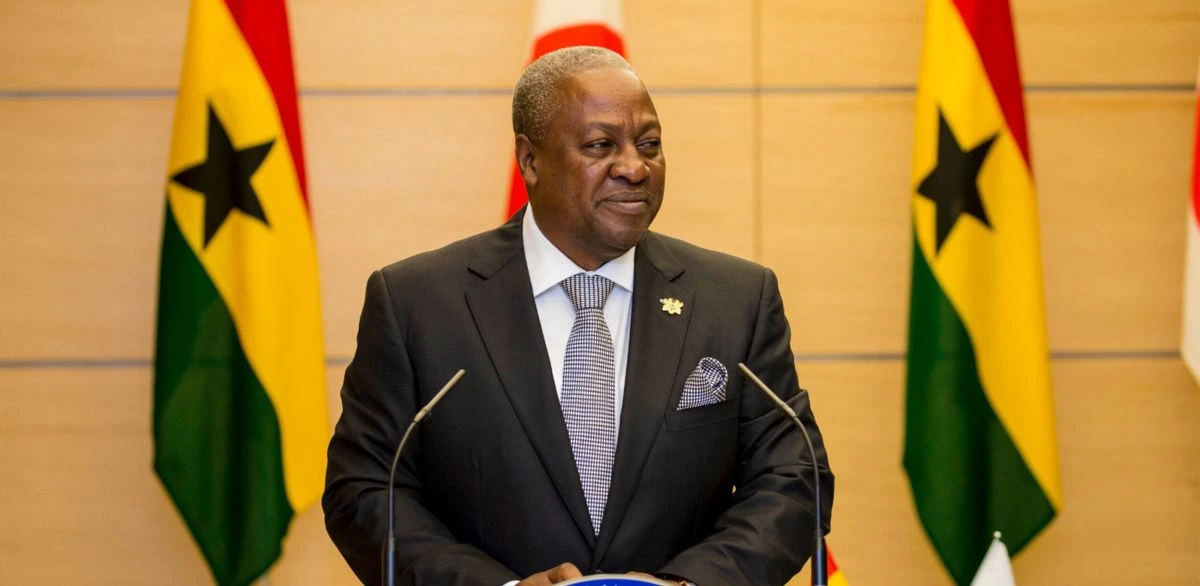
The development was reported by 3News on Monday, November 9, 2026, following President John Dramani Mahama’s meeting with Boeing Group officials.
The proposed airline is expected to strengthen Ghana’s aviation industry, improve air connectivity and position Accra as a major aviation hub in West Africa. The latest development outlines the major steps the government must complete before the proposed carrier can commence operations.
Ghana agrees roadmap for national airline
The Ghanaian government has agreed on a roadmap for establishing the proposed national carrier, outlining the partnerships, regulatory approvals, aircraft selection and financing arrangements required to get the airline operational.
Also Read
According to the report, preliminary studies confirmed the project’s viability, while Boeing assured President Mahama of its continued support throughout the airline’s establishment and operational stages.
The agreed roadmap includes finding a strategic airline partner to support commercial operations, securing a technical partner to provide aviation expertise and operational support, obtaining an Air Operator Certificate (AOC), selecting suitable aircraft and finalising financing arrangements.
A statement outlining the agreement explained:
- “A road map for setting up the new airline has been agreed, which will involve search for a strategic airline partner and a technical partner. It will also include acquisition of an Air Operators Certificate, fleet selection and financing decisions,” the statement read in part
The government expects the proposed carrier to improve the utilisation of existing airport infrastructure, expand air connectivity and create thousands of jobs across the aviation industry.
These employment opportunities are expected to cover pilots, cabin crew, aeronautical engineers and aviation management specialists. However, the proposed airline must first complete its regulatory, partnership and financing requirements before commencing operations.
Nigeria’s troubled national airline history
Ghana’s renewed push for a national carrier comes against the backdrop of Nigeria’s failed attempts to establish a sustainable national airline.
- Nigeria Airways operated from 1958 until its liquidation in 2003. Despite having about 30 aircraft at its peak in the early 1980s, the airline collapsed amid mismanagement, corruption and overstaffing, accumulating approximately $528 million in debt. Its fleet had dwindled to three aircraft, while passenger numbers fell from 2.1 million in 1985 to just 10,000 in the first quarter of 2003.
- The collapse also left thousands of former employees with unpaid benefits, prompting the Federal Government to commence an N18 billion severance settlement for 2,700 former workers in September 2026.
- A subsequent attempt to establish Nigeria Air also failed. Introduced in 2018, the project was revived through a proposed partnership with Ethiopian Airlines, which secured a 49% stake in 2022. However, after the airline’s unveiling in May 2023, the Federal High Court in Lagos declared the partnership invalid in August 2024.
In October 2024, Aviation Minister Festus Keyamo raised concerns that the deal would have required Nigeria to pay Ethiopian Airlines approximately $112 million over three years for aircraft presented as part of its equity contribution. He also questioned its proposed tax exemptions, indemnity provisions and control of key management positions.
The project was subsequently suspended, highlighting the importance of commercial viability, transparent partnerships, sustainable financing and effective government oversight in establishing a national carrier.
Nigeria’s national airline faces key hurdles
Nigeria’s experience provides a relevant context to Ghana’s renewed efforts, particularly as discussions about establishing a viable national carrier have resurfaced in the country.
On November 4, 2026, Nairametrics reported that the Nigerian Senate rejected a proposal seeking the revival of Nigeria Air, with Senate President Godswill Akpabio subsequently calling for a fresh legislative push to establish a national carrier.
Akpabio argued that Nigeria still needed an airline operating under its national flag, recalling that the former Nigeria Airways once had about 32 aircraft on the ground and approximately 40 operating across different routes.
- He also expressed concern about the difficulty of securing private aircraft for charter and the pressure on domestic airlines during the December travel period.
- For Ghana, the immediate priority is to translate the agreed roadmap into an operational airline through the completion of the outlined requirements.
- This includes securing suitable strategic and technical partners, obtaining the necessary operating certification, selecting aircraft and putting sustainable financing arrangements in place.
While preliminary studies have confirmed the project’s viability, the proposed airline is yet to complete these requirements. Its ability to deliver on the government’s expectations of improved connectivity, better airport infrastructure utilisation and thousands of jobs will depend on successfully navigating these stages.