Follow Us on Google Discover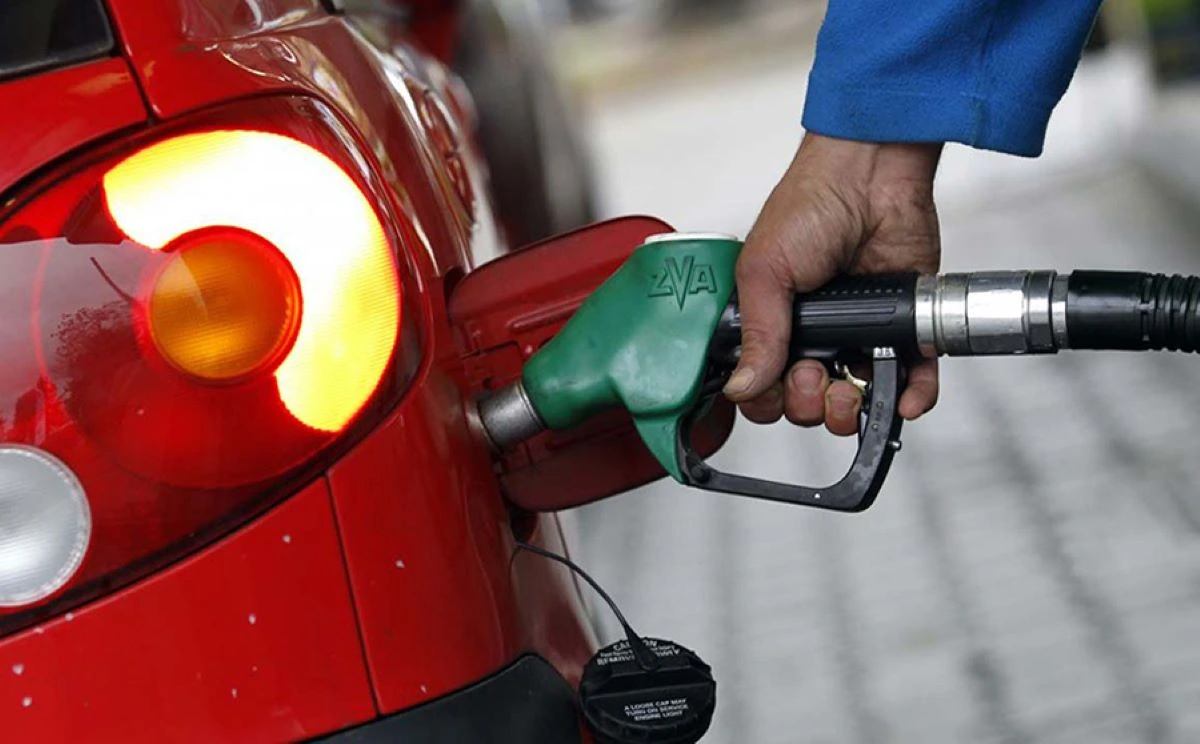
South Africa’s petrol price has hit a record $1.82 per litre as the Iran conflict drives a sharp increase in global oil prices.
The Department of Mineral and Petroleum Resources announced the latest fuel-price adjustment on Monday.
The 95-octane petrol price in Gauteng will rise by R3.33 ($0.20) to a record R30.25 ($1.82) per litre from October 7, while diesel prices are also expected to increase as much as R3.24 per litre.
The increase reflects growing pressure from higher international crude prices and renewed concerns over global oil supplies, highlighting the fuel-price risks facing oil-dependent economies such as Nigeria.
Oil price surges
The adjustment reflects the impact of international oil prices on South Africa’s monthly fuel-price mechanism, with crude rising to around $100 per barrel last month as the US and Iran exchanged attacks.
- A drone attack on Saudi Arabia’s East-West Pipeline further heightened concerns over global supply.
- As of Tuesday, data from oilprice.com shows that Brent Crude is trading around $100 per barrel while oil in the OPEC Basket to $109.4 per barrel.
The development also highlights the broader economic impact of higher fuel costs across Africa, where heavy reliance on road transportation can make households and businesses particularly vulnerable to energy-price shocks.
For fuel-importing economies, higher international prices also increase foreign-exchange requirements, put pressure on domestic currencies, and raise the cost of imported goods and services.
South Africa’s exposure
South Africa’s latest fuel-price increase follows months of concern over the country’s exposure to global energy-market disruptions.
- In July 2026, Nairametrics reported that South Africa planned to build strategic petroleum reserves of about 36 million barrels, equivalent to roughly 60 days of national demand, to strengthen energy security amid concerns over global supply disruptions.
- Later that month, South Africa’s inflation rate rose to 5.0% in June from 4.5% in May, with energy and import costs contributing to renewed price pressures. The development underscored the sensitivity of domestic inflation to changes in global energy prices.
- The South African Reserve Bank subsequently kept its benchmark interest rate at 7% in July and warned of inflation risks, while its adverse scenario assumed crude oil could reach $100 per barrel in 2026.
By August, Crude oil had risen above $90 per barrel as renewed US-Iran strikes around the Strait of Hormuz heightened concerns over global supply disruptions, signaling the potential for further energy-price pressures.
Nigeria is also feeling the shock
Nigeria is also feeling the impact of the global oil shock, with higher crude prices putting pressure on petrol prices and operating costs, although expanding domestic refining capacity provides some insulation from imported refined-product costs.
Nairametrics reported on September 29 that Nigerian petrol prices had risen from about N1,077–N1,205 per litre in early July to N1,395–N1,500 in September, with oil marketers attributing the pressure partly to the Middle East conflict and higher crude prices.
Earlier, on September 24, Brent crude had climbed above $106 per barrel as the Iran conflict heightened concerns over wider supply disruptions, raising the risk of higher fuel, transportation and operating costs in Nigeria.