Follow Us on Google Discover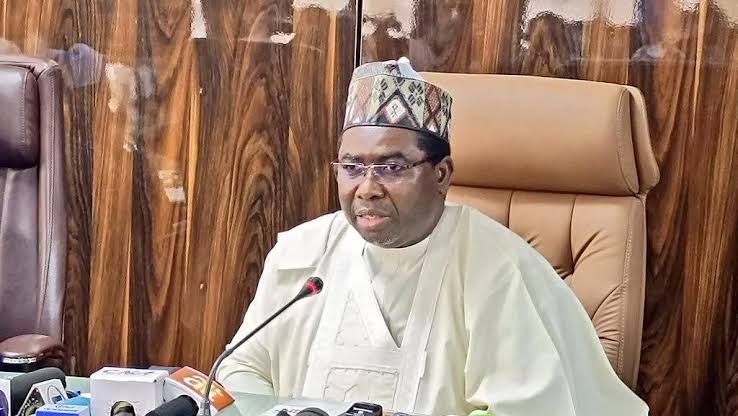
The Independent National Electoral Commission (INEC) has said its staff are the least-paid workers in Nigeria, as it moves to improve their welfare ahead of the 2027 general elections.
INEC Chairman, Prof. Joash Amupitan, disclosed this on Tuesday while presenting the commission’s preparations for the 2027 elections at a World Press Conference in Abuja.
Amupitan said the commission had taken “some very radical steps” to prioritise the welfare of its staff, including removing INEC from the civil service payment structure and adopting a separate salary structure.
INEC moves to improve staff welfare
Amupitan said the decision to improve staff welfare was driven by the need to demand greater responsibility from its personnel.
- “INEC staff are the least paid in Nigeria. So, we felt if we want to demand and hold our staff responsible, we should give them a living wage,” he said.
The INEC chairman said the commission had prioritised the welfare of its personnel as part of the changes being implemented.
Amupitan said INEC staff are not core civil servants but had previously been placed under the civil service payment structure.
According to him, the commission has now been removed from that structure to operate its own electoral and salary structure.
- “We are not core civil servants, but we have been lumped under the civil service payment structure, which we have just removed INEC from, to have their own separate structure, electoral structure and a separate salary structure from the civil service,” he said.
He said the changes were among several gaps identified by the commission as part of efforts to address challenges within the electoral system.
- “So, those are some of the gaps, there are many others, that we have discovered, and we felt that if they are addressed squarely, it will be able to solve some of the malaise we have with the system,” Amupitan said.
Plans for election reruns
Amupitan also said the commission was making provisions for rerun elections as part of its preparations for the 2027 general elections.
He said reruns are a constitutional requirement and must therefore be incorporated into the commission’s election planning.
- “On the issue of rerun, it’s a constitutional matter. And as we are planning for the election, you have to plan for a rerun,” he said.
According to Amupitan, the Constitution provides the procedures and protocols for conducting rerun elections.
INEC outlines scale of 2027 elections
The commission’s decision to review its staff welfare comes as it prepares for a large-scale electoral exercise in 2027.
Earlier this year, INEC told the National Assembly that it requires N873.78 billion to conduct the 2027 general elections, alongside N171 billion for its operations in 2026. The proposed election budget is significantly higher than the N313.4 billion released for the 2023 elections.
- The scale of the exercise is also reflected in the number of personnel required for the elections.
- INEC said in May that it would require 1.4 million NYSC corps members, with 707,384 expected to serve during the presidential and National Assembly elections and another 707,384 for the governorship and State Houses of Assembly elections.
More recently, INEC said Nigeria’s voter register had surpassed 103 million following the completion of its three-phase Continuous Voter Registration exercise and a final cleanup using the Automated Biometric Identification System.