Follow Us on Google Discover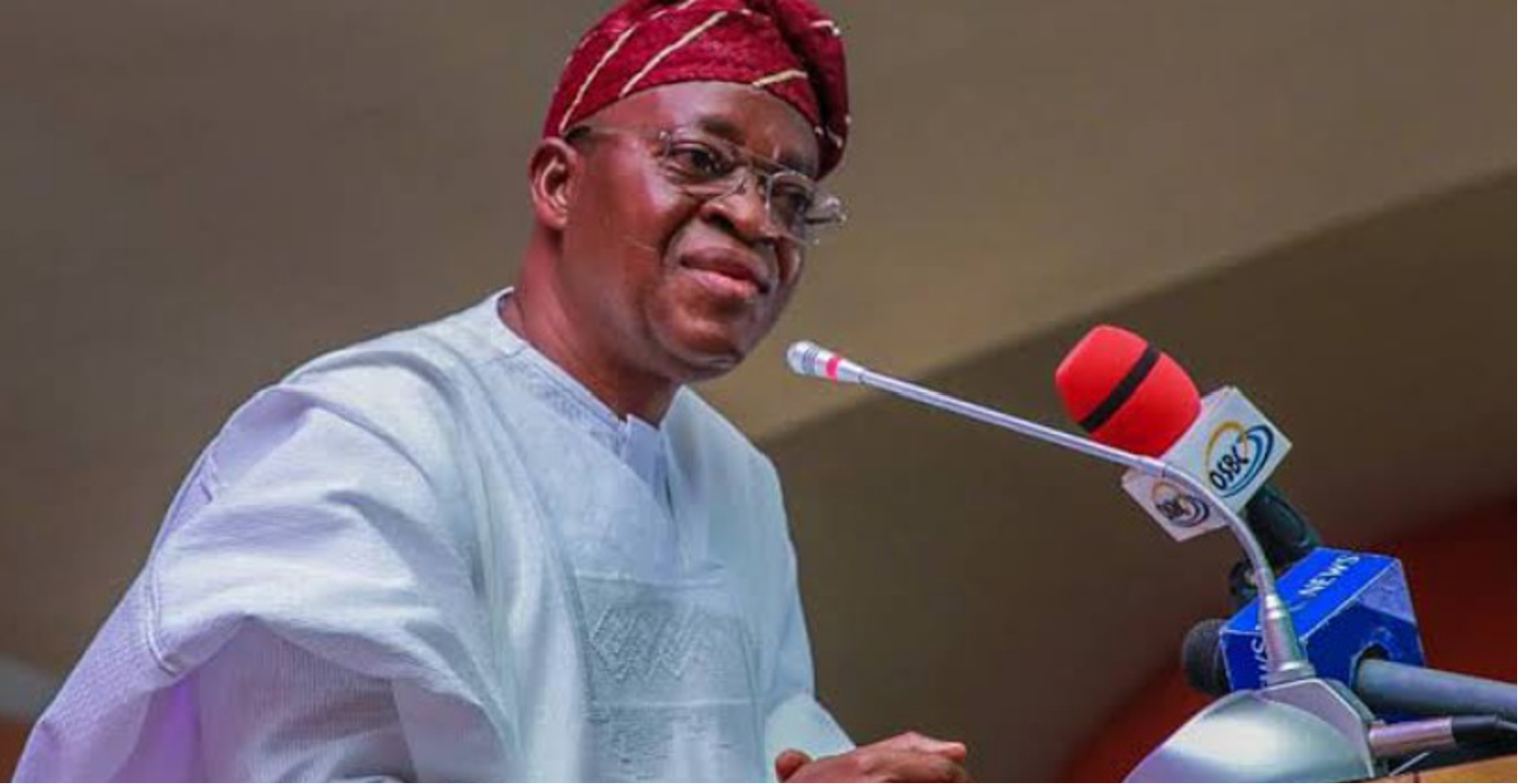
The Federal Government has approved the modernisation and upgrade of four ports outside Lagos, alongside the development of six deep seaports in Akwa Ibom, Cross River, Bayelsa, Ogun, Ondo and Rivers states.
The Minister of Marine and Blue Economy, Adegboyega Oyetola, announced the approvals in a statement on his official X account on Sunday.
The four ports are Onne and Rivers ports in Rivers State, Delta Port in Delta State and Calabar Port in Cross River State, while the six deep seaports are Ibom, Bakassi, Agge, Gateway, Ondo and Bonny.
FG approves four port upgrades
Oyetola said the approval builds on the earlier modernisation and upgrade of Apapa and Tin Can Island ports in Lagos. He said extending the programme beyond Lagos would complement investments in the two Lagos ports while helping to reduce the concentration of cargo traffic around the Lagos axis.
Also Read
- “I am pleased to announce that the Federal Government has approved the comprehensive modernisation and upgrade of Onne, Rivers, Delta and Calabar Ports,” Oyetola said.
- He said the upgrades would improve cargo handling, reduce vessel turnaround times and strengthen regional connectivity.
- Oyetola added that the improvements would make goods movement more predictable and cost-effective while supporting trade, industrial activity and regional development.
- He also said the government had approved the development of the Ibom, Bakassi, Agge, Gateway, Ondo and Bonny Deep Seaports.
The minister said combining the modernisation of existing ports with new deep seaports would expand Nigeria’s maritime capacity and create stronger economic corridors across the country.
Nigeria plans integrated maritime network
Oyetola said the government’s approach extends beyond port infrastructure to an integrated maritime and logistics system in which ports, roads, rail, inland waterways and other transport infrastructure work together to facilitate cargo movement.
He said the objective is to reduce the time and resources businesses spend moving goods while creating an environment that encourages investment and supports job creation.
- The minister said the Ministry would work with state governments, terminal operators, investors, shipping companies and other stakeholders to ensure the projects deliver tangible improvements.
- He said Nigeria has the geography, market and maritime resources to become a leading maritime hub.
- Oyetola added that the government’s role is to provide the infrastructure, policies and enabling environment required to turn that potential into sustainable economic value.
The projects form part of the government’s broader plan to position Nigeria as a major maritime and logistics hub in Africa.
Badagry port talks expand capacity
The Minister of Marine and Blue Economy had said the Federal Government recently began exclusive talks with APM Terminals on the development of the proposed Badagry Deep Seaport in Lagos State.
The talks followed the signing of a Memorandum of Understanding with Badagry Port Development Limited after discussions with APM Terminals in Copenhagen, Denmark.
The proposed port is expected to expand Nigeria’s deepwater capacity, accommodate larger container vessels and create opportunities for cargo handling and transshipment.
The Badagry project forms part of wider efforts to expand deep-sea port capacity along Nigeria’s coastline.
Nigerian ports record stronger activity
Nigerian ports recorded stronger activity in 2026, with cargo volumes, vessel calls and container traffic increasing during the first half of the year.
In Q1 2026, cargo throughput rose 11.6% year-on-year to 32.38 million metric tonnes, while the gross registered tonnage of ocean-going vessels increased 19.5% to 46.75 million tonnes.
In Q2, cargo throughput increased 12.3% to 35.74 million metric tonnes from 31.83 million metric tonnes a year earlier.
Ocean-going vessel calls rose 14.4% to 1,201, while their gross registered tonnage increased 22.2% to 49.95 million tonnes, indicating larger vessel calls.
Container traffic rose 11.3% to 602,392 twenty-foot equivalent units, while transshipment reached 29,038 TEUs compared with zero recorded in Q2 2025.
The growth follows a strong 2025 performance, when total cargo throughput rose 24.8% to 129.3 million metric tonnes and container traffic increased 25.7% to more than 2.1 million TEUs.
Government backs maritime sector financing
The Federal Government has also moved to improve financing for indigenous participation in Nigeria’s maritime sector through the Cabotage Vessel Financing Fund (CVFF), more than two decades after its establishment.
- President Bola Tinubu approved the disbursement of the fund, with Oyetola directing the Nigerian Maritime Administration and Safety Agency (NIMASA) and 12 Primary Lending Institutions to fast-track the process.
- NIMASA received 92 applications, with 20 submitted for consideration and one reviewed and forwarded.
The CVFF is structured to provide low-interest, long-term financing for eligible maritime operators and is expected to support indigenous participation in shipping and create more than 30,000 jobs.
The fund was estimated at N44.64 billion in 2019, while NIMASA valued it at about $700 million in 2025.