Follow Us on Google Discover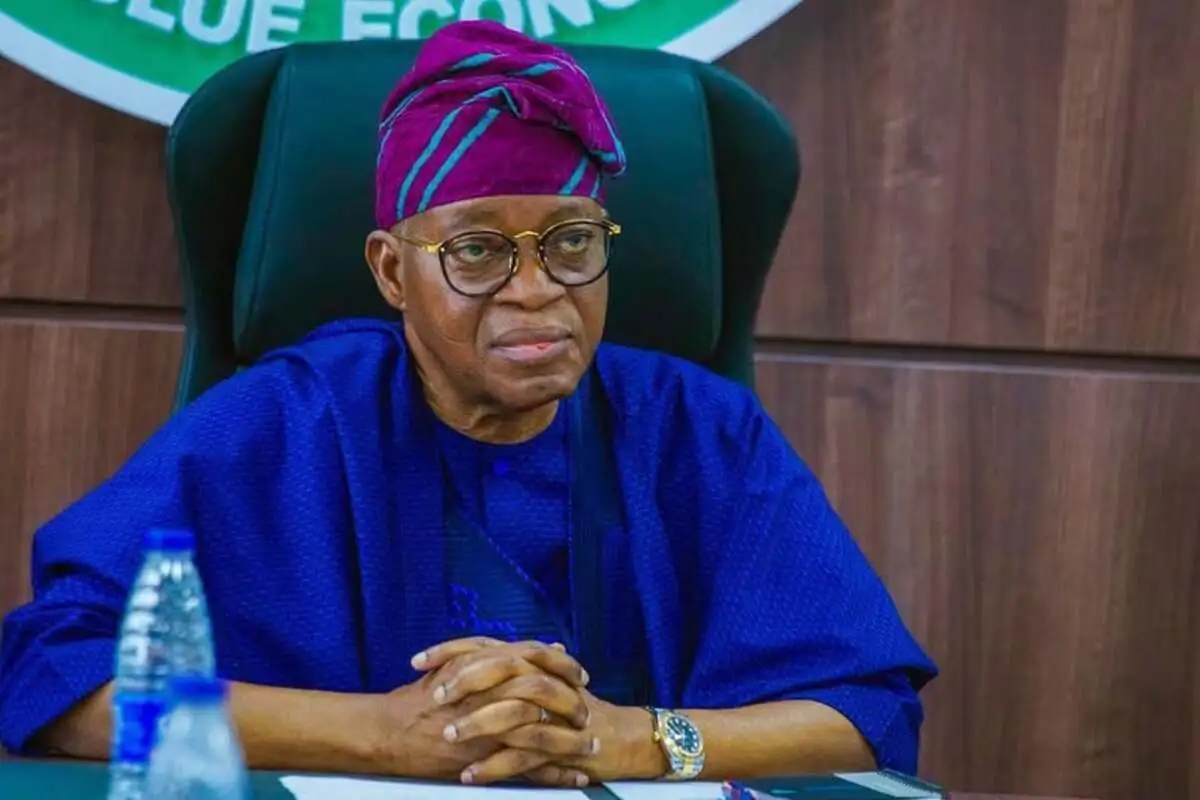
The Federal Government has begun exclusive talks with APM Terminals on the development of the proposed Badagry Deep-Seaport in Lagos State.
The development was disclosed by the Minister of Marine and Blue Economy, Adegboyega Oyetola, in a statement posted on his X account on Tuesday.
The talks followed the signing of a Memorandum of Understanding (MoU) with Badagry Port Development Limited after discussions with APM Terminals in Copenhagen, Denmark.
The proposed port is expected to expand Nigeria’s deepwater capacity, accommodate larger container vessels and create new opportunities for cargo handling and transhipment.
What the government is saying
Oyetola said the engagement with APM Terminals represents an important step towards advancing the proposed Badagry Deep-Seaport project. He said the project is also part of the Federal Government’s broader strategy to attract private-sector investment through public-private partnerships.
- “Yesterday in Copenhagen, Denmark, we took an important step towards unlocking a new chapter in Nigeria’s maritime and economic development,” Oyetola said.
- “I led a Federal Government delegation that engaged @APMTerminals on the proposed development of the Badagry Deep-Seaport, culminating in the signing of a Memorandum of Understanding (MoU) with Badagry Port Development Limited for exclusive negotiations on the project,” he added.
The minister said the proposed port would provide additional deepwater capacity, enable larger vessels to call at Nigerian ports and increase cargo-handling capacity, while creating opportunities for transshipment serving Nigeria and the wider West African market.
The project is also expected to support jobs, skills development, investment and enterprise across the maritime value chain, including logistics, transportation, manufacturing and warehousing.
Nigeria plans wider deep-seaport network
The Badagry project forms part of wider efforts to expand Nigeria’s deep-sea port capacity along the country’s coastline. Similar development efforts are underway or being considered in Akwa Ibom, Bayelsa, Cross River, Ogun, Ondo and Rivers states.
Deep-sea ports are designed around naturally deep-draft channels that can accommodate larger vessels and higher cargo volumes.
The additional capacity is expected to improve maritime connectivity and strengthen Nigeria’s potential as a regional shipping and transshipment hub.
The statement added that the government is also working to modernise existing ports, with the Nigerian Ports Authority prioritising the rehabilitation of Apapa and Tin Can Island ports, support for Lekki and Badagry, the revitalisation of Eastern ports and the development of digital systems including the Port Community System and National Single Window.
Get up to speed
Nigerian ports have recorded stronger activity in 2026, with cargo volumes, vessel calls and container traffic increasing during the first half of the year.
- In Q1 2026, cargo throughput rose 11.6% year-on-year to 32.38 million metric tonnes, while the gross registered tonnage of ocean-going vessels increased 19.5% to 46.75 million tonnes.
- In Q2, cargo throughput increased 12.3% to 35.74 million metric tonnes from 31.83 million metric tonnes a year earlier.
- Ocean-going vessel calls rose 14.4% to 1,201, while their gross registered tonnage increased 22.2% to 49.95 million tonnes, indicating larger vessel calls.
- Container traffic rose 11.3% to 602,392 twenty-foot equivalent units (TEUs), while transshipment reached 29,038 TEUs compared with zero recorded in Q2 2025.
The growth follows a strong 2025 performance, when total cargo throughput rose 24.8% to 129.3 million metric tonnes and container traffic increased 25.7% to more than 2.1 million TEUs.
What you should know
The Federal Government has also moved to improve financing for indigenous participation in Nigeria’s maritime sector through the Cabotage Vessel Financing Fund (CVFF), more than two decades after its establishment.
President Bola Tinubu approved the disbursement of the fund, with the Minister of Marine and Blue Economy, Adegboyega Oyetola, directing the Nigerian Maritime Administration and Safety Agency (NIMASA) and 12 Primary Lending Institutions to fast-track the process.
- NIMASA received 92 applications, with 20 submitted for consideration and one reviewed and forwarded.
- The CVFF is structured to provide low-interest, long-term financing for eligible maritime operators.
- The fund is expected to support indigenous participation in shipping and create more than 30,000 jobs.
- The fund was estimated at N44.64 billion in 2019, while NIMASA valued it at about $700 million in 2025.
The development of additional deep-seaport capacity, alongside improved access to maritime financing, forms part of broader efforts to expand Nigeria’s role in regional and international maritime trade.