Follow Us on Google Discover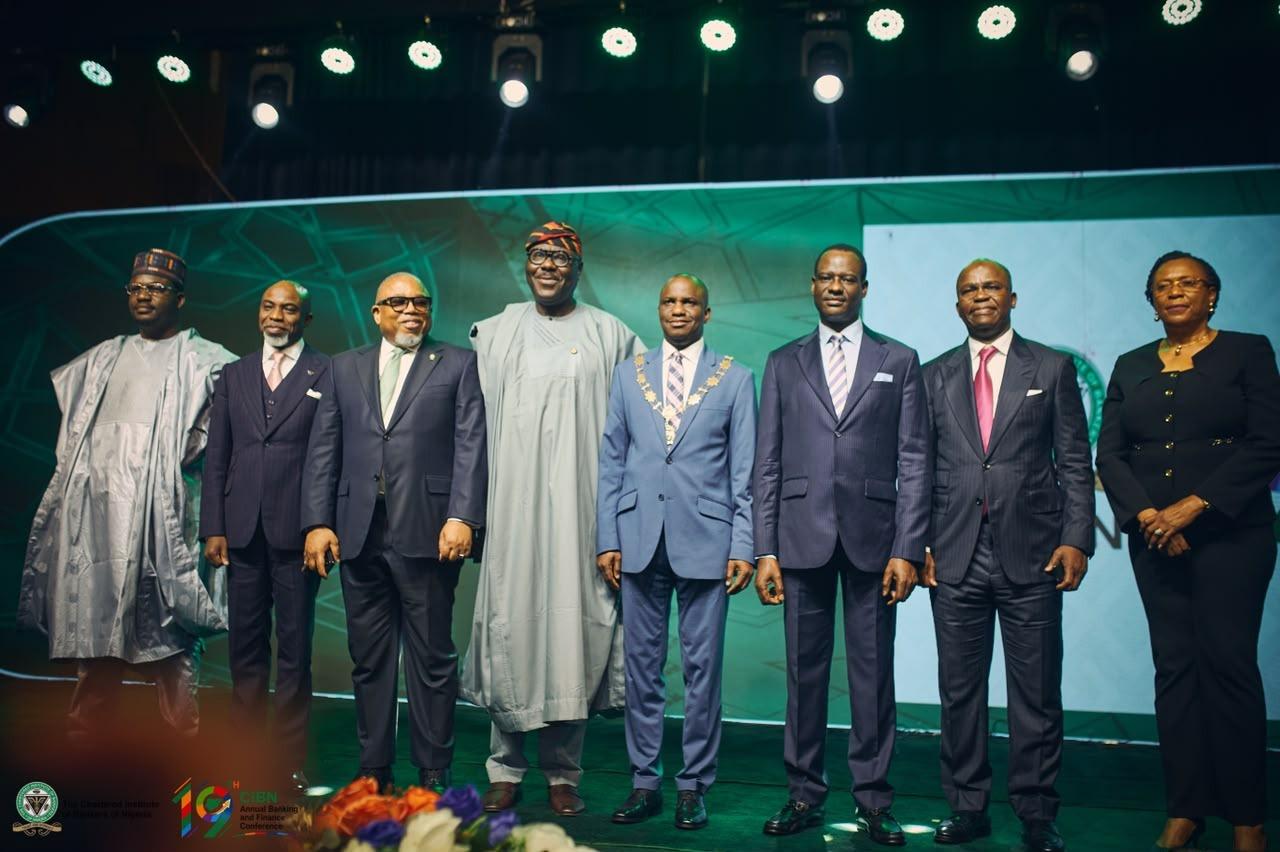
The Chartered Institute of Bankers of Nigeria (CIBN) has said that micro, small and medium-sized enterprises (MSMEs) are still being constrained by high operating costs and other factors despite the macroeconomic progress recorded under the current Federal Government.
CIBN President and Chairman of Council, Dr. Dele Alabi, disclosed this on Tuesday at the 19th Annual Banking and Finance Conference in Abuja, which was attended by Nairametrics.
The development comes over a year after data from the National Credit Guarantee Company (NCGC) cited that an estimated 80% of MSMEs in Nigeria remain excluded from formal credit access due to stringent collateral requirements and lenders’ aversion to risk.
What the CIBN President is saying
Alabi explained that Nigeria is not insulated from global economic shocks, adding that they reach the nation through volatile crude oil and gas prices; higher costs of petrol, diesel, cooking gas and fertiliser; rising freight and logistics costs; exchange-rate pressures; and shifts in capital flows.
He noted the multi-layered response by the Federal Government and stakeholders, involving closer coordination of fiscal, monetary and energy policies, which, according to him, has led to support for domestic production and food supply, as well as more targeted social protection for vulnerable households.
- “The good news is that certain policies implemented in the past couple of years are beginning to yield fruit. Likewise, recent indicators show that these efforts are beginning to rebuild confidence,” he said.
He added that the latest figures from the National Bureau of Statistics’ Q2 2026 Gross Domestic Product Report, alongside the fact that 33 banks have met the revised minimum capital requirements, with N4.65 trillion in new capital raised, are important signals of stronger macroeconomic stability, improving investor confidence and the prospect of broader access to global capital.
- However, he stressed that the true test of these milestones is whether they “translate into lower living costs, more jobs, higher real incomes, affordable credit, reliable public services and reduced poverty.”
- “Macroeconomic progress must therefore be felt at the micro level—in households, small businesses and the daily lives of ordinary Nigerians,” he said.
- “MSMEs are central to employment, enterprise and local value creation, but many remain constrained by high operating costs, unreliable infrastructure, limited access to markets, low productivity, skills gaps and slow digital adoption,” he stated.
He highlighted that the next phase of reforms must focus on moving stability from national balance sheets to business balance sheets and household budgets.
More details
Speaking as Guest of Honour, President Bola Tinubu, who was represented by the Minister of Finance and Coordinating Minister of the Economy, Taiwo Oyedele, said his administration had engaged in difficult but necessary reforms targeted at addressing structural weaknesses accumulated over decades.
- “Nigeria remains the largest economy in Africa by scale of opportunities,” he said.
- He maintained that with the ongoing reforms, “credibility is rising and prosperity is coming.”
Governor of the Central Bank of Nigeria, Yemi Cardoso, represented by CBN Deputy Governor Philip Ikeazor, said the solution to addressing global economic shocks must be multi-layered.
He added that if sub-nationals and other stakeholders committed to working with the fiscal authorities, inflation would be brought down to single digits.
He maintained that no economy can thrive without high-performing banks or with weak banks.
The Managing Director of the Nigeria Deposit Insurance Corporation, Mr. Thompson Oludare Sunday, represented by E. Chidinma, said that as Nigeria pursues sustainable economic development, the banking industry must continue to provide the financing required to support entrepreneurship, infrastructure development, agriculture, manufacturing and other productive sectors.
The official added that the disruptions confronting the nation today require continued investment in people, technology, governance and institutional capacity, as well as an unwavering commitment to depositor protection and financial system stability.
What you should know
In June 2026, the Federal Executive Council (FEC) approved financing packages worth about $2.76 billion, €200 million and ₦215 billion to support transportation, agriculture, renewable energy, infrastructure and micro, small and medium-sized enterprises (MSMEs).
The approvals were announced by the Minister of Finance and Coordinating Minister of the Economy, Taiwo Oyedele, after a FEC meeting chaired by President Bola Tinubu.
The approvals signal the Federal Government’s continued reliance on external and development financing to accelerate infrastructure delivery, strengthen agricultural productivity, expand renewable energy access and improve financing for small businesses.