Follow Us on Google Discover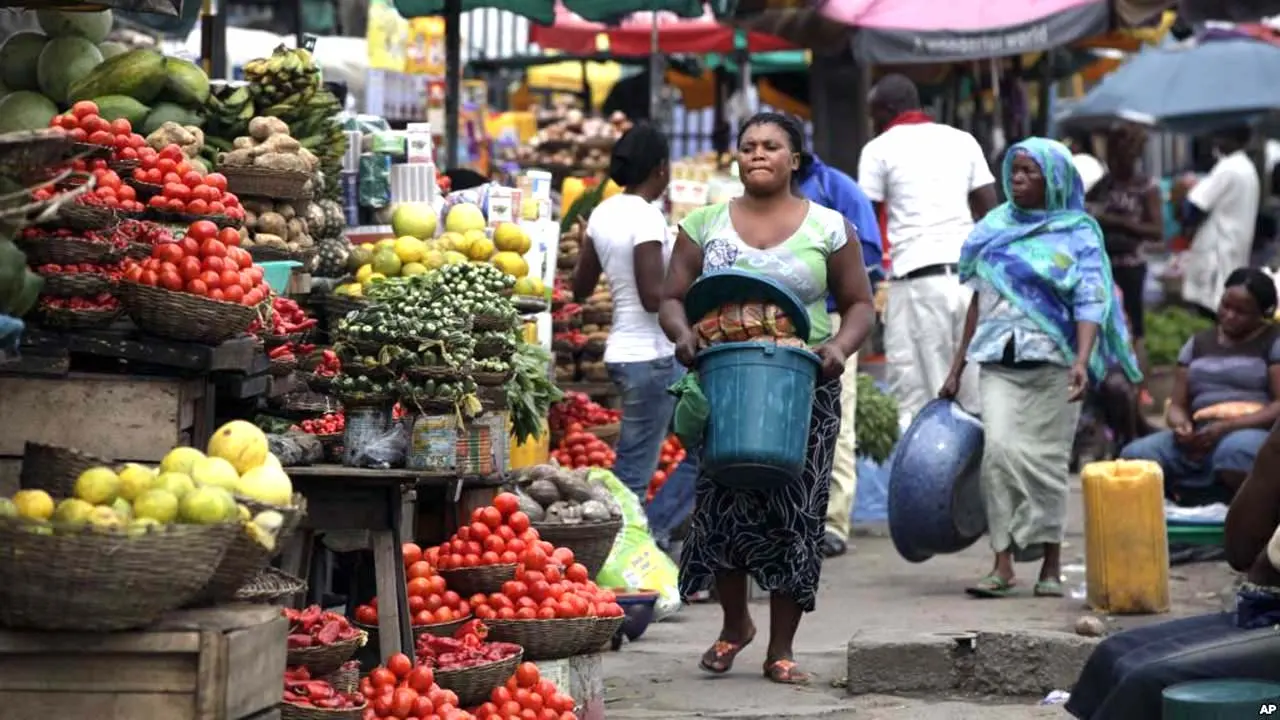
Nigeria’s food inflation rate declined to 19.57% in August 2026, marking its first drop in six months and ending five consecutive months of increases.
This was according to the latest Consumer Price Index (CPI) report by the National Bureau of Statistics (NBS).
The August rate represents a 0.74 percentage-point decline from the 20.31% recorded in July 2026. It was also 5.73 percentage points lower than the 25.30% recorded in August 2025.
What the data shows
The decline interrupts a sustained rise in food inflation that began in March. Food inflation increased from 8.89% in January to 12.12% in February, 14.31% in March, 16.06% in April, 16.96% in May, 17.52% in June and 20.31% in July, before easing to 19.57% in August.
Also Read
- The NBS report released on Monday stated, “The Food inflation rate in August 2026 was 19.57% on a year-on-year basis and stood at 25.30% in the same month of the preceding year (August 2025).”
The moderation was more pronounced on a month-on-month basis, with food inflation dropping to 1.02% in August from 5.56% in July, representing a decline of 4.54 percentage points based on the published rates.
This means that while food prices continued to increase on average during August, they did so at a considerably slower pace than in July.
- The NBS said, “This shows that the average prices of food items are increasing at a decreasing rate in August 2026.”
It attributed the slowdown mainly to changes in the average prices of several food products, including palm oil, carrots, pepper, onions, cassava flour, beef, yam flour, water yam, melon (egusi), fresh ginger, fresh fish, Irish potatoes, wheat grain, frozen chicken and turkey meat, among others.
The average annual food inflation rate for the 12 months ending August 2026 stood at 15.70%, compared with 29.86% recorded for the corresponding period ending August 2025.
Food remains biggest inflation driver
Despite the August moderation, food remained the largest contributor to Nigeria’s overall inflation.
- Food and non-alcoholic beverages contributed 6.16 percentage points to the year-on-year headline inflation rate, significantly ahead of restaurants and accommodation services at 1.99 percentage points, transport at 1.64 percentage points, and housing, water, electricity, gas and other fuels at 1.30 percentage points.
- At the state level, Adamawa recorded the highest year-on-year food inflation at 38.85%, followed by Zamfara at 37.96% and Bayelsa at 36.20%.
- Borno recorded food deflation of -4.04%, while Jigawa recorded -0.23%. Kebbi had one of the slowest increases at 3.47%.
On a month-on-month basis, food inflation was highest in Katsina at 9.48%, Rivers at 8.86% and Osun at 8.32%. Taraba recorded the sharpest decline at -12.42%, followed by Borno at -12.15% and Bauchi at -8.88%.
The NBS cautioned against direct comparisons of inflation rates across states because consumption patterns and the weights assigned to food and non-food items differ across locations.
What you should know
Nigeria’s headline inflation eased marginally to 15.39% in August from 15.43% in July, while month-on-month headline inflation slowed sharply to 0.71% from 1.57%.
Nairametrics earlier reported that analysts’ forecasts put August headline inflation between 15.3% and 15.94%, compared with 15.43% recorded in July.
Analysts also expected food inflation to remain the major pressure point in August, even as core inflation continues to moderate.