Follow Us on Google Discover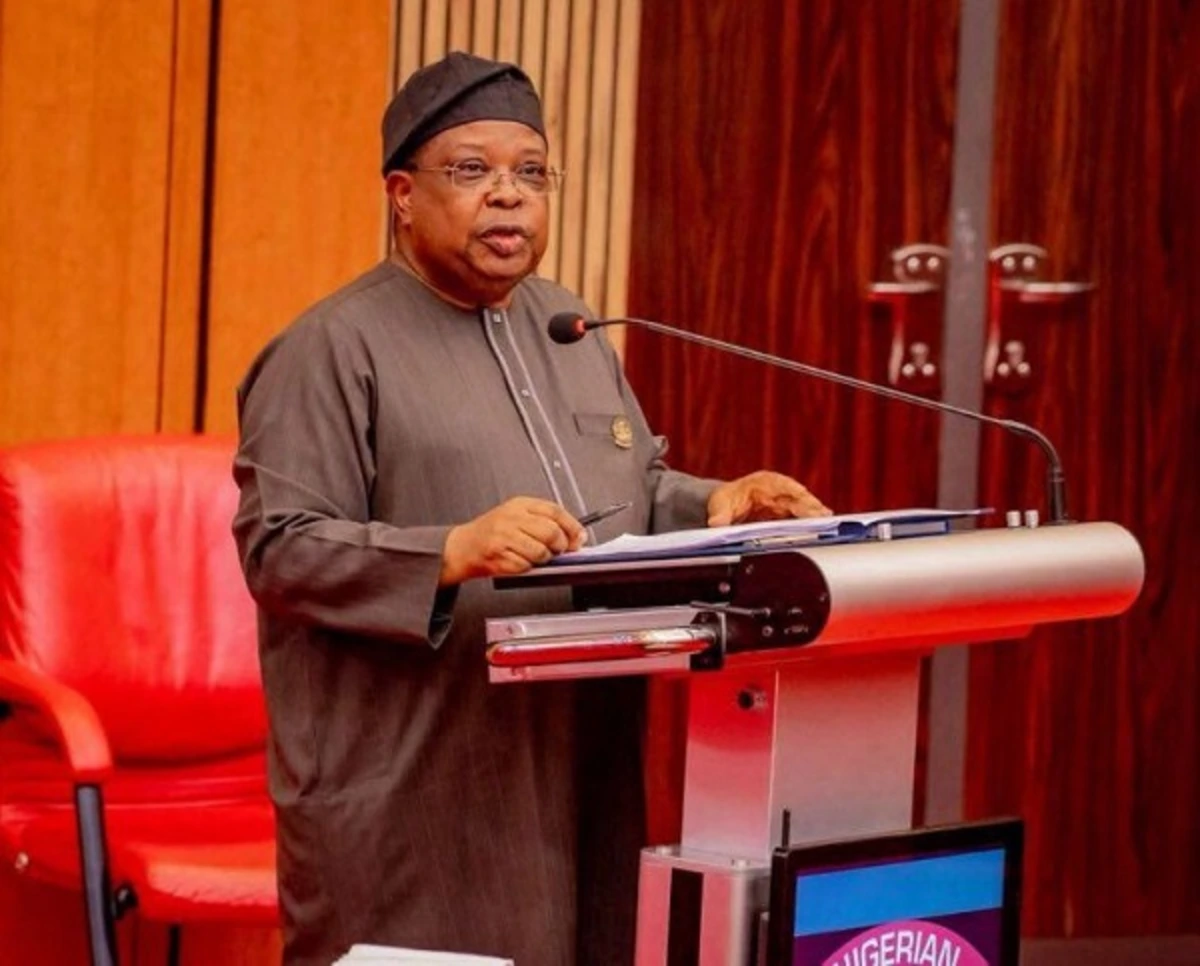
Nigeria’s power sector reforms could provide a model for developing economies seeking to strengthen energy security amid rising geopolitical tensions and fragmentation, Minister of Power Joseph Tegbe has said.
Tegbe made the remarks in a keynote address at the opening plenary of the 50th edition of the Middle East Energy 2026 Leadership Summit in Dubai, where he spoke on “Energy Security and the Effect of Geopolitics.”
According to a statement issued by Adeola Labzy, Special Adviser, Media and Publicity to the Minister, Tegbe told ministers, industry leaders and international delegates that energy security can no longer be measured by the availability of oil and gas reserves alone.
What the Minister is saying
The Minister said modern energy security depends on the resilience of the entire energy system, including critical mineral supply chains, electricity grids, financing and institutions capable of maintaining supply during periods of disruption.
He positioned Nigeria as an important player in this evolving energy landscape, highlighting the country’s more than 200 trillion cubic feet of proven gas reserves and its long-standing record of supplying liquefied natural gas (LNG) to markets in Europe and Asia.
Tegbe also identified the Electricity Act 2023 as a major turning point in Nigeria’s electricity market, saying the legislation ended the long-standing federal monopoly and opened the way for 37 emerging electricity markets across the country.
He said the reform agenda under President Bola Ahmed Tinubu is focused not only on restructuring the market but also on creating the regulatory certainty required to attract long-term investment.
- “Capital does not flee risk; it flees uncertainty. Investors will price risk all day long; what they cannot price is a rule that changes after the contract is signed,” Tegbe said.
According to him, Nigeria’s power reforms are therefore fundamentally about building credibility through regulatory certainty, contract sanctity and bankable offtake arrangements.
The Minister said Africa should no longer be viewed as peripheral to the global energy conversation.
With about 600 million Africans still without access to electricity, he argued that the continent’s natural resources, solar potential, youthful population and rapidly growing energy demand will have significant implications for global energy markets.
He urged international investors and development partners to move beyond extracting Africa’s raw resources and instead support local processing, manufacturing, skills development and long-term financing.
- “Nigeria has chosen to build. Africa has chosen to build. And we invite you, in the spirit of this remarkable city and this landmark fiftieth summit, to build with us,” Tegbe said.
The Minister is expected to continue his engagements in Dubai during the week, including participation in a ministerial fireside discussion on financing Africa’s power future under the summit’s Africa Spotlight programme.
Get up to speed
President Bola Ahmed Tinubu, in June 2023, assented to the Electricity Act 2023, a landmark legislation originally passed by the National Assembly in July 2022.
- The new Act replaces the Electric Power Sector Reform Act 2005 and introduces a comprehensive framework to guide the post-privatisation phase of the Nigerian Electricity Supply Industry (NESI).
- In March, the Federal Government said its reforms in the power sector have attracted $2 billion in investment, with liabilities reduced to N146 billion.
FG said the reforms have already led to the activation of 16 state electricity markets, while also stimulating competition and innovation within the industry.
- In April, PricewaterhouseCoopers (PwC) said Nigeria’s ongoing electricity sector reforms hinge on clearer regulatory frameworks and stronger coordination between federal and state authorities.
PwC argues that regulatory uncertainty and overlapping mandates between federal and state authorities remain one of the biggest risks to Nigeria’s electricity reforms.
What you should know
As part of reforms in the power sector, the Nigerian Electricity Regulatory Commission (NERC) inaugurated a new forum aimed at enhancing coordination and effectiveness in electricity regulation across Nigeria.
- Nairametrics earlier reported that DisCos are facing renewed financial pressure following a directive by the NERC requiring them to refund N20.33 billion to customers who purchased prepaid meters under the Meter Asset Provider (MAP) scheme.
- NERC previously directed that all refunds under the amended order must be completed within 12 months, with reimbursements applied directly to customer electricity bills.
In February, the Federal Government announced plans to share the electricity subsidy costs with other tiers of government, like the state and local governments, from 2026.