Follow Us on Google Discover
The Federal Government has announced plans to share the electricity subsidy costs with other tiers of government, like the state and local governments, from 2026, thereby ending the burden of carrying the subsidy in the power sector.
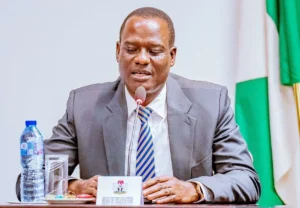
This was made known by the Director-General of the Budget Office of the Federation, Tanimu Yakubu, while presenting a keynote address during a training and sensitisation workshop for Ministries, Departments, and Agencies (MDAs) on Monday, February 2, 2026, in Abuja.
The training programme is on the 2026 post-budget preparation process using the Government Integrated Financial Management Information System Budget Preparation Sub-System.
Yakubu said the president wants electricity subsidy costs to be explicit, practical and transparent, warning that no level of government should carry hidden or unpaid obligations.
What the DG Budget Office of the Federal is saying
Yakubu noted that this new directive is not a punishment but rather an alignment, adding that it could act as an incentive for the different levels of government to support cost-reflective efficiency as well as have a power market that can deliver.
He said, “If we want a stable power sector, we must pay for the choices we make. When tariffs are held below cost, a gap is created. That gap is a subsidy. And a subsidy is a bill.”
He added that from 2026, the Federal Government would no longer treat electricity subsidies as an open-ended obligation borne solely by the centre, especially where policy decisions and political benefits are shared.
“In 2026, we will stop pretending that this bill can be left to the Federal Government alone, especially where the policy choice or the political benefit is shared across tiers of government,” Yakubu said.
He noted that the President has instructed that the existing electricity sector legal framework be invoked to ensure that subsidy sharing is practical, transparent, and enforceable.
He said, “This means subsidy costs must be explicit, tracked, and funded, so they do not return as arrears, liquidity crises, or hidden liabilities in the market. If any tier of government chooses affordability interventions, the funding responsibilities must be clear, agreed, and enforceable.’’
“This is not punishment. It is alignment. When everyone carries a fair share of the cost, everyone also has an incentive to support cost-reflective efficiency, targeted protection for the vulnerable, and a power market that can actually deliver,’’ Yakubu added.
The budget office boss told MDAs to fully disclose all subsidy-related costs in their 2026 budget submissions and avoid pushing unfunded liabilities into the electricity market.
More insights
This new directive by the Federal Government may not be unconnected with the debt crisis in the power sector, with the electricity-generating companies (GenCos) owed over N4 trillion.
In July, President Bola Tinubu, after a meeting with the representatives of electricity generating companies in Abuja, approved a N4 trillion bond initiative aimed at addressing the liquidity shortfall in Nigeria’s power sector.
Although some stakeholders have expressed their concerns with this strategy over debt-for-debt risk, government officials insist the approach will stabilise the power sector and support long-term economic growth.
Last week, the Federal Government recorded a full subscription for its N501 billion inaugural power sector bond issued under the Presidential Power Sector Debt Reduction Programme (PPSDRP), signalling strong investor confidence in ongoing electricity market reforms.
The bond issuance was aimed at addressing long-standing payment arrears owed to electricity generation companies.
What you should know
President Bola Ahmed Tinubu had, in June 2024, assented to the Electricity Act 2023, which was initially passed by lawmakers in July 2022.
- The Electricity Act, which removed the power sector from the exclusive list, will replace the Electricity and Power Sector Reform Act of 2005.
- It provides a framework to guide the post-privatization phase of the Nigerian Electricity Supply Industry (NESI) as well as encourage private sector investments in the sector.
The Act will bring about the de-monopolization of Nigeria’s electricity generation, transmission, and distribution of electricity at the National level and empower states, companies, and individuals to generate, transmit and distribute electricity.