Follow Us on Google Discover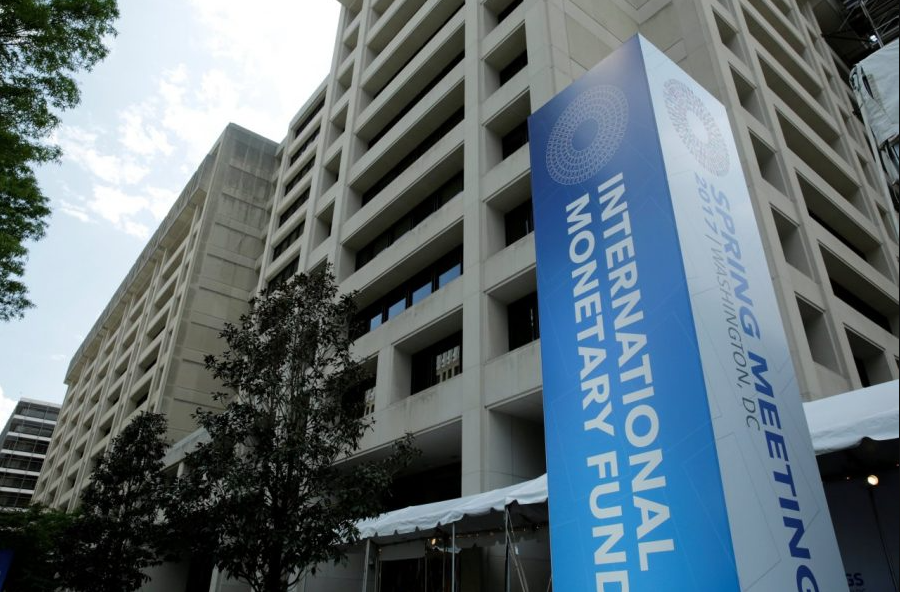
Sub-Saharan African countries continue to face persistent gaps between approved national budgets and actual fiscal outcomes.
This is according to a new research paper published on the International Monetary Fund (IMF) website.
The study warned that weak budget credibility across the region is raising concerns over fiscal discipline, debt sustainability, and the long-term development outlook for many African economies.
The paper, titled Budget Credibility in Sub-Saharan Africa, examined fiscal performance across 39 countries between 2021 and 2024 and found that deviations between budget plans and actual outcomes remain widespread and structural rather than temporary.
What the paper is saying
The IMF paper found that fiscal deficits across many Sub-Saharan African countries routinely exceeded approved budget projections due to overly optimistic revenue assumptions and persistent overspending on recurrent expenditure.
- The authors stated, “capital spending is typically under-executed, especially when tax revenues fall short or grants are delayed.”
- “Deficits are frequently higher than planned, driven mainly by optimistic revenue projections and overspending on primary current expenditures,” the authors said.
- Spending on wages, subsidies, goods and services, and social transfers often exceeded approved budget limits, worsening fiscal balances.
- Capital expenditure, including spending on roads, hospitals, schools, and infrastructure projects, was consistently under-executed during periods of fiscal pressure.
- The study also found that interest payment obligations were often underestimated, increasing financing pressures and widening budget deficits.
The authors stated that fiscal slippages across the region were “persistent and often large,” highlighting deeper institutional weaknesses rather than isolated forecasting errors or temporary economic shocks.
More insights
The report noted that while recurrent spending frequently exceeded budget ceilings, infrastructure and development projects were often the first casualties when governments faced fiscal stress.
According to the researchers, capital projects are routinely delayed, scaled down, or abandoned altogether when revenues underperform or external financing is delayed.
- The study found that countries with stronger fiscal institutions recorded smaller deviations between planned and actual fiscal outcomes.
- Countries operating under IMF-supported programmes generally experienced lower fiscal slippages due to external monitoring and policy discipline.
- Low-income and fragile states recorded larger budget deviations, reflecting weaker administrative capacity and financing constraints.
- Fiscal discipline was also found to weaken during pre-election periods, when governments increased spending pressures and departed from approved budget plans.
The paper stressed that budget credibility is not only about accurate forecasting but also reflects broader institutional quality, fiscal governance, expenditure controls, and policy implementation capacity.
The IMF had earlier projected sub-Saharan Africa’s fiscal position to weaken in 2026, even as improved commodity prices offer some relief to external balances across parts of the region.
The Fund projects that the median fiscal deficit for Sub-Saharan Africa will widen to 3.2% of GDP.
What you should know
Nairametrics reported that the Federal Government had increased its planned borrowing for 2026 to N29.20 trillion following an expansion in the proposed budget size and fiscal deficit.
The new borrowing figure represents an increase of N11.31 trillion compared to the earlier projection of N17.89 trillion.
President Bola Tinubu earlier requested the Senate’s approval to increase the 2026 Appropriation Bill by N9 trillion, raising the total budget from N58.4 trillion to N67.4 trillion.