Follow Us on Google Discover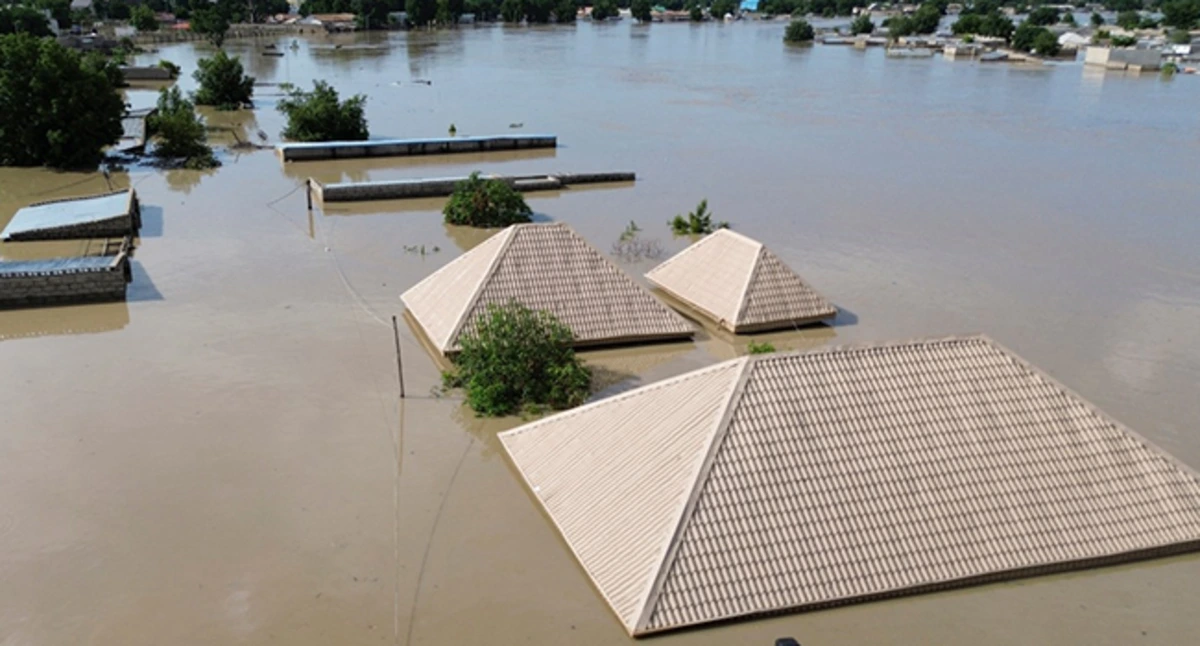
The Nigeria Hydrological Services Agency (NIHSA) has issued a seven-day flood advisory, warning that 17 states face a medium flood risk between July 21 and July 27 due to rising river levels.
The warning was contained in the agency’s National Flood Advisory (Alert No. NFA-2026-200), issued on Tuesday by Director General Umar Mohammed, according to the News Agency of Nigeria (NAN).
NIHSA said rising water levels at key river monitoring stations have increased the likelihood of localized flooding along river channels and floodplains in the affected states.
What they are saying
According to Mohammed, the states covered by the advisory are Adamawa, Bauchi, Benue, Borno, Edo, Gombe, Imo, Jigawa, Kaduna, Kano, Kebbi, Nasarawa, Niger, Plateau, Taraba, Yobe and Zamfara.
Also Read
He added that water levels at several monitoring stations had exceeded watch and warning thresholds, increasing the flood risk for nearby communities.
- “The Nigeria Hydrological Services Agency (NIHSA) has issued a seven-day flood advisory, warning of a medium flood risk in 17 states between July 21 and July 27.
- “The agency said the alert followed rising water levels at key river monitoring stations, increasing the likelihood of localised flooding along river channels and floodplains,” the NAN report read in part.
Water levels at Saminara on the Karam River, Waya Dam Site on the Waya River and Amber on the Amber River exceeded watch and warning thresholds.
Sixteen gauging stations nationwide are currently recording elevated river levels.
Mohammed identified Bauchi as the most vulnerable state, with 1,841 communities, 145 schools, 101 health facilities and eight markets potentially affected. He added that vulnerable communities and public facilities were also identified in Edo, Imo, Kaduna, Plateau and Benue states.
More insights
Mohammed urged state governments, local authorities and residents in flood-prone communities to activate precautionary measures immediately. He also called on emergency agencies to begin implementing response plans ahead of possible flooding.
- The National Emergency Management Agency (NEMA), State Emergency Management Agencies (SEMAs), local governments and community leaders should activate emergency response plans.
- Residents were advised to relocate people, livestock and valuables from floodplains to safer locations.
- Emergency agencies should pre-position food, medical supplies and water treatment materials in vulnerable communities.
Residents were also cautioned against walking, driving or riding through flooded roads and waterways, while authorities were urged to clear blocked drains, culverts and waterways.
He further advised the public and relevant agencies to monitor NIHSA’s daily flood updates and advisories throughout the forecast period.
Get up to speed
Flooding has remained a recurring challenge during the 2026 rainy season, with several states recording flash floods that have disrupted transportation, damaged property and displaced residents. Weather agencies have repeatedly warned that heavy rainfall could trigger localized flooding in vulnerable communities.
- The Nigerian Meteorological Agency (NiMet) has issued several forecasts in recent weeks warning of widespread rainfall, thunderstorms and localized flooding.
- Authorities have repeatedly advised residents in flood-prone communities to heed early warning alerts and avoid floodwaters.
- Recent flood incidents have highlighted the vulnerability of low-lying communities and the need for improved drainage infrastructure and flood preparedness.
The latest NIHSA advisory forms part of ongoing efforts to strengthen early warning systems and reduce the impact of flooding across the country.
What you should know
The latest flood advisory comes weeks after the National Economic Council (NEC) approved N83.2 billion under the Anticipatory Action Task Force (AATF) to strengthen Nigeria’s preparedness for flooding and other climate-related emergencies.
- In 2025, President Bola Tinubu approved N16.7 billion to reconstruct the Mokwa Bridge in Niger State after it was destroyed by flooding, alongside N2 billion for rebuilding homes affected by the disaster.
- Urban planning and environmental experts recently told Nairametrics that rapid urbanisation, blocked drainage channels and the loss of wetlands have heightened flood risks in many Nigerian cities.
They recommended improved drainage maintenance, wetland protection, stricter development controls and greater investment in resilient flood-control infrastructure.
The experts said these measures are critical to reducing the impact of recurring floods on lives, livelihoods and public infrastructure.