Follow Us on Google Discover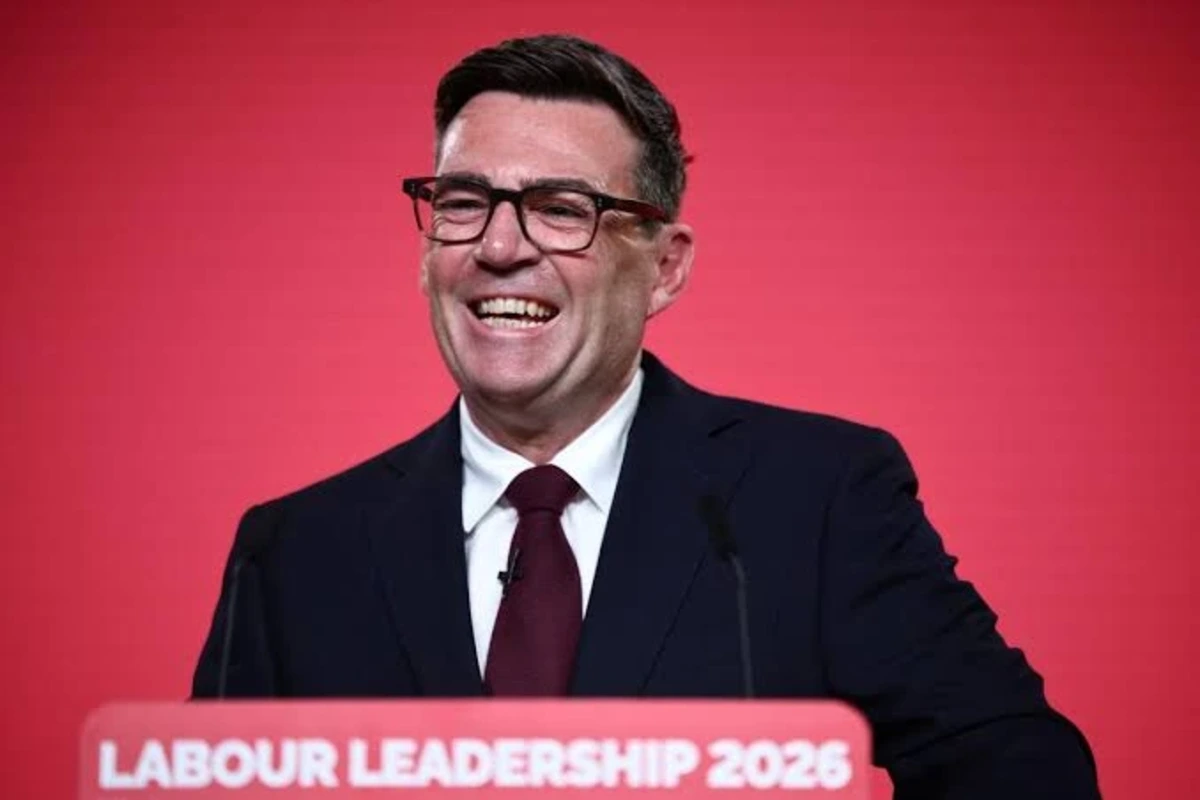
Andy Burnham officially became the United Kingdom’s prime minister on Monday after succeeding Keir Starmer, who formally resigned following weeks of political pressure within the ruling Labour Party.
ABC reports that Burnham, who was elected Labour Party leader last week after serving as Mayor of Greater Manchester, became Britain’s seventh prime minister in 10 years after being invited by King Charles III to form a new government.
His election comes after months of political turbulence for Labour despite the party’s landslide victory in the 2024 general election, with Burnham promising to restore stability and introduce a new economic and political agenda.
What they are saying
Keir Starmer formally announced his resignation outside 10 Downing Street before travelling to Buckingham Palace to tender his resignation to King Charles III.
Also Read
- “Today I am here to offer my resignation and close the book on my time as prime minister. My work is done.”
- “I thank the British people for the opportunity to serve. I go with good grace, I go with a smile, and I go proud of everything that we have achieved.”
- “I now pass the baton to Andy Burnham. I wish him every success. He has my full support.”
In his first address as prime minister, Burnham said Britain must “regain our stability,” describing his appointment as a “circuit-breaker” that would usher in a new political and economic direction.
Get up to speed
Starmer announced in June that he would step down after mounting criticism from within the Labour Party over the government’s performance despite securing a historic parliamentary majority in the 2024 general election.
- The resignation followed disappointing local election results in May, where Labour reportedly lost more than 1,000 council seats, triggering calls from party members for a change in leadership.
- Starmer had previously indicated he intended to serve a full five-year term before deciding to resign.
- Burnham emerged as the sole candidate in the Labour leadership contest, securing nominations from 379 of Labour’s 403 Members of Parliament.
Following his election as Labour leader last week, Burnham pledged to restore public confidence and tackle widening economic inequality and declining living standards.
After accepting Starmer’s resignation, King Charles III invited Burnham to form a new government, after which the new prime minister returned to Downing Street to begin appointing members of his cabinet.
What you should know
Burnham has outlined an ambitious domestic agenda centred on economic renewal, public services and constitutional reform.
He pledged to tackle the rising cost of living and create more employment opportunities for young people.
- The new prime minister also promised to end homelessness, support the re-industrialisation of Britain and return key public services to greater public control.
- Burnham further committed to devolving more powers to local authorities as part of a broader programme of governance reform.
The leadership transition marks a significant political shift for the United Kingdom, with Burnham now expected to steer Labour through growing economic challenges while rebuilding public confidence ahead of the country’s next general election.