Follow Us on Google Discover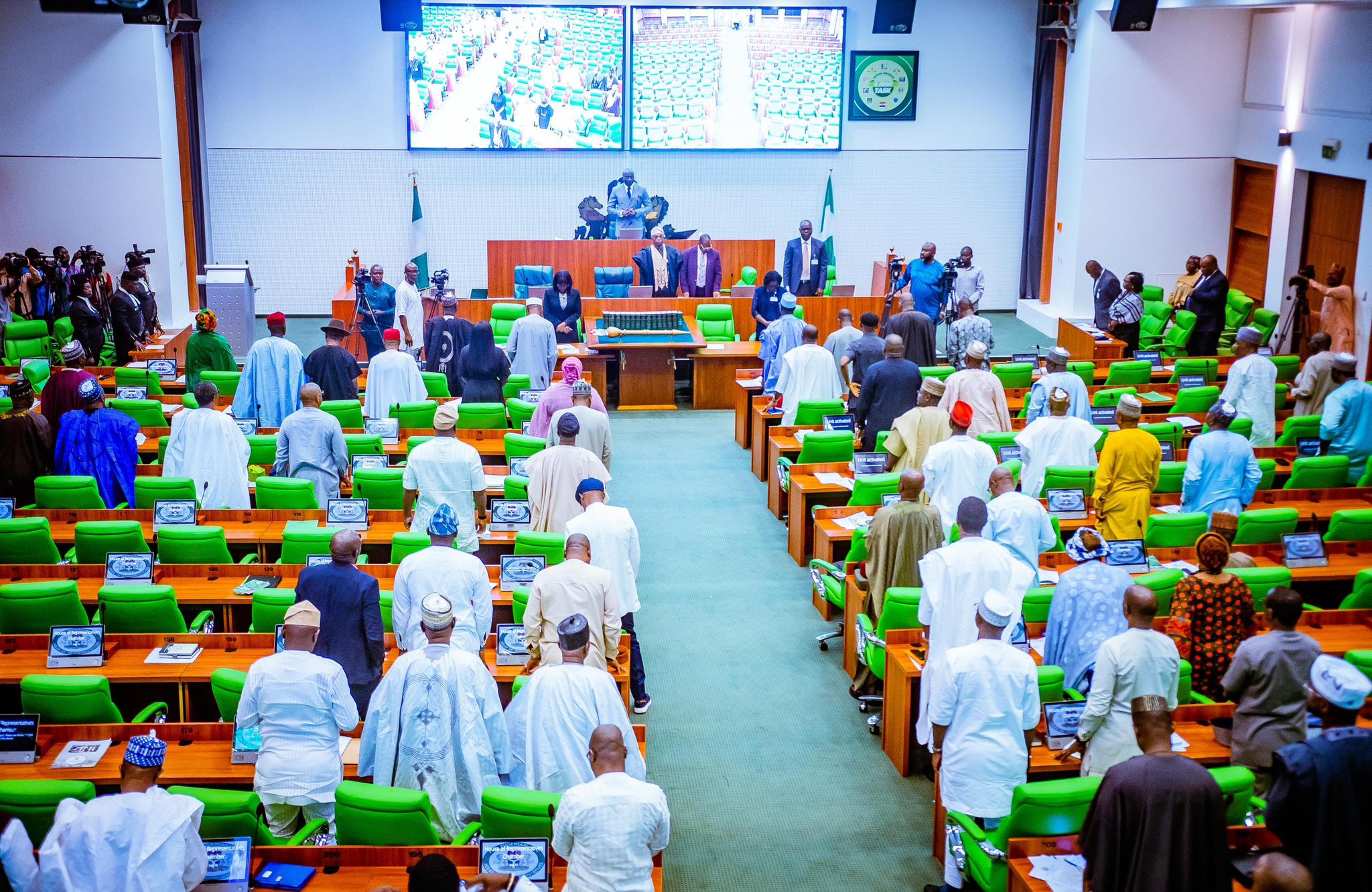
President Bola Tinubu has formally transmitted the Constitution of the Federal Republic of Nigeria (Alteration) (State Police) Bill, 2026 to the House of Representatives, seeking constitutional approval for the establishment of state police services across the country.
The President, in a letter addressed to House Speaker Tajudeen Abbas, said the bill is designed to amend the 1999 Constitution and create the legal framework needed for a dual policing system involving both federal and state law enforcement agencies, according to ChannelsTV.
The transmission comes barely two weeks after the Senate passed a similar constitutional amendment proposal, with the legislation securing the support of more than two-thirds of senators, meeting the constitutional threshold required for amendments to the 1999 Constitution.
What Tinubu is saying
The President described the legislation as a critical component of his administration’s broader security reform agenda, urging the House to act quickly on the proposal.
- “I am delighted to present to the House of Representatives for consideration the Constitution of the Federal Republic of Nigeria (Alteration) (State Police) Bill, 2026, which seeks to amend the Constitution of the Federal Republic of Nigeria, 1999, to create a constitutional pathway for the establishment of State Police Services,” he said.
- “This Bill builds on the significant work already done in this regard by the House of Representatives and incorporates additional safeguards to ensure that the creation of a dual policing structure to address our nation’s evolving national security challenges can be achieved quickly and effectively to the benefit of all Nigerians,” he added.
- “The proposed legislation is a critical component of our administration’s strategy to reorganize Nigeria’s security architecture to better protect our citizens, and I am confident that the House of Representatives will act quickly to consider and pass this Bill,” Tinubu said, urging lawmakers to expedite deliberations on the proposal.
Get up to speed
The push for state police has been one of the most debated security policy questions in Nigeria for decades, with proponents arguing that the centralised federal police structure is ill-suited to addressing the diverse and localised nature of security challenges across the country’s 36 states.
- Tinubu’s transmission of the State Police Bill to House of Representatives comes after both chambers of the National Assembly had already advanced separate constitutional amendment proposals on state police.
- On June 11, the House of Representatives passed its own Constitution Alteration Bill on state police as part of the ongoing constitutional review process.
- The Senate followed on June 24, approving a constitutional amendment bill on the proposed establishment of State Police Services after securing the constitutionally required two-thirds majority.
The Senate passed its version of the constitutional amendment after Senate Leader Opeyemi Bamidele presented the bill’s general principles to lawmakers, following which senators subjected it to clause-by-clause consideration before approving it at third reading.
More insights
Tinubu said the bill builds on previous legislative efforts by the House and introduces additional safeguards designed to ensure effective implementation of the proposed dual policing structure once enacted.
With the President now transmitting the bill to the House, the proposal has gained significant momentum, with both the executive and the Senate now aligned on the need to create a constitutional pathway for state police, leaving the House as the remaining legislative hurdle before the amendment can proceed to state assemblies for ratification.
The bill’s passage through both chambers with the required two-thirds majority will be essential, given that constitutional amendments in Nigeria require approval from at least 24 of the 36 state assemblies in addition to the National Assembly.
What you should know
The passage of the State Police Bill has continued to generate mixed reactions across the country, with security experts and stakeholders weighing the potential benefits against practical challenges.
Nairametrics earlier reported that a retired Commissioner of Police, Balarabe Sule, cautioned that many Nigerian states may lack the financial capacity to establish and sustain their own police forces if the proposed state police system is implemented.
Sule was reacting to the Senate’s passage of the constitutional amendment bill seeking to establish state police across the federation, warning that funding could pose a major challenge to the initiative.
While acknowledging that state police could enhance security and improve crime prevention, the former police commissioner questioned whether most states have the resources and institutional capacity to effectively support such a system.