

The global automotive industry is rapidly shifting toward electric vehicles (EVs) as countries seek to reduce carbon emissions and meet the Paris Agreement’s goal of net-zero emissions by 2050.
Developed economies are leading this transition, while developing countries, including Nigeria, face economic and infrastructural constraints that have slowed adoption.
Nigeria has committed to decarbonising road transportation through EV adoption.


According to the country’s Energy Transition Plan, launched in 2022, it aims for a 100% transition to electric vehicles by 2060, with Lagos State targeting 2050.
The federal government also instituted a National Action Plan for the Development of Electric Vehicles (EVDP), aiming for at least 30% of vehicles produced locally to be electric by 2032, alongside efforts to reduce reliance on imported vehicles.
Despite these policy measures, EV adoption in Nigeria is constrained by limited charging infrastructure, inconsistent electricity supply, and comparatively low economic capacity.
However, private companies have entered the market, assembling and selling EVs domestically while also producing other vehicle types such as saloon cars, SUVs, trucks, buses, and intracity three- and four-wheelers. These initiatives indicate gradual growth in Nigeria’s electric mobility sector.
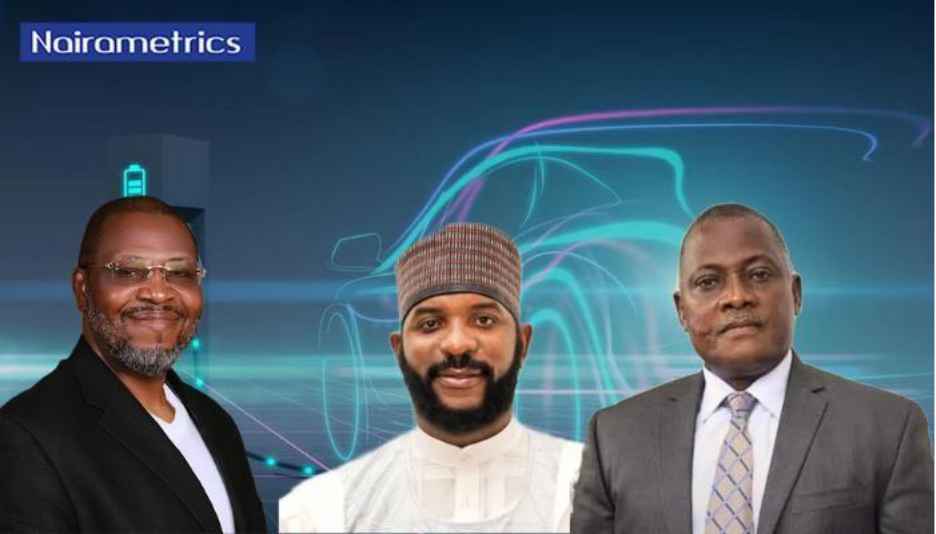
This article spotlights the companies assembling electric vehicles in Nigeria and the founders and owners driving their growth.

Dr. Sam Faleye is the Chairman and CEO of SAGLEV Inc., a Delaware-based EV company that operates in Nigeria through its subsidiary, Saglev Electromobility. The subsidiary has been in Nigeria for five years, with actual assembly of electric vehicles in December 2023 at its Imota, Ikorodu plant.
The facility, approved by the National Automotive Design and Development Council (NADDC), is dedicated to EV assembly in sub-Saharan Africa. It handles SKD and CKD production and currently supports 16 EV models — about 20% for private use (sedans, SUVs) and the rest for logistics, corporate fleets, and public transport.
Through its partnership with Dongfeng Motor Corporation, Saglev has rolled out products such as the VOYAH luxury series, the R6 pickup, the M-HERO 917 SUV, and electric BRT buses. The Imota plant has a starting capacity of 2,500 units a year, expandable to 10,000 units, while the company is also investing in charging infrastructure to ease adoption barriers.
Dr. Faleye studied medicine at the University of Ilorin, trained in Internal Medicine at Howard University Hospital, and earned a Master’s in Informatics from the University of Tennessee Health Science Center. He has been Board-certified in Internal Medicine since 1998 and became a Fellow of the American College of Physicians in 2005.
With subsidiaries in Nigeria and Ghana, SAGLEV is one of the early indigenous-led ventures driving EV adoption in West Africa.











We Nigerians are happy, Seriously this is a welcome development, our youth will be rapidly employed into this industries, may God see us through amen!