


The global automotive industry is rapidly shifting toward electric vehicles (EVs) as countries seek to reduce carbon emissions and meet the Paris Agreement’s goal of net-zero emissions by 2050.
Developed economies are leading this transition, while developing countries, including Nigeria, face economic and infrastructural constraints that have slowed adoption.
Nigeria has committed to decarbonising road transportation through EV adoption.


According to the country’s Energy Transition Plan, launched in 2022, it aims for a 100% transition to electric vehicles by 2060, with Lagos State targeting 2050.
The federal government also instituted a National Action Plan for the Development of Electric Vehicles (EVDP), aiming for at least 30% of vehicles produced locally to be electric by 2032, alongside efforts to reduce reliance on imported vehicles.
Despite these policy measures, EV adoption in Nigeria is constrained by limited charging infrastructure, inconsistent electricity supply, and comparatively low economic capacity.
However, private companies have entered the market, assembling and selling EVs domestically while also producing other vehicle types such as saloon cars, SUVs, trucks, buses, and intracity three- and four-wheelers. These initiatives indicate gradual growth in Nigeria’s electric mobility sector.
This article spotlights the companies assembling electric vehicles in Nigeria and the founders and owners driving their growth.
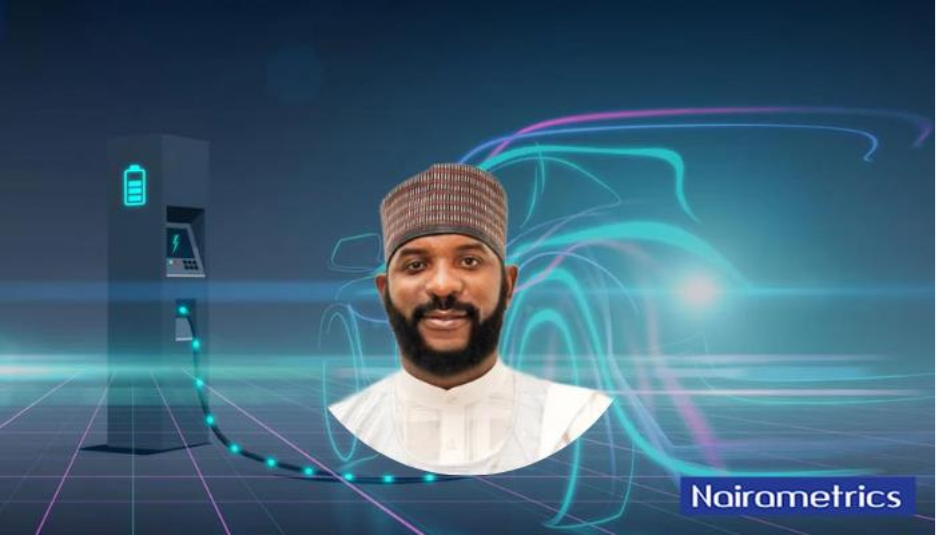
Prince Mustapha Audu is the Chief Executive Officer of the Electric Motor Vehicle Company (EMVC), an indigenous Nigerian automaker that assembles both electric and hybrid vehicles in Nigeria as part of its mission to deliver sustainable mobility solutions. He is the son of the late Prince Abubakar Audu, former governor of Kogi State, and holds a Bachelor’s degree in Computing Science from the University of Glasgow.
Headquartered along the Abuja–Lokoja Expressway in Gwagwalada, EMVC entered the electric vehicle market in 2022 with the launch of its first models — the Adoja M1 electric tricycle and the Adoja M2 electric car. Since then, the company’s product line has expanded to include electric motorcycles, tricycles, small cargo vehicles, and cars, with some units featuring solar panels or tracking systems as optional add-ons.
Among its products, the Adoja car delivers a range of 125 to 250 kilometres per charge with a maximum speed of 60 kilometres per hour. The Bama motorcycle can reach speeds of up to 100 kilometres per hour. The Igwe and Obong three-wheelers cover between 125 and 200 kilometres per charge, with top speeds of 50 and 40 kilometres per hour, respectively.
In 2025, EMVC partnered with the Nasarawa State Government to roll out a mix of its vehicles, including Igwe three-wheelers for economic empowerment and entrepreneurship programmes, Adoja Mini sedans for ride-hailing services, and electric SUVs for official use by state officials.











We Nigerians are happy, Seriously this is a welcome development, our youth will be rapidly employed into this industries, may God see us through amen!