

The global automotive industry is rapidly shifting toward electric vehicles (EVs) as countries seek to reduce carbon emissions and meet the Paris Agreement’s goal of net-zero emissions by 2050.
Developed economies are leading this transition, while developing countries, including Nigeria, face economic and infrastructural constraints that have slowed adoption.
Nigeria has committed to decarbonising road transportation through EV adoption.


According to the country’s Energy Transition Plan, launched in 2022, it aims for a 100% transition to electric vehicles by 2060, with Lagos State targeting 2050.
The federal government also instituted a National Action Plan for the Development of Electric Vehicles (EVDP), aiming for at least 30% of vehicles produced locally to be electric by 2032, alongside efforts to reduce reliance on imported vehicles.
Despite these policy measures, EV adoption in Nigeria is constrained by limited charging infrastructure, inconsistent electricity supply, and comparatively low economic capacity.
However, private companies have entered the market, assembling and selling EVs domestically while also producing other vehicle types such as saloon cars, SUVs, trucks, buses, and intracity three- and four-wheelers. These initiatives indicate gradual growth in Nigeria’s electric mobility sector.
This article spotlights the companies assembling electric vehicles in Nigeria and the founders and owners driving their growth.
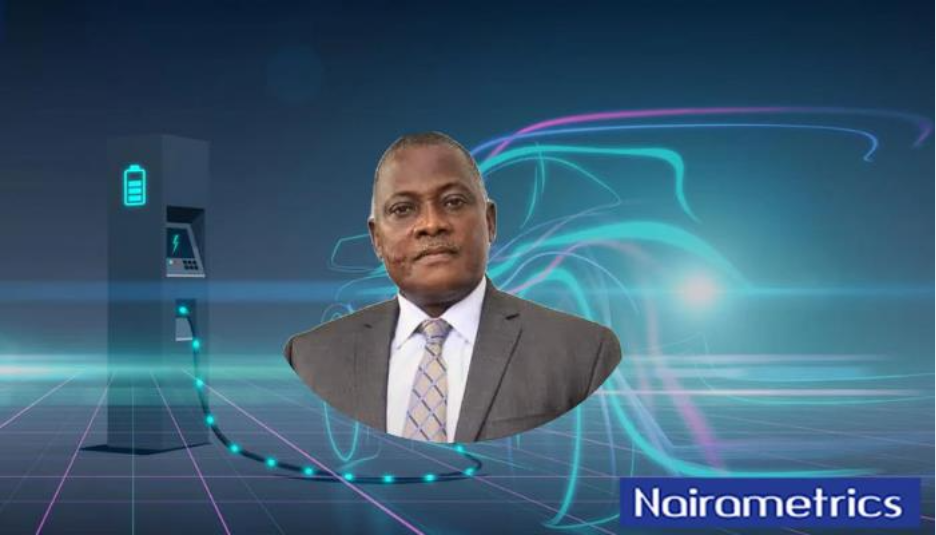
Chief Innocent Ifediaso Chukwuma, born on October 1, 1961, is the founder of Innoson Vehicle Manufacturing (IVM), regarded as Nigeria’s first indigenous automobile company. He established the firm in 2007 after decades of experience in motorcycle parts trading and plastics manufacturing. By late 2014, the company had rolled out its first locally assembled cars, marking a milestone in Nigeria’s automotive sector.
Innoson entered the electric vehicle market in September 2024, and since then its EV products have expanded to include four top models. These are the IVM Link, a five-seater with a driving range of 201–230 kilometres on a full charge; the IVM EX01, which also offers a 201–230 kilometre range and is designed for daily commuting; and the IVM EX02, the flagship model capable of travelling 330–400 kilometres per charge. A lower-priced version of the EX02 is also available, maintaining the same range while offering a more affordable entry point. All of these vehicles are assembled in Nigeria.
Alongside its EV push, Innoson continues to assemble internal combustion engine vehicles, covering sedans, SUVs, minibuses, pickup trucks, and specialised vehicles such as ambulances and waste compactors.











We Nigerians are happy, Seriously this is a welcome development, our youth will be rapidly employed into this industries, may God see us through amen!