• Login
  • Register
Nairametrics
  • Home
  • Exclusives
    • Recapitalization
      • Access Holdings Offer
      • Fidelity Bank Offer
      • GTCO Offer
      • Zenith Bank Offer
    • Financial Analysis
    • Corporate Stories
    • Interviews
    • Investigations
    • Metrics
    • Nairalytics
  • Economy
    • Business News
    • Budget
    • Public Debt
    • Tax
  • Markets
    • Currencies
    • Cryptos
    • Commodities
    • Equities
      • Company Results
      • Dividends
      • Public Offer & Right Issues
      • Stock Market News
    • Fixed Income
    • Funds Management
    • Securities
  • Sectors
    • Agriculture
    • Aviation
    • Company News
    • Consumer Goods
    • Corporate Updates
    • Corporate deals
    • Corporate Press Releases
    • Energy
    • Entertainment
    • Financial Services
    • Health
    • Hospitality & Travel
    • Manufacturing
    • Real Estate and Construction
    • Renewables & Sustainability
    • Tech News
  • Financial Literacy
    • Career tips
    • Personal Finance
  • Lifestyle
    • Billionaire Watch
    • Profiles
  • Opinions
    • Blurb
    • Market Views
    • Op-Eds
    • Research Analysis
  • Home
  • Exclusives
    • Recapitalization
      • Access Holdings Offer
      • Fidelity Bank Offer
      • GTCO Offer
      • Zenith Bank Offer
    • Financial Analysis
    • Corporate Stories
    • Interviews
    • Investigations
    • Metrics
    • Nairalytics
  • Economy
    • Business News
    • Budget
    • Public Debt
    • Tax
  • Markets
    • Currencies
    • Cryptos
    • Commodities
    • Equities
      • Company Results
      • Dividends
      • Public Offer & Right Issues
      • Stock Market News
    • Fixed Income
    • Funds Management
    • Securities
  • Sectors
    • Agriculture
    • Aviation
    • Company News
    • Consumer Goods
    • Corporate Updates
    • Corporate deals
    • Corporate Press Releases
    • Energy
    • Entertainment
    • Financial Services
    • Health
    • Hospitality & Travel
    • Manufacturing
    • Real Estate and Construction
    • Renewables & Sustainability
    • Tech News
  • Financial Literacy
    • Career tips
    • Personal Finance
  • Lifestyle
    • Billionaire Watch
    • Profiles
  • Opinions
    • Blurb
    • Market Views
    • Op-Eds
    • Research Analysis
Nairametrics
Home Economy

Moody’s scores Nigeria highly negative on ESG, cites flooding as reason for rating

Omono Okonkwo by Omono Okonkwo
October 24, 2022
in Economy
Nigeria to relocate 10,000 persons in preparation for flood season
Share on FacebookShare on TwitterShare on Linkedin

The global rating agency, Moody’s, said  Nigeria’s Credit Impact Score is highly negative (CIS-5).

According to the rating agency, Nigeria’s Environmental Social and Governance (ESG) levels reflect a very high exposure to environmental risk and social risk and weak governance that, with low wealth levels, leads to low resilience to Environmental and Social risks.

The ratings were contained in a report recently released by Moody as seen by Nairametrics.

MoreStories

seaports, cargo scanning, NCS

Top 10 ports handling most of Nigeria’s imports and exports in Q4 2025 

March 13, 2026
Cardoso to fintech CEOs: Technology innovation must be matched by strong governance 

CBN FX reforms drive 200% capital inflows – Cardoso

March 13, 2026

According to Moody’s, Nigeria’s exposure to environmental risks carries very high credit risks, reflected in its E-5 issuer profile score.

What Moody’s is saying

The rating agency highlighted Nigeria as a country with a very high negative governance profile score (G-5 issuer profile), reflecting weak control of corruption and rule of law as well as very weak fiscal and monetary policy effectiveness and opaque management of the public resource. Moody’s went further to make use of current living conditions as practical examples of ESG-related risks in Nigeria.

  • Exposure to carbon transition risk is very high, due to the very significant reliance on oil for the public sector and the economy as foreign exchange earnings from oil represent 80% of merchandise exports.
  • Nigeria’s credit profile would face downward pressure in a scenario of more rapid global carbon transition than Moody’s currently assumes and that implied by stated policies internationally.
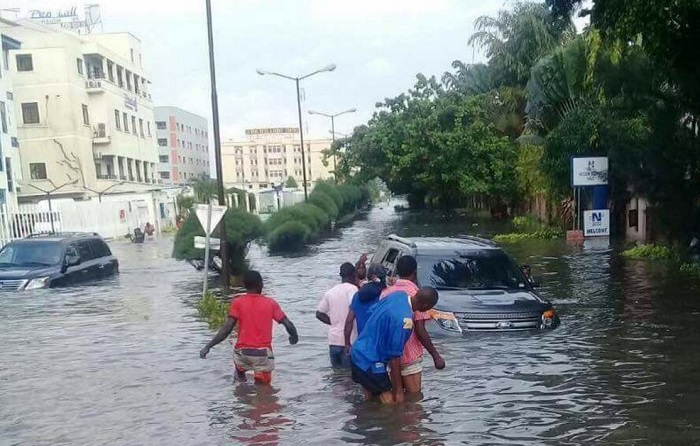
  • Water risk and physical climate risk are also high, driven by the high share of the population exposed to unsafe drinking water, risks of flooding and health stress, as well as risks from waste and pollution respectively.
  • Exposure to social risks is very highly negative (S-5 issuer profile score), mainly related to poverty, low education outcomes, poor health and safety indicators, and access to basic services.
  • Infant mortality is one of the highest in Sub-Saharan Africa and poverty is widespread, with close to 40% of the population living on the Purchasing Power Parity (PPP) of less than $1.90 a day, despite vast natural resources wealth.

Nigeria’s oil market risks, highlighted by Moody’s

According to Moody, the successive oil shocks and the Covid-19 pandemic have exacerbated Nigeria’s exposure to social risks.

  • GDP per capita remains well below 2015 figures, with growing inequality due to the most vulnerable households carrying a disproportionate part of the burden of successive shocks.
  • Management of oil revenue is particularly weak; absent fiscal stabilizers, the government runs a pro-cyclical policy or worse, fails to take advantage of high international oil prices as illustrated in 2022.
  • In 2021, the country’s hydrocarbon exports amounted to $41 billion, the general government received only $5 billion in net oil revenue or 1% of GDP.
  • Nigeria’s fiscal and external position hasn’t benefited from higher oil prices in 2022, which have been 42% higher on average than in 2021.
  • This is due to the 32% drop in oil production since the beginning of the year (recorded between January and September of 2022) and growing domestic consumption of petroleum products – a product of the country’s stage of economic development further incentivized by the expensive oil subsidy.
  • The constraints on oil production increasingly appear structural, caused by repeated theft and lack of investment in infrastructure. While the oil sector is a relatively modest contributor to GDP, it is a primary source of revenue and foreign exchange generation.

How Nigeria can get an upgrade or downgrade according to Moody’s

  • Moody’s would likely downgrade Nigeria’s rating, if it concluded that fiscal and external pressure is likely to continue to intensify, with the government’s funding options narrowing further. Should Moody’s assess that the likelihood of default, including through a distressed exchange, has increased, the rating may be downgraded by multiple notches.
  • Should Moody conclude that a sizeable devaluation is highly likely, downward pressure on the rating would develop too. Conversely, Moody’s would likely confirm Nigeria’s rating at the current level if it expects that the fiscal and external pressure, including those arising from the oil sector, will ease. A clear, prudent medium-term funding plan would support Moody’s view that the risk regarding debt service payments is consistent with the current rating.




Add Nairametrics on Google News
Follow us for Breaking News and Market Intelligence.
Tags: CIS-5ESGMoody’s ReportNigeria’s Credit Impact Score is very highly negativeNigeria’s Environmental Social and Governance
Omono Okonkwo

Omono Okonkwo

Omono Okonkwo is an accomplished Mass Communicator, with a remarkable track record spanning over a decade across various dimensions of the field. Her proficiency encompasses Print, Digital, and Broadcast Journalism, Copywriting, Research and Writing, Podcasting, Public Speaking, as well as a comprehensive grasp of Energy Markets. Her engagement in energy market coverage commenced officially in 2016, as she assumed the role of a country correspondent (Nigeria) with Natural Gas World, a subsidiary of Minoils Media based in Vancouver, Canada. Since then, Omono Okonkwo has consistently demonstrated excellence and left an indelible mark on the ever-evolving energy sector.

Next Post
UK and US warn citizens of possible terrorist attacks in Abuja

UK, US warn citizens of possible terrorist attacks in Abuja

Leave a Reply Cancel reply

Your email address will not be published. Required fields are marked *

money fair
rabafast
rabafast

nairametrics


DUNS

Follow us on social media:

  • HOME
  • ABOUT NAIRAMETRICS
  • CONTACT US
  • DISCLAIMER
  • ADs DISCLAIMER
  • COPYRIGHT INFRINGEMENT

© 2026 Nairametrics

Welcome Back!

Login to your account below

Forgotten Password? Sign Up

Create New Account!

Fill the forms below to register

All fields are required. Log In

Retrieve your password

Please enter your username or email address to reset your password.

Log In
Social Media Auto Publish Powered By : XYZScripts.com
No Result
View All Result
  • Home
  • Exclusives
    • Recapitalization
      • Access Holdings Offer
      • Fidelity Bank Offer
      • GTCO Offer
      • Zenith Bank Offer
    • Financial Analysis
    • Corporate Stories
    • Interviews
    • Investigations
    • Metrics
    • Nairalytics
  • Economy
    • Business News
    • Budget
    • Public Debt
    • Tax
  • Markets
    • Currencies
    • Cryptos
    • Commodities
    • Equities
      • Company Results
      • Dividends
      • Public Offer & Right Issues
      • Stock Market News
    • Fixed Income
    • Funds Management
    • Securities
  • Sectors
    • Agriculture
    • Aviation
    • Company News
    • Consumer Goods
    • Corporate Updates
    • Corporate deals
    • Corporate Press Releases
    • Energy
    • Entertainment
    • Financial Services
    • Health
    • Hospitality & Travel
    • Manufacturing
    • Real Estate and Construction
    • Renewables & Sustainability
    • Tech News
  • Financial Literacy
    • Career tips
    • Personal Finance
  • Lifestyle
    • Billionaire Watch
    • Profiles
  • Opinions
    • Blurb
    • Market Views
    • Op-Eds
    • Research Analysis
  • Login
  • Sign Up

© 2026 Nairametrics