

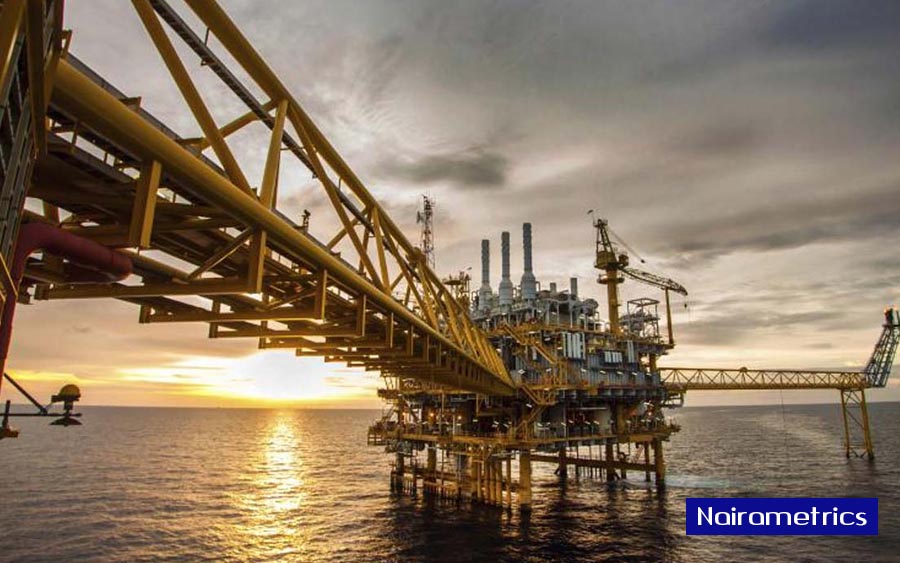
Crude oil still remains a major source of revenue for Nigeria despite a tumultuous 2020 for oil prices. The commodity contributes 90% of our export earnings and will still be a major revenue generator for the foreseeable future.
With this in mind, it is high time Nigeria explores other forms of revenues that can be derived from oil. 200 million Nigerians cannot be catered for with the proceeds of a country that has a production capacity of 1.4 – 1.9 million barrels per day (depending on the quota with OPEC). In contrast, Saudi Arabia has a production capacity of 11 million barrels per day and a population of 30 million.
This article does not only relate to the issue of macroeconomic stabilization, but highlights if the Nigerian government can make use of financial instruments ‘hedging’ to diversify and provide the government with added flexibility and additional tools to make more revenue.

Most countries who do not partake in this hedging programme, either have lower costs of production like Saudi Arabia and Russia, or do not want to take the risks associated with the programme.
READ: Total Plc must quickly move past one of its toughest year yet
Case Study: Mexico
Last year, when oil prices crashed and entered negative digits, Countries dependent on oil were adversely affected by the crash. But somehow, Mexico for the fourth time, cashed about $2.5 billion from its oil hedge program.
For over two decades, Mexico has guaranteed oil revenue via options contracts purchased from oil companies and Wall Street investment banks. Mexico’s hedging experiences of its oil exports is often used as an example for other countries to follow.
In 2009, after the financial global crisis, Mexico made $5.089 billion from it’s hedging position. In 2014, when oil prices plummeted and countries reliant on high oil prices were affected, Mexico was “unbothered”. The Ministry of Finance had purchased put options with one year maturity to hedge 228 million barrels of oil, about 28 percent of production, at a strike price of US$ 76.4 per barrel — US$ 31.1 above the actual average oil price in 2015. Mexico earned $6.4 billion from that hedge. In 2016, Mexico earned $2.7 billion from its hedging.
READ: NNPC explains measures to cut cost of crude oil production
Since Mexico began running the hedge program in 2001, it has made a profit of $2.4 billion — payouts brought in $14.1 billion while the costs of running the programme cost $11.7 billion in fees to banks and brokers.
Last year, people argued that Mexico’s hard stance during the OPEC+ talks in April is directly related to the fact that it had a hedging programme in place. I must add that hedging gives you an edge in the markets but It’s far more technical, risky and in a few cases profitable. Sources within the NNPC say that the Nigerian government has not executed a hedging program yet.
So how does this programme work?
Mexico, a big exporter of oil and a member of OPEC, hedge their oil against declines that may occur in the market. Take for example, last year as a result of the pandemic and an unsuccessful OPEC meeting due to Russia and Saudi Arabia’s oil supply war, oil prices dropped to negative digits.
A government like Mexico, who hedges their oil with trading schemes would have been benefited from the drop. In this case, for every drop below the “strike price” (A strike price is the set price at which an oil derivative contract can be bought or sold when it is exercised) revenue is being made.
READ: DPR warns against hoarding of petroleum products by depot owners, threatens sanctions
Hedging works both ways. It depends on who the hedger is. In the case above, Mexico is an exporter of oil, so it hedges against drop in prices. However, a country like Egypt, which announced it had executed its own hedging programme last year is a net importer of oil. Primarily, it hedges against the rise in prices. As oil prices rise, Egypt generates money despite naturally preferring low prices as an importer.
Additionally, the downstream sector needs to improve. This is another avenue Nigeria can take to make more money from Oil. The Nigerian downstream sector which involves petroleum product refining, storing, marketing and distribution has much room for development and can improve the fortunes of the millions of Nigerians. Oil accounts for 9% of Nigeria’s GDP and if we look at that, it’s very minimal if we take into context how important Oil is to our economy.
Conclusion
As I wrote in the earlier premise, this is not as straightforward as it sounds. There are insurance premiums to consider (the cost of the hedging programme), timing of the execution and general oil market outlook to examine.
For example, it appears that investors are going long on oil. All commodity analysts and banks are also favouring high oil prices as a result of vaccine availability and global supply cuts. Goldman Sachs forecasts oil to be $70 by Q2 2021 and Morgan Stanley also sees Oil at $70 by the third quarter. It would be highly risky to hedge against declining prices in this environment. (Recall prices going in the opposite direction doesn’t favor the hedger).
A hedged economy might create additional revenue needed for the country to rebalance its reserves.
PS. I am willing to discuss further with interested stakeholders on the possibility of carrying hedging operations for Nigeria.
Dapo-Thomas Opeoluwa is an Investment Banker and Energy analyst. He holds a degree in MSc. International Business, Banking and Finance from the University of Dundee and also holds a B.Sc in Economics from Redeemers University. As an Oil Analyst at Nairametrics, he focuses mostly on the energy sector, fundamentals for oil prices and analysis behind every market move. Opeoluwa is also experienced in the areas of politics, business consultancy, and investments. You may contact him via his email- dapothomasopeoluwa@yahoo.com.










Even though this article is no doubt helpful, it must be emphasized that Nigeria’s economic woes sterm from its unwillingness to desist from its corrupt practices through which its resources are drained. Most Nigerian elite know what to do but will never do it because that will deprive them of their invisible (illicit) wealth. Quite simply, they are bereft of moral values.