Follow Us on Google Discover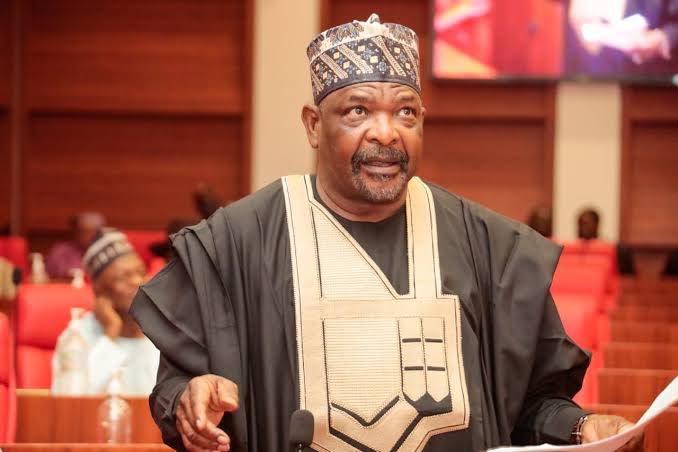
Senator Abdul Ningi, representing Bauchi Central Senatorial District, has called on the Federal Government to sever diplomatic relations with South Africa over the recurring killings of Nigerian nationals in the country.
Ningi made the call during plenary in the Senate on Tuesday, while contributing to a motion on the recent killings of Nigerians in South Africa.
His remarks come days after the Federal Government condemned the reported killing of two Nigerian nationals in South Africa, warning that it could consider further diplomatic measures, beyond diplomatic engagements, should attacks against Nigerians in the country continue.
What Ningi is saying
The lawmaker lamented that successive Nigerian governments had repeatedly condemned attacks on Nigerians living in South Africa and issued travel advisories and cautions, but argued that such responses had failed to deter the violence or secure justice for victims.
Also Read
He questioned the effectiveness of the government’s repeated warnings, saying Nigerians continued to be killed despite official condemnations.
- “Nigerians are being killed left, right, and centre, and there has never been any action except condemnation. What does the government mean by caution? Caution for what? Are we not Nigerians? Don’t Nigerians deserve to live like citizens of other countries?”
Ningi argued that Nigeria should move beyond verbal condemnations and adopt stronger measures by ending diplomatic relations with South Africa.
- “There has to be action. Let’s sever diplomatic relations with South Africa. If we do that, we are sending a signal. This chamber must rise to this occasion and tell the Federal Government that enough is enough. Sever relations with South Africa—completely.”
Get up to speed
The Federal Government, on July 5, condemned the killing of two Nigerian nationals in South Africa and warned that continued attacks could force Nigeria to consider stronger diplomatic measures.
According to the government, one of the victims, Emeka Charles Iroegbu, allegedly died after being subjected to what it described as brutal interrogation by officers of the Tshwane Metro Police in Sunnyside, Pretoria, on June 28.
The second victim, Musa Yunana Joe, popularly known as “Big Joe,” was reportedly shot dead in front of his shop in Witbank, Mpumalanga, on the same day.
However, South African authorities have disputed claims surrounding one of the deaths. Police said the Nigerian man who died while in custody was arrested for allegedly possessing drugs and later collapsed, maintaining that the incident was unrelated to the recent wave of anti-migrant violence in the country.
What you should know
Ningi’s call adds to growing demands for stronger action against South Africa following the latest killings.
- In late June, Air Peace founder and Chief Executive Officer, Allen Onyema, urged Nigerians to boycott South Africa economically by refusing to invest in the country.
- According to Onyema, the most effective response would be for Nigerians to withhold investments from South Africa while continuing to encourage South African businesses to invest in Nigeria.
- Both proposals—cutting diplomatic ties and discouraging investments—could, however, have significant implications for the economic relationship between the two countries.
According to data reported by Nairametrics, South Africa remained Nigeria’s largest source of imports within Africa in the first quarter of 2026, with imports valued at N155.26 billion, representing an 18.2 per cent increase from N131.32 billion recorded in the fourth quarter of 2025.
The imports included goods such as vehicles for transporting cargo valued at N33.58 billion, polypropylene worth N16.72 billion, apples valued at N10.38 billion, industrial odoriferous mixtures worth N6.26 billion, and beverage flavouring extracts valued at N6.09 billion.
The figures highlight the depth of trade between both countries and underscore the potential economic consequences of any move to downgrade diplomatic relations or encourage a sustained economic boycott.