
 Follow Us on Google Discover
Air Peace founder and Chief Executive Officer, Allen Onyema, has urged Nigerians to stop investing in South Africa and boycott the country in response to renewed xenophobic attacks targeting foreign nationals, including Nigerians.
Onyema made the call during an exclusive interview on ARISE News on Monday, where he advocated economic retaliation against South Africa while rejecting violence or actions that could negatively affect businesses operating in Nigeria.
His remarks come amid renewed xenophobic attacks in South Africa that have affected several foreign nationals, including Nigerians.
The attacks prompted the Nigerian government to begin evacuating some of its citizens from the country as concerns over their safety mounted.
Also Read
What they are saying
While supporting calls for consequences against South Africa over the attacks, Onyema said he was opposed to violent reprisals or shutting down South African-owned businesses operating in Nigeria.
- “I don’t want Nigerians to go to the street and attack any South Africans. Nigerians are not like that. We love foreigners. Nigerians are not like that. That’s not the kind of retaliation I want,” he said.
The Air Peace boss also rejected suggestions that Nigeria should shut down companies such as MTN in response to the attacks.
- “I don’t want Nigeria to close down MTN or other companies. Don’t Nigeria’s have shares in those companies? After all, those people are Nigerians too. I don’t want that,” he added.
Instead, Onyema called for what he described as a non-violent economic response, urging Nigerians to withhold investments from South Africa.
- “The kind of retaliation I want is for Nigerians to boycott South Africa. Do you know what it means? Boycott South Africa. Don’t invest in that country,” he said.
According to him, withdrawing financial support and investments from South Africa would send a stronger message than any form of confrontation.
- “If they want to invest in our country, let them bring their money and invest. And determine how they take the money back. That is non-violent action.
- “Boycott South Africa. If you decide to go against me, the only thing I can do to you is withdraw my support to you. I don’t have to support you to use it to finish me.
- “So, that’s the kind of retaliation I want. That is most powerful.”
More insights
Onyema’s proposed boycott could have implications for trade relations between Africa’s two largest economies, given the scale of commercial ties between Nigeria and South Africa.
- Data for the first quarter of 2026 shows that South Africa was Nigeria’s largest source of imports within Africa, with goods valued at N155.26 billion entering the country during the period. The figure represents an 18.2 per cent increase from the N131.32 billion recorded in the fourth quarter of 2025.
- The imports included vehicles for the transportation of goods valued at N33.58 billion, polypropylene worth N16.72 billion, apples valued at N10.38 billion, odoriferous mixtures used in industrial production worth N6.26 billion, and extracts and flavouring products used in the beverage industry valued at N6.09 billion.
The figures underscore South Africa’s position as one of Nigeria’s most significant African trading partners and a major supplier of manufactured goods, industrial raw materials and consumer products.
What you should know
Nigeria has already begun efforts to evacuate its citizens from South Africa following the renewed wave of xenophobic attacks.
- On June 15, Nairametrics reported that the first batch of 262 Nigerians departed Johannesburg for Lagos as part of a government-led evacuation exercise.
- The evacuation followed an earlier announcement by the Federal Government on June 5 that arrangements had commenced to bring back Nigerians willing to return home amid rising anti-immigrant sentiment and escalating xenophobic tensions in South Africa.
Other African countries have also taken similar measures. Ghana has likewise repatriated some of its citizens from South Africa in response to previous outbreaks of xenophobic violence, highlighting the wider regional concerns generated by the recurring attacks.

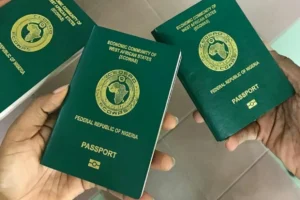
Context matters. Africans tend to rely on emotional solutions. The xenophobist thrives on emotions. The boycotter thrives on emotions. Yet there is a better way.
Here’s some context.
Nigeria, Ghana, Malawi and others have so far evacuated under 10,000 people who chose to leave South Africa.
This out of a population of 4 million immigrants. This means over 99.5% of people have chosen to stay.
Why do they chose to stay? And what does this say?
If countries were boycotted because of their troubles, imagine how many people would have boycotted America during race issues of the 50s, 60s and 70s. Imagine what they would have lost by boycotting.
Great nations become great by growing through these storms.
Access Bank South Africa is one of its top sources of revenue for group. If Access Bank pulls out of SA, someone else will take their shares and grow.
How does this benefit Access? And Nigeria?
SAs stock market is 15 times larger than Nigeria. If Nigeria boycotts, someone else will take it.
Nigeria is not at war with SA. And xenophobia is not SA Government policy. Infact many of the biggest Unions and groups in SA condemn it publicly.
So how can Nigeeia declare a boycott agaibst another country based on the actions of some private people? It’s an emotional response.
The better option is for Nigerians investing in SA, to use their investment muscle to sit at the table with SA and improve issues.
Adebayo Ogunlesi leads Blackrocks $ 30 billion dollar investment into SA. This is a leverage for access and conversation to help build a South africa that works for all of Africa.
Hopefully we all can become more strategic and less sentimental.
South Africas Global trade I’m 2025 was $ 220 billion. Total trade with Nigeria was $ 2.1 billion. This means though Nigeria is South Africa’s biggest trading partner, it makes 1% of trade volumes. If South Africa loses Nigeria trade, it would be painful but replaceable.
For Nigeria, if it loses its trade with SA, it would be losing 2% of its $ 100 bn trade in 2025.
Secondly, in 2025, the trade between Nigeria and SA benefitted Nigeria more as SA is among Nigerias top buyers or crude oil.
So suggestions for Nigeria to attempt to punish SA economically would be painful for both, but hurt Nigeria more.
What would be more painful however is the potential future loss for both countries, because a successful management of the relationship of both sides could drive up trade volumes x5 to x 10 within the next decade. These two countries, leveraging on each other could become much richer.
Hence the way forward is collaboration mindset, with discussions, negotiations, solutions, not cold war mindset of boycotts and fights.
Buhari understood this. In 2022, he flew to South Africa to iron out issues when similar crises flared up. Did did not mean he did not express displeasure, but he saw the overarching need to build more collaboration. Not retaliation