Follow Us on Google Discover
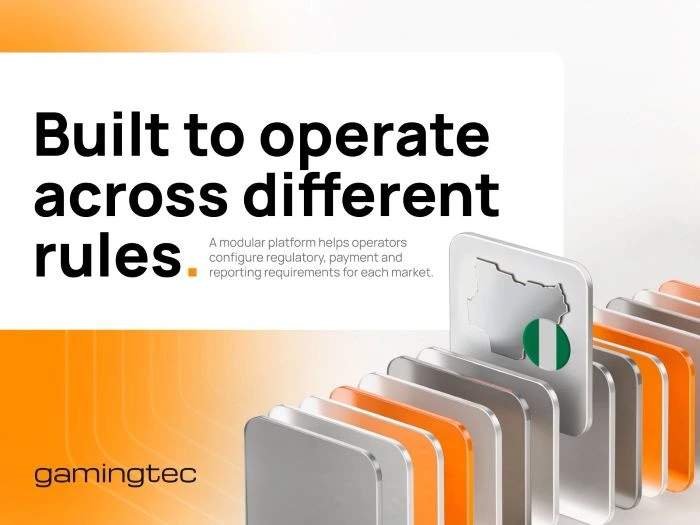
Expanding across Nigeria means more than reaching new players.
Since the Supreme Court transferred gaming regulation to the states in 2024, operators have had to account for different regulatory requirements as they enter new parts of the country.
In November 2024, Nigeria’s Supreme Court affirmed the states’ authority over lottery and gaming regulation, with federal authority applying in the Federal Capital Territory.
The main route to scale is now the Universal Reciprocity Certificate, introduced in May 2025 by the Federation of State Gaming Regulators of Nigeria (FSGRN), which covers online betting and casinos across its 22 member states. It does not reach Kano or the Federal Capital Territory, which run their own regimes.
Also Read
Fees and levies still differ from state to state. A Pulse review of published regulatory information in October 2026 found that Oyo charges N20 million for a sports-betting licence plus N500,000 for registration. Cross River charges N10 million for a new licence and N2 million for registration, and collects a monthly Good Causes Levy of 10% of stakes minus winnings.
In Kano, a licence costs N5 million, plus N300,000 to apply and a Good Causes charge on gross gaming revenue.
Regulators work through the platform
States also enforce their rules through operators’ own systems, and Lagos goes furthest. Since August 2025, every operator licensed by the Lagos State Lotteries and Gaming Authority (LSLGA) has had to integrate SafePlay, a regulator-run self-exclusion system, as a condition of keeping its licence.
A player who excludes through SafePlay is blocked across all Lagos-licensed platforms at once. Lagos also has a separate B2B supplier licence category for companies providing services to licensed gaming operators. This is an important consideration for operators choosing technology providers, as their suppliers may also need to meet the state’s licensing requirements.
In February 2026, the LSLGA introduced a 5% withholding tax on online bettors’ net winnings, with immediate effect. The tax is deducted at payout and applies to every Lagos-licensed platform, including payouts to players who live outside the state. Peter Kesitilwe, chief executive of the Africa iGaming Alliance, warned that “these abrupt changes often distort price competitiveness”.
When fees and levies differ between states within one country, an operator with several licences has to run separate rules for payouts, taxes, player protection and revenue reporting within one business.
One platform, many rulebooks
Gamingtec, an international B2B iGaming technology provider, offers a turnkey platform under which the operator keeps control of its licence, brand, payments, content, customer data and compliance processes, while Gamingtec supplies the underlying technology.
The platform’s regulatory, payment, reporting and responsible-gambling components can be configured separately for each market without rebuilding the system. “Gamingtec has developed its technology with the requirements of different markets in mind.
Its modular architecture allows operators to configure the relevant platform components and adapt the product more efficiently to local regulatory, operational and commercial requirements,” says Rikesh Lowtoo, Director of Product at Gamingtec.
Casino and sportsbook run on a single player account management (PAM) system. Through one interface, operators see registrations, deposits and withdrawals, bonus usage and transaction history across both products in real time. Payment integrations, including cards, local payment methods and crypto, are built into the same system, along with wallet management, reconciliation and transaction monitoring.
The platform is designed to handle high betting volumes with low latency, which is what players expect: according to TGM Research, 80% of African bettors prefer to place bets during live games, when odds change by the minute and a delay can cost a bet.
The casino offers more than 10,000 games, including slots, live dealer and crash titles. The sportsbook covers more than 125 sports and over 210,000 pre-match and live events a month, adds more than 5,000 virtual sports events a day, and includes Betbuilder and ComboBoost for multi-selection bets.
Gamingtec operates under licences in Portugal, Poland, Curaçao, and Anjouan, and holds a Gaming-Related Vendor Licence in the United Arab Emirates, so working with several regulators at once is already part of its business.
For an operator expanding across Nigeria, every new state licence adds another set of fees, taxes and integrations. How quickly that platform can take them on decides how fast the business can grow.