Follow Us on Google Discover
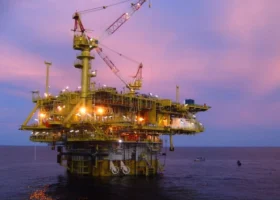
Ghana has discovered hydrocarbons in a new offshore geological formation, opening an additional exploration frontier for its oil and gas industry.
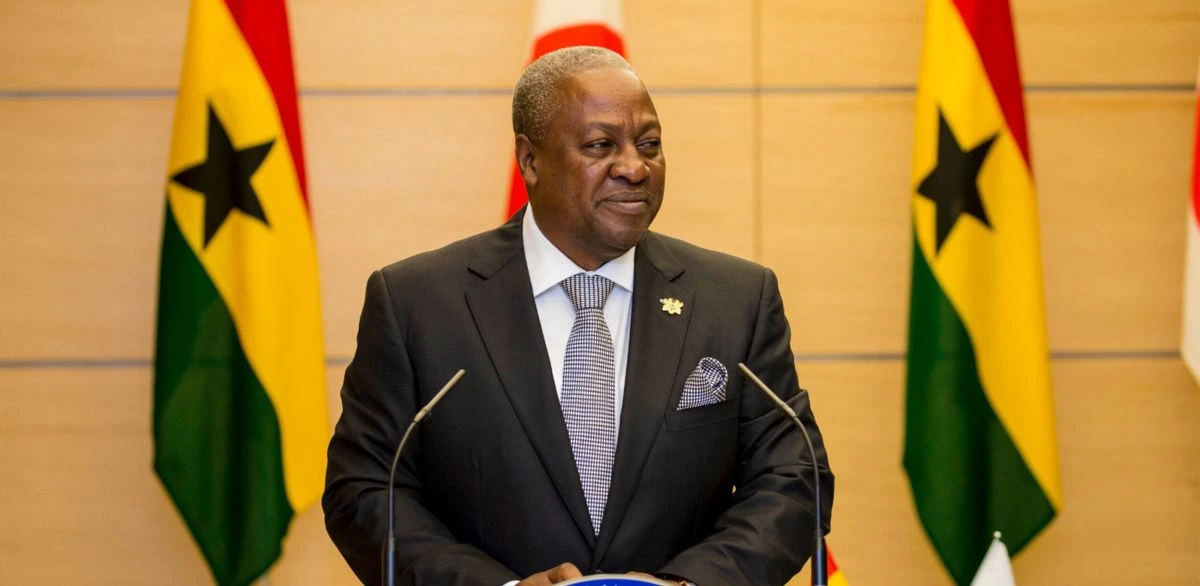
President John Dramani Mahama announced the discovery on Tuesday, November 10, 2026, at a conference in the Western Region, following confirmation by Planet One Oil & Gas.
The discovery was made at the Nya Gyidie-1X exploration well in the Deepwater Cape Three Points Block, about 148 kilometres offshore Ghana, marking the country’s first successful test of a carbonate formation as a primary exploration target.
Ghana opens new carbonate exploration frontier
The discovery introduces a geological formation different from the sandstone reservoirs that have hosted Ghana’s previous commercial oil and gas discoveries. It could expand the country’s exploration prospects as the government seeks to attract investment and replenish its petroleum reserves.
Also Read
The Nya Gyidie-1X exploration well is located in the Deepwater Cape Three Points Block, operated by Planet One Oil & Gas alongside GOIL Upstream Ltd and the Ghana National Petroleum Corporation (GNPC).
President John Dramani Mahama said the discovery marks Ghana’s first successful test of a Cenomanian-Turonian carbonate formation as a primary exploration target, expanding the geological prospects available to the country’s oil and gas industry.
- “It is the country’s first successful test of a Cenomanian-Turonian carbonate play as a primary exploration target,” he said.
However, the volume and type of hydrocarbons discovered remain unknown. Planet One’s Chief Executive, Andaleeb Sehgal, said further evaluation was underway to determine the discovery’s scale and development potential, with additional exploration drilling planned over the next 12 to 18 months.
Energy Minister John Jinapor described the discovery as a milestone in efforts to revitalise Ghana’s upstream sector and attract investment. Its significance will depend on the results of further technical evaluation and the commercial viability of developing the resource.
Ghana expands petroleum infrastructure and investment
Ghana’s petroleum industry has continued to attract investment in infrastructure and exploration as the government seeks to strengthen its energy sector, expand supply capacity and develop new opportunities across the oil and gas value chain.
- On October 6, 2026, Nairametrics reported that Asharami Ghana had commissioned a 6,000-metric-tonne liquefied petroleum gas (LPG) facility, expanding the country’s storage capacity by 10%. The development highlighted continued investment in Ghana’s petroleum infrastructure and efforts to strengthen its energy supply.
- On July 28, 2026, Africa’s upstream oil and gas investment had fallen to $37 billion, with Nigeria and four other countries dominating investment in the sector, according to the International Energy Agency (IEA).
The report provided a broader picture of investment trends shaping exploration and production across the continent.
- Earlier, on October 29, 2024, Ghana was considering importing petrol from Nigeria’s Dangote Refinery, highlighting its reliance on external refined petroleum supplies and the growing energy trade relationship between both countries.
These developments reflect the different investment and supply dynamics shaping Ghana’s petroleum industry, from infrastructure expansion and upstream exploration to regional petroleum trade.
Nigeria expands oil and gas exploration
Nigeria is also pursuing new oil and gas exploration opportunities as the government seeks to increase its hydrocarbon reserves, attract investment and strengthen production capacity.
- In October 2026, Nairametrics reported that Seplat Energy discovered an estimated 157 billion cubic feet (Bcf) of natural gas and 19 million barrels of oil in place at its Aku-01 exploration well in Nigeria. The company said further evaluation would be required to determine the commercially recoverable volumes.
- The discovery adds to Nigeria’s ongoing efforts to identify additional hydrocarbon resources and expand its petroleum production capacity.
Nigeria’s broader petroleum reserve position also reflects the country’s resource potential.
- The Nigerian Upstream Petroleum Regulatory Commission (NUPRC) declared total petroleum reserves of 37.01 billion barrels of crude oil and condensate as of January 1, 2026.
- The commission also reported natural gas reserves of 215.19 trillion cubic feet.
- In August 2026, Nairametrics reported that Nigeria could attract between $30 billion and $50 billion in offshore oil and gas investments between 2026 and 2030 through 22 major projects.
These developments highlight ongoing exploration and investment activities in West Africa’s petroleum industry as countries seek to expand their hydrocarbon reserves and strengthen production capacity.