Follow Us on Google Discover
The Federal Government has announced a 30-day discount window on petrol sold by the Nigerian National Petroleum Company Limited (NNPC Limited), with priority given to public transporters nationwide.
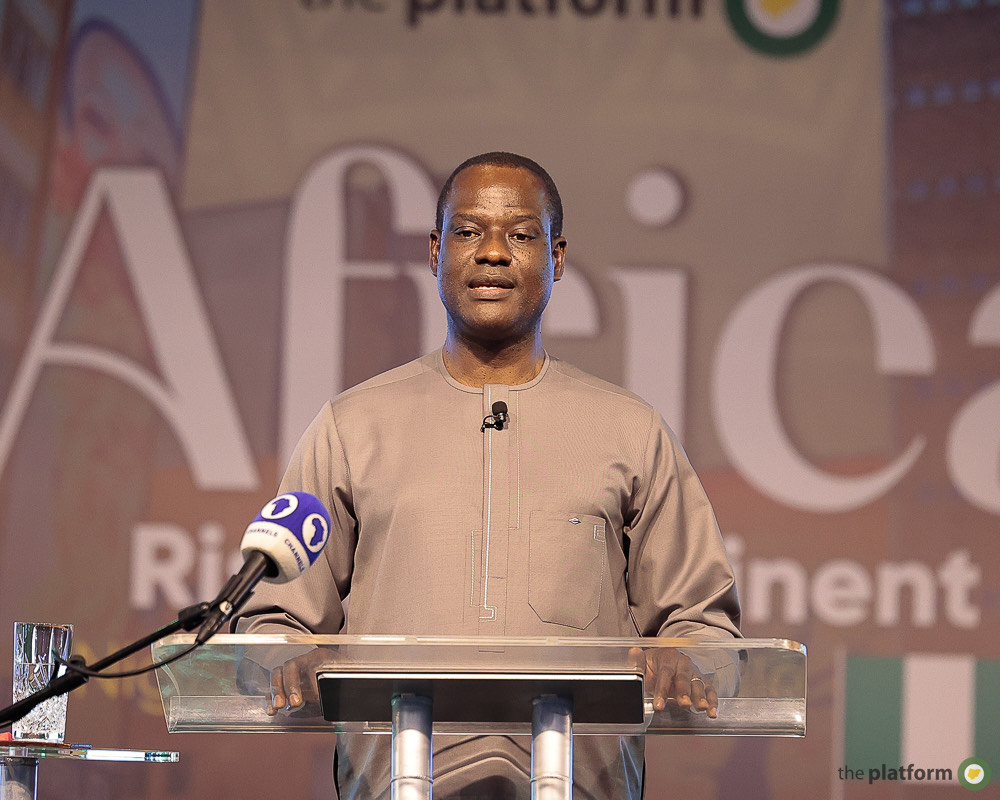
The Minister of Finance and Coordinating Minister of the Economy, Taiwo Oyedele, announced the measure at a press briefing on fuel prices and subsidy questions on Thursday, October 8, 2026, in Abuja.
Oyedele said the discount is not a subsidy but an arrangement by the government to sell petrol at cost, as part of measures aimed at reducing fuel price volatility.
FG Offers 30-Day Petrol Discount
Oyedele said the government is also pursuing forward sales of crude oil to domestic refineries as part of measures to reduce the impact of global market volatility on petrol prices.
Also Read
- “Government is taking further steps. Number one, margin discounts at NNPC stations. We are offering a discount on petrol dispensed by NNPC Limited for the next 30 days in the first instance, with priority for public transporters nationwide. So it’s not a subsidy, government is just saying we sell to you at cost.”
- “Number two, forward sales of crude to domestic refineries. As production rises and previously committed crude is freed up, these will shield pump prices from volatility in the global markets.”
- Oyedele said the arrangement is sustainable because it provides refiners with greater certainty around crude prices while helping to promote price stability for consumers.
- “So the idea we have is an idea that is sustainable. You can sell your crude forward, we say to the refiners for the next six months, we are selling you crude at $80 per barrel, for example. That preserves your budgets, provides certainty to the refiners, and price stability to the consumer.”
The government’s measures are aimed at reducing the effect of fluctuations in crude prices and exchange rates on domestic petrol prices.
FG Sets N1,350 Petrol Ceiling
The minister also said the Federal Government would introduce price modulation, with a N1,350 per litre ceiling that he said is neither a subsidy nor price control.
He said pump prices should not have to follow every movement in global crude prices or exchange rates.
- “Pump prices should not have to follow every swing in global crude or the exchange rates. The government is negotiating a ceiling of N1,350 a litre on the ex-Gantry or landing cost of petrol to keep pump prices stable.”
- Oyedele explained that when the cost of petrol rises above the ceiling, refiners and importers will absorb the shortfall and recover the difference at a later time.
- “Where costs rise above the ceiling, refiners and importers will carry the shortfall and recover it later, when crude prices or exchange rates allow without breaching the ceiling.”
- “The reasoning is simple. N1,400 a litre today and N1,400 a litre tomorrow is better than N1,500 a litre today and N1,300 a litre tomorrow. Why? Because volatility itself adds to uncertainty and costs. And when fares go up sharply, they rarely come down as fast.”
Oyedele noted that the price ceiling will be reviewed monthly, with research conducted where necessary and the relevant figures published to ensure transparency.
What you should know
Nairametrics reported last month that petrol prices had increased across major Nigerian cities, with retail outlets selling between N1,400 and N1,450 per litre.
Checks by Nairametrics showed that as of Sunday, most filling stations in Lagos were dispensing petrol between N1,400 and N1,430 per litre, while MRS stations sold at N1,395 per litre. In Abuja, pump prices ranged from N1,400 to N1,450 per litre.
The adjustment marked another increase in domestic fuel prices, which had risen sharply from around N830 per litre before the Middle East crisis earlier this year to more than N1,300 in many parts of the country.
The latest government measures are therefore aimed at moderating price movements and reducing the impact of sharp changes in crude prices and exchange rates on consumers and businesses.