Follow Us on Google Discover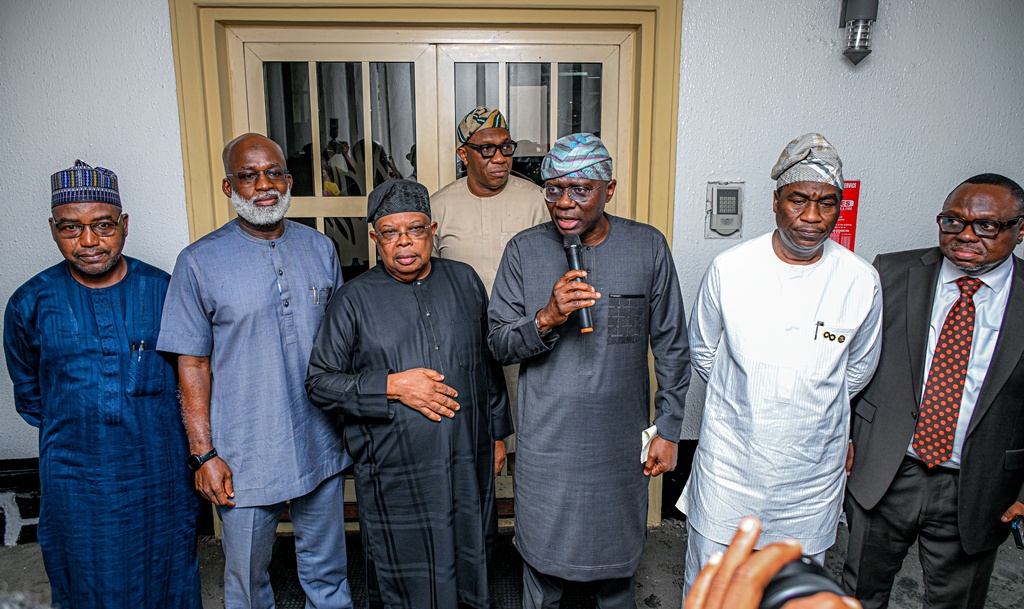
The Federal Government and the Lagos State Government have agreed to work together to deliver stable and reliable electricity to the Lagos corridor under the 24/7 Energy Zones pilot approved by President Bola Tinubu.
According to a statement from the Ministry of Power, the agreement was reached during a high-level technical session at Lagos House, Marina, between the Minister of Power, Joseph Tegbe, and Lagos State Governor Babajide Sanwo-Olu, alongside senior officials from both governments and agencies in the power sector.
The Lagos corridor is the first location for the 24/7 Energy Zones pilot, which is expected to extend to the Abuja Kaduna Kano and Enugu Port Harcourt corridors as part of efforts to improve electricity supply across major commercial and industrial centres.
FG secures DisCos commitment
Tegbe said the Ministry of Power had engaged electricity distribution companies and secured commitments from them to increase power offtake and provide steady and reliable electricity to customers along the Lagos corridor.
- He said the Federal Government would work with Lagos State around four priority areas approved by the President: grid stabilisation, market liquidity, grid expansion, and governance and regulatory harmonisation.
- The minister said the initiative would require coordinated action across the electricity value chain, with both federal and state authorities working to resolve issues affecting power supply and the development of the electricity market.
- Governor Sanwo-Olu welcomed the federal government’s intervention, saying Lagos State was committed to working with the Ministry of Power to develop practical solutions to persistent challenges in the electricity sector.
He said the state would work towards creating a bankable, collaborative and competitive electricity market in Lagos.
Joint committee to drive implementation
To translate the agreement into concrete actions, the Federal Government announced the establishment of a Joint Technical Committee to identify and resolve outstanding issues and recommend next steps for the implementation of the 24/7 Energy Zones pilot.
The committee will be chaired by the Managing Director of the Nigerian Independent System Operator (NISO) and co-chaired by the Permanent Secretary of the Lagos State Ministry of Energy.
Its membership will include representatives of the Nigerian Electricity Regulatory Commission (NERC), Transmission Company of Nigeria (TCN), Rural Electrification Agency (REA), Lagos State Electricity Regulatory Commission (LASERC), Lagos Independent System Operator (LAISO), Lagos State Electricity Authority (LSEA) and the Office of the Minister of Power.
The technical committee will report to a Steering Committee chaired by Governor Sanwo-Olu and co-chaired by Tegbe.
The Steering Committee will also include the Special Adviser to the President on Power, the Permanent Secretary of the Federal Ministry of Power and the Lagos State Commissioner for Energy.
Energy Zones to address power problem
Last week, Nairametrics reported that the federal government was advancing plans to establish Energy Zones in Nigeria’s highest-demand areas as part of efforts to deliver stable, 24-hour electricity to homes, businesses and industries.
Power Minister Tegbe had discussed the proposed zones at a recently held strategic meeting with the leadership of selected electricity distribution companies, focusing on improving the distribution end of the power value chain.
According to the Minister, the zones are intended to address distribution constraints, unlock commercial and industrial demand, and improve DisCo revenue and collections.
Tegbe said challenges in Nigeria’s electricity sector extend beyond generation and transmission to the amount of power that can be taken up and delivered to consumers through the distribution network.