Follow Us on Google Discover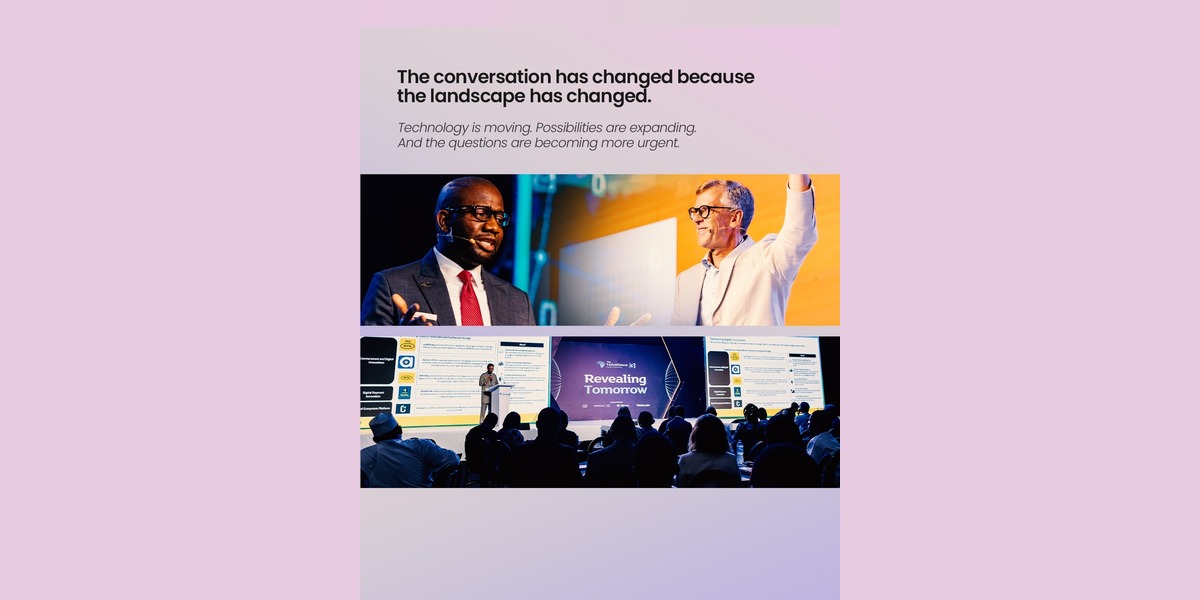
Africa’s digital transformation is entering a more demanding phase.
Over the past decade, significant progress has been made across digital payments, cloud adoption, mobile connectivity, fintech, e-commerce and technology-enabled services. Artificial intelligence is now creating another wave of opportunity, while governments across the continent are investing more deliberately in digital infrastructure and public-service platforms.
But growth in digital adoption is creating a new set of economic questions.
Can infrastructure keep pace with demand? Can African businesses scale technology investments into measurable productivity? Can financial systems become interoperable enough to support seamless regional commerce? Can governments create digital public infrastructure that reduces friction for citizens and businesses? And can the continent attract sufficient long-term capital to build the systems required for its next stage of growth?
Also Read
These questions will form the core of discussions at TeXcellence 5.0, scheduled for 13 October 2026 at the Landmark Event Centre, Lagos.
Convened by CWG Plc, the fifth edition carries the theme “Accelerating Africa’s Digital Future.”
The conference’s thematic evolution reflects the changing maturity of Africa’s technology conversation.
TeXcellence 3.0 in 2024 focused on “Revealing Tomorrow”, looking at the technologies and trends likely to shape industries.
In 2025, “Future-Forward Africa” moved the conversation towards competitiveness and what African businesses would require to participate more effectively in the global digital economy.

This year, the emphasis shifts towards execution.
Africa’s problem is increasingly not an absence of innovation, but the difficulty of converting innovation into productivity and scale.
Banks, fintechs, payment processors and mobile-money platforms have driven significant adoption, but fragmentation between markets continues to increase the cost and complexity of cross-border commerce.
TeXcellence 5.0 will devote a major conversation to Africa’s financial infrastructure, examining interoperability, settlement systems and the technologies required to move value more efficiently across the continent.
Enterprise AI will also feature prominently.
As companies move beyond experimentation, executives are demanding clearer answers around return on investment. Where is AI already improving productivity? Which applications are delivering measurable commercial outcomes? What infrastructure and governance are required to move from isolated pilots to enterprise-wide deployment?
The public sector faces a related challenge.
Digital government is increasingly becoming economic infrastructure. Identity systems, data exchange, digital payments and citizen-service platforms can reduce transaction costs across entire economies when they are designed effectively and connected.
A dedicated GovTech conversation at TeXcellence will explore what an African digital public infrastructure stack should look like and how governments can build systems capable of enabling private-sector innovation at scale.
Other discussions will address trust, digital identity, fraud and cybersecurity—issues that become more important as a larger share of economic activity moves onto digital platforms.
The conference will also bring Africa’s creative economy into the broader digital-growth conversation. With African film, music and culture reaching increasingly global audiences, attention is shifting from visibility to value capture: intellectual property, ownership, distribution and the business infrastructure required to build globally competitive creative enterprises.
Participants across the programme include executives, policymakers, technology builders and business leaders from several African markets, including Dr. Joe Abah, Prof. Chidiebere Onyia, Dotun Adeoye, Mosope Okanlawon, Ifeoluwa Johnson, Ernest Mbenkum, Collin Babirukamu, Rowena Turinawe, Togbe Romaric Agbagla, Stella Fubara and C.J. “Kenneth” Gyang.
Across its previous editions, TeXcellence has convened thousands of participants and senior executives around Africa’s technology and business agenda.
For its fifth edition, however, the central question is less about how much technology Africa can adopt.
It is about how effectively technology can be converted into productivity, stronger institutions, scalable businesses and regional economic opportunity.
That is the point at which digital transformation becomes economic transformation.
And it is increasingly where Africa’s technology conversation needs to go next.