Follow Us on Google Discover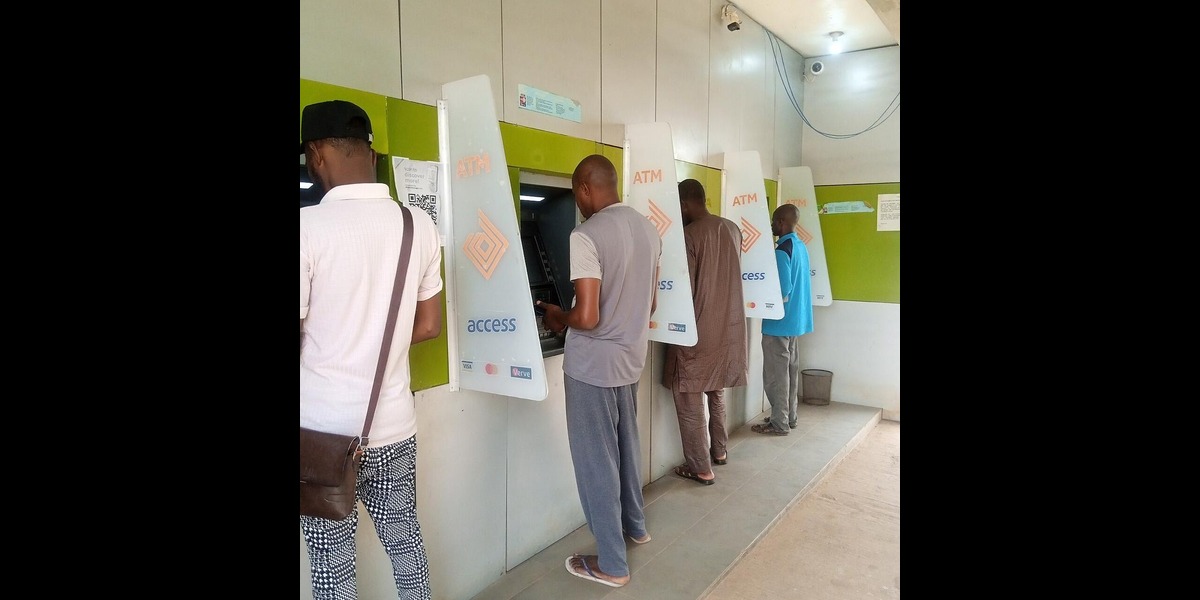
- By extending access to finance to 2.528 million low-income Africans and onboarding 78,438 MSMEs onto financing platforms, Access is using technology to widen economic participation, helping more people save, borrow, build businesses, and create opportunity.
For most of Africa’s modern history, financial inclusion depended on distance. If you lived within reach of a bank branch, you could save, borrow, and transact.
If you lived hours from the nearest town, the formal economy passed you by. Millions of hardworking, creditworthy people were excluded not because they lacked ambition or ability, but because serving them was uneconomic under an old model built around bricks and mortar. Technology is finally collapsing that distance, and with it, one of the continent’s most persistent barriers to prosperity.
In 2025, Access Holdings extended access to finance to 2.528 million low-income Africans and onboarded 78,438 micro, small and medium enterprises onto its financing platforms. Behind those numbers are traders, smallholder farmers, artisans and young entrepreneurs stepping, often for the first time, into a formal system that can help them save securely, weather shocks and grow. Each new customer is a household given a little more control over its future, a way to keep earnings safe, to smooth income across lean seasons, and to build the kind of financial record that unlocks credit and opportunity later on.
The impact is felt most acutely in communities that banks have historically found uneconomical to serve. A market woman who once kept her earnings under a mattress can now build a savings record. A young mechanic can access a small digital loan without collateral or a branch visit. A farmer can receive payment for a harvest directly and securely rather than carrying cash along unsafe roads. These are not abstractions; they are the everyday texture of inclusion across African towns and villages, where access to a single financial tool can change the trajectory of a family.
Also Read
The holding company model is what makes this reach affordable. Access Bank anchors deposits and trade; Oxygen X Finance delivers instant, app-based consumer credit to people a branch could never profitably reach; Hydrogen Payment Services provides the low-cost rails that make micro-transactions viable; and Access ARM Pensions opens the door to long-term retirement savings for workers in the informal economy. Each subsidiary lowers the cost of serving those the old model left out, and each reinforces the others: a payment today generates the data that supports a loan tomorrow and a pension contribution the year after.
This matters because inclusion is not charity; it is economics. Individuals inside the formal system save more, invest more, and are more resilient to emergencies. Small businesses with access to credit hire more people and buy more from their own suppliers. Across a continent where the informal sector still dominates, drawing millions into formal finance expands the very base on which African economies grow. Every person brought in becomes a saver, a borrower, a taxpayer, and a participant, widening the market not just for Access, but for the whole economy around them.
For entrepreneurs, the shift is transformative. MSMEs are the backbone of African economies, employing the majority of workers. However, they remain chronically starved of capital, locked out by a lack of collateral, credit history, or proximity to a lender. By bringing 78,438 of them onto financing platforms in a single year, Access is addressing one of the continent’s most stubborn constraints, turning informal hustle into bankable enterprise, and giving small businesses the tools to accept payments, access working capital, and plan for growth rather than mere survival.
Technology is what makes the economics finally work. Digital infrastructure, mobile channels, and data allow the Group to reach a farmer in northern Nigeria or a fish trader in coastal Ghana at a fraction of the cost of building a branch. The same rails that move billions of payments also gather the information that lets the Group assess risk, tailor products, and extend credit responsibly to customers who were previously invisible. Reach is now a function of software and data, not real estate, and that changes everything about who can be served, and how affordable it is.
The strategic prize is a larger, more resilient economy. Every newly included saver and every newly financed enterprise widen the base of formal activity on which growth, tax revenue and stability ultimately depend, a virtuous circle in which reach and opportunity steadily reinforce one another across the continent.
The ambition is to keep widening the circle. Inclusion is not a target reached once and celebrated; it is a continuing effort to bring the next million people and the next cohort of small businesses into a system that can help them thrive. The movement of 2.528 million low-income Africans into formal finance in a single year, alongside tens of thousands of enterprises, is evidence that the long-promised goal of inclusion is finally being kept, not through slogans, but through infrastructure, technology and intent, one customer and one business at a time.