Follow Us on Google Discover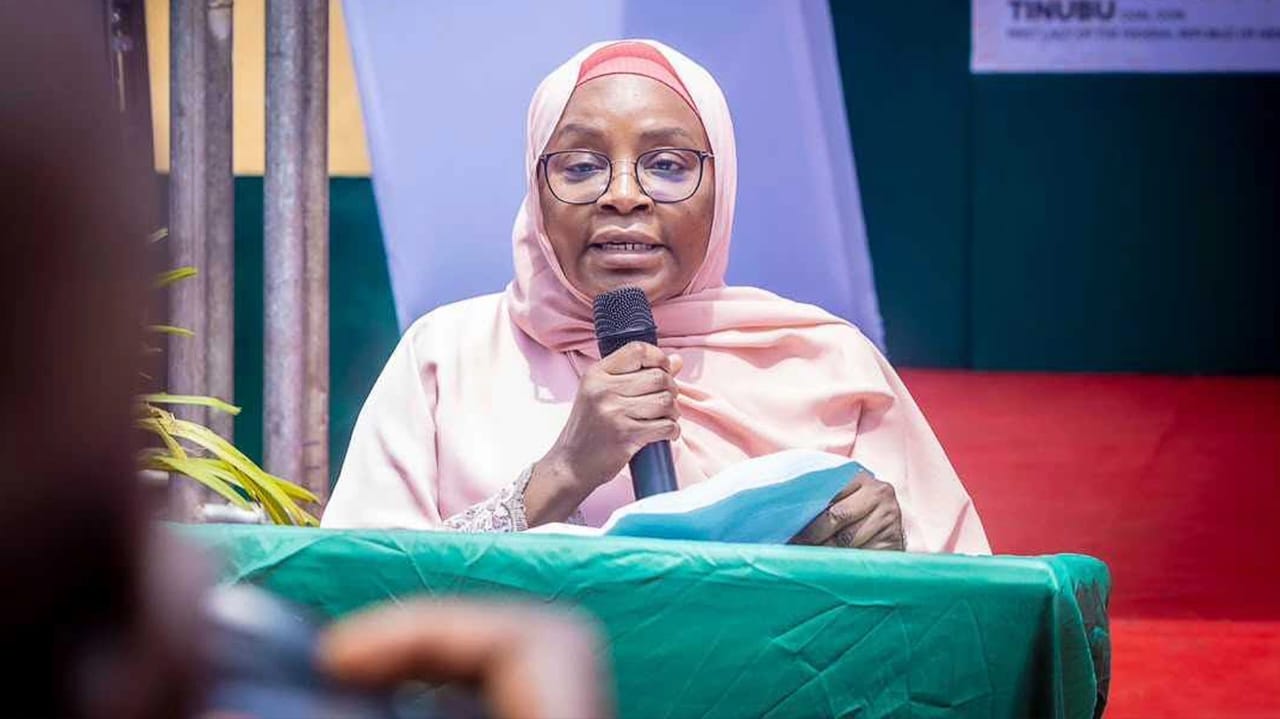
The Universal Basic Education Commission (UBEC) will commence full implementation of its 10-Year Universal Basic Education (UBE) Roadmap, covering 2026–2035, in the first week of October.
The Executive Secretary of UBEC, Dr Aisha Garba, disclosed this on Monday in Abuja at the opening of a two-day consultative workshop with chairmen of the 36 State Universal Basic Education Boards (SUBEBs) and UBEC directors.
The commission also unveiled the Basic Education Action Plan Management System (BEAPMS), a digital platform designed to improve planning, transparency and monitoring of basic education projects across Nigeria.
UBEC adopts whole-school approach
Garba said the roadmap and BEAPMS are part of reforms aimed at moving UBEC interventions away from isolated projects towards a “whole school approach”.
Also Read
Under the new approach, states will be required to assess the full needs of a school before their action plans are approved by UBEC.
- “For any state to do renovation, you have to do a whole school approach. A whole school approach means you take a school and look at all the gaps,” Garba said.
- “We are no longer going to be doing two blocks of classrooms in the bush and abandoning them without any fence or toilet,” she added.
She explained that where a school requires fencing, toilets, furniture, computers or additional classrooms, such needs would be captured as part of the intervention plan.
UBEC revises matching grant formula
Garba also announced a revised matching grant formula that will allow states to deploy UBEC funds according to their specific education needs.
She said the previous formula focused largely on new infrastructure, limiting access for states whose priorities were the maintenance and improvement of existing schools.
- “The new formula allows each state to look at its own needs because there is no one-size-fits-all,” she said.
- “If the need on the ground is furniture, renovation, fencing, computers or other facilities, then states are allowed to address those needs,” she added
According to Garba, the revised formula could also support enrolment materials and additional teachers where states identify increased enrolment as a priority.
New digital platform to track UBEC projects
The commission said BEAPMS will also give communities a role in monitoring projects implemented in schools.
Garba said the amount of money accessed by each state will be published on UBEC’s website alongside information on the projects being implemented.
- “This will also allow us to bring in the community to be part of the monitoring of the projects that we do on the ground,” she said.
She added that the system would give parents and community members greater visibility into how UBEC funds are used and the projects being implemented.
- “With that, the community can hold us accountable to the money we have accessed from UBEC, the projects we are doing on the ground, as well as the quality of projects,” she said.
Garba said BEAPMS had been under development for more than a month, adding that SUBEB chairmen had been fully onboarded ahead of its full implementation.
Earlier efforts to reform UBEC funding
The latest reforms build on earlier efforts by UBEC to improve how basic education funds are planned, accessed and monitored.
- Nairametrics reported in July 2025 that the Federal Government was reviewing the guidelines for accessing UBEC intervention funds, with future disbursements expected to be tied to performance targets.
- The review was aimed at making the funding process more flexible for states while strengthening accountability and value for money.
- In April 2026, UBEC allocated N5.18 billion to 518 communities across the country under its School-Based Management Committee–School Improvement Programme (SBMC-SIP).
In May 2025, UBEC also began developing a new template to guide states in preparing work plans for accessing federal intervention funds, following concerns over conditions attached to accessing the funds.