Follow Us on Google Discover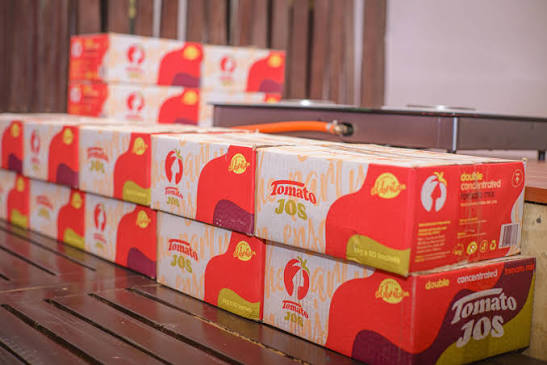
The EU-funded Agriculture Financing Initiative (AgriFI) has invested $2.5 million in Tomato Jos Inc. to expand climate-smart tomato production and processing in northern Nigeria.
Mr Modestus Chukwulaka, Press Officer of the European Union (EU) Delegation to Nigeria and ECOWAS Officer, disclosed this in a statement released in Abuja on Monday.
The investment, managed by the European Development Finance Institutions Management Company (EDFI MC) through AgriFI’s ACP Regional Window, will support packaging equipment, factory upgrades and expanded drip irrigation.
The convertible-note investment is expected to help Tomato Jos expand its product range, reduce production and energy costs, deepen its engagement with smallholder farmers and increase the availability of locally processed tomato paste in Nigeria.
Also Read
EU-backed investment targets tomato processing
The $2.5 million investment will support Tomato Jos’ vertically integrated farming and processing operations, including the expansion of consumer-packaged tomato paste for nationwide distribution.
- More than half of the company’s raw materials are currently sourced from smallholder farmers in Kaduna State.
- The financing will fund new packaging equipment, factory upgrades and expanded drip irrigation.
- Tomato Jos plans to develop additional product formats and serve new customer segments, including business-to-business and Hotel, Restaurant and Catering (HORECA) customers.
- The investment is expected to reduce energy and production costs while supporting the company’s expansion.
- Tomato Jos also expects the investment to strengthen its contribution to food security and import substitution by reducing post-harvest losses and increasing locally processed tomato paste.
EU Ambassador to Nigeria and ECOWAS, Gautier Mignot, said the investment demonstrated how private capital could support local agricultural value chains.
- “Through the EU-funded AgriFI ACP Regional Window, this investment in Tomato Jos supports a Nigerian business that is creating local value from farm to shelf.”
- “It is a practical example of how the EU works with partners to mobilise sustainable private investment in inclusive and climate-smart agriculture,” Mignot said.
The investment is also expected to catalyse a $6 million equity round in 2028, representing an anticipated leverage factor of 3.2 times.
Tomato Jos targets 16,000 tonnes by 2029
Tomato Jos expects its annual fresh-tomato production to increase to about 16,000 tonnes by 2029 from just over 4,500 tonnes currently.
- The company also plans to expand its network of smallholder farmers and increase farmer incomes as production grows.
- The number of smallholder farmers engaged by Tomato Jos is expected to rise from about 500 to 1,500 by 2029.
- The company aims to increase income per farmer by more than 150% between 2024 and 2029.
- EDFI MC said the company’s integrated model links farmers to reliable offtake while providing access to land, irrigation, inputs and technical support.
EDFI MC Chief Executive Officer Rodrigo Madrazo said the AgriFI investment would support targeted investments in irrigation and packaging capacity while helping attract additional private capital.
Madrazo said Tomato Jos combined a commercial model with development impact by linking agricultural production with local processing and farmer support.
Tomato Jos expands northern value chain
Tomato Jos CEO Mira Mehta said the investment would support the company’s efforts to build a more resilient tomato value chain in northern Nigeria.
- “AgriFI’s investment supports important next steps in building a resilient tomato value chain in northern Nigeria.”
- “It will enable investments that expand our production and market reach, reduce our energy costs and carbon footprint, and deepen our work with smallholder farmers,” she said.
Mehta said the company aimed to make locally produced, high-quality tomato paste more accessible to Nigerian consumers while creating more reliable economic opportunities for farming communities.
The investment forms part of AgriFI’s broader mandate to unlock and leverage sustainable investment in agricultural small and medium-sized enterprises in developing countries, with a focus on smallholder inclusion. The ACP Regional Window targets agricultural value chains in African, Caribbean and Pacific countries with support from the Organisation of African, Caribbean and Pacific States Secretariat.
The EU has also previously announced broader support for Nigeria, including a €288 million package covering sectors such as healthcare, agriculture, finance, migration, climate and digital public infrastructure, as well as commitments to development projects in the North-West and North-East regions.