Follow Us on Google Discover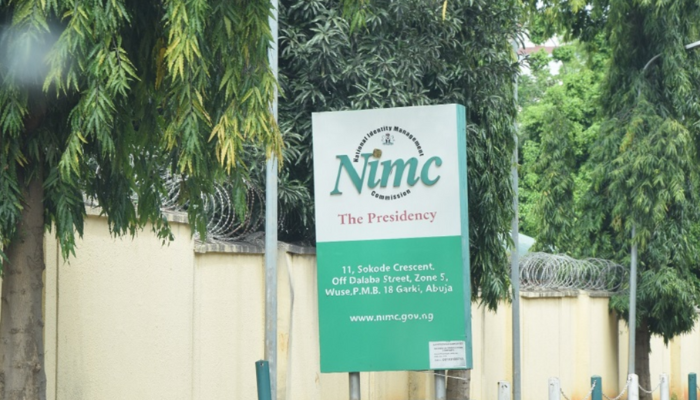
The National Identity Management Commission (NIMC) has denied claims that Nigerians’ National Identification Numbers (NINs) and other personal information were exposed, following a video circulating on social media alleging that citizens’ data had been exposed and offered for sale.
The denial was contained in a statement by NIMC’s Head of Corporate Communications, Kayode Adegoke, in Abuja on Wednesday.
The commission said its systems remain protected and urged Nigerians to disregard unverified information that could create fear over the safety of their identity information.
Adegoke said the commission had measures in place to protect NINs and other personal information contained in the National Identity Database.
Also Read
NIMC orders investigation
According to NIMC, its Director-General, Abisoye Coker-Odusote, has ordered a comprehensive investigation into the claims to establish whether any of the commission’s tokenisation verification agents breached their licensing agreements.
The investigation will also determine whether the licensing agreements were breached directly or through sub-licensees, the commission said.
Coker-Odusote reaffirmed NIMC’s commitment to protecting the identity information entrusted to it and to data protection and privacy.
- “NIMC will continue to work with relevant stakeholders to ensure that the identity information entrusted to the commission is properly protected,” she said.
NIMC says systems remain protected
Adegoke said the claims circulating online were misleading and assured Nigerians that there was no need for panic over the alleged exposure of their identity information.
- “Our systems are protected and the commission remains committed to ensuring the safety and security of citizens’ identity information,” he said.
He added that NIMC would continue to strengthen measures against unauthorised access.
- “NIMC takes the protection of citizens’ personal data seriously and will continue to strengthen measures against unauthorised access,” Adegoke said.
The commission also advised Nigerians to use only approved channels for NIN verification and other identity-related services.
NIMC said it would continue working with relevant stakeholders to strengthen the protection of citizens’ identity information and uphold data privacy.
NIMC has faced scrutiny over NIN data security
NIMC has previously faced concerns over the security of Nigerians’ identity data.
- In March 2024, the Nigeria Data Protection Commission (NDPC) investigated allegations of unauthorised access to NIN data after reports that a private website, XpressVerify.com, could retrieve Nigerians’ personal information.
NIMC subsequently restricted licensed agents’ access to its NIN database while the investigation continued.
- In June 2024, NIMC said its licensed Front End Partners (FEPs) and verification agents would undergo mandatory security vetting as part of measures to strengthen the security of the NIN database.
The issue is particularly relevant as NIMC’s role in Nigeria’s digital identity infrastructure has expanded.
In June 2026, President Bola Tinubu signed the NIMC Act 2026 into law, replacing the 2007 legislation and giving the commission expanded powers over Nigeria’s digital identity infrastructure.
The new law retains the NIN as the country’s foundational identity credential and provides for enhanced protections for personal data.