Follow Us on Google Discover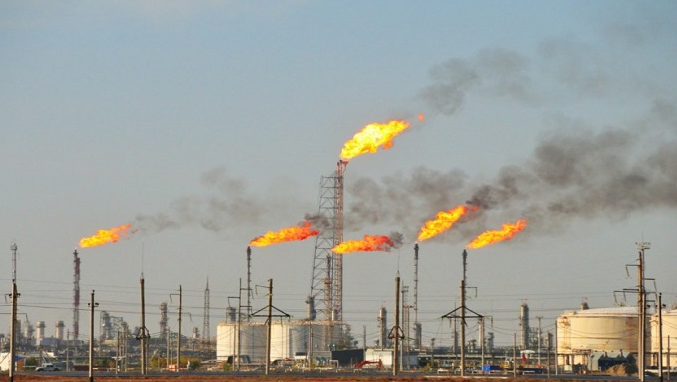
Nigeria’s gas flaring rate climbed to 7.48% in August 2026, the highest level recorded since October 2025, as the volume of gas flared rose to 18,350.55 million standard cubic feet (MMSCF).
This is according to data from the Nigerian Upstream Petroleum Regulatory Commission (NUPRC).
Analysis of the data by Nairametrics reveals that the August figure is the highest since October 2025 when it was 7.55%.
The latest increase came despite gas utilisation remaining relatively high at 92.5% during the month, with 227,088.59 MMSCF used for field operations, domestic supply and exports.
Also Read
What the data is saying
Nigeria produced 245,439.13 MMSCF of gas in August, comprising associated and non-associated gas.
- Of this volume, 18,350.55 MMSCF was flared, while the remaining 227,088.59 MMSCF was utilised.
- The amount flared increased by 2,763.01 MMSCF, or 17.7%, from 15,587.54 MMSCF in July. This followed a decline in the previous two months, from 17,644.56 MMSCF in May to 16,636.40 MMSCF in June and 15,587.54 MMSCF in July.
- August therefore recorded both the highest flared volume and the highest flaring rate so far in 2026.
The 2026 monthly data shows that gas flaring remained above 6% throughout the first eight months of the year.
- The rate stood at 7.10% in January before falling to 6.44% in February and 6.40% in March. It subsequently increased to 6.79% in April and 6.98% in May.
- The rate eased to 6.77% in June and 6.72% in July before rising to 7.48% in August.
- The August rate was therefore 1.08 percentage points higher than the 6.40% recorded in March, the lowest level so far this year.
- From January to August, Nigeria flared about 131,564 MMSCF of gas, based on the NUPRC monthly figures.
The deterioration is also evident when compared with August 2025.
- Nigeria flared 16,729.35 MMSCF in August last year, equivalent to 7.37% of total production. The corresponding figures in August 2026 were 18,350.55 MMSCF and 7.48%.
This represents a year-on-year increase of 1,621.20 MMSCF, or 9.7%, in the volume of gas flared, while the flaring rate increased by 0.11 percentage points.
Total gas production also rose from 227,015.22 MMSCF in August 2025 to 245,439.13 MMSCF in August 2026, an increase of about 8.1%.
Get up to speed
NUPRC data showed that the country flared 203,965 MMSCF, equivalent to about 203.9 billion standard cubic feet, in 2025, even though overall gas utilisation stood at 92.4%.
- Total gas production that year reached approximately 2.71 trillion standard cubic feet, with about 2.50 trillion standard cubic feet utilised across field operations, domestic supply and exports.
- President Bola Tinubu has previously charged the management of Nigeria Liquefied Natural Gas (NLNG) to unlock greater economic value from the country’s gas resources following the high level of flaring.
Nigeria also recorded a 12% increase in gas flaring in 2024, according to World Bank data, placing it among countries with significant increases in flared volumes that year.
What you should know
According to the World Bank, Nigeria recorded an 8% increase in gas flaring volumes alongside an 8% rise in oil production in 2025.
- Nigeria has repeatedly pledged to eliminate routine gas flaring and maximise the value of its vast natural gas resources.
- The country holds more than 200 trillion cubic feet of proven natural gas reserves, among the largest in Africa.
In October 2025, NUPRC unveiled a comprehensive Gas Development Roadmap aimed at unlocking over 55 trillion cubic feet of uncommitted gas reserves and attracting billions of dollars in new investments across Nigeria’s gas value chain.