Follow Us on Google Discover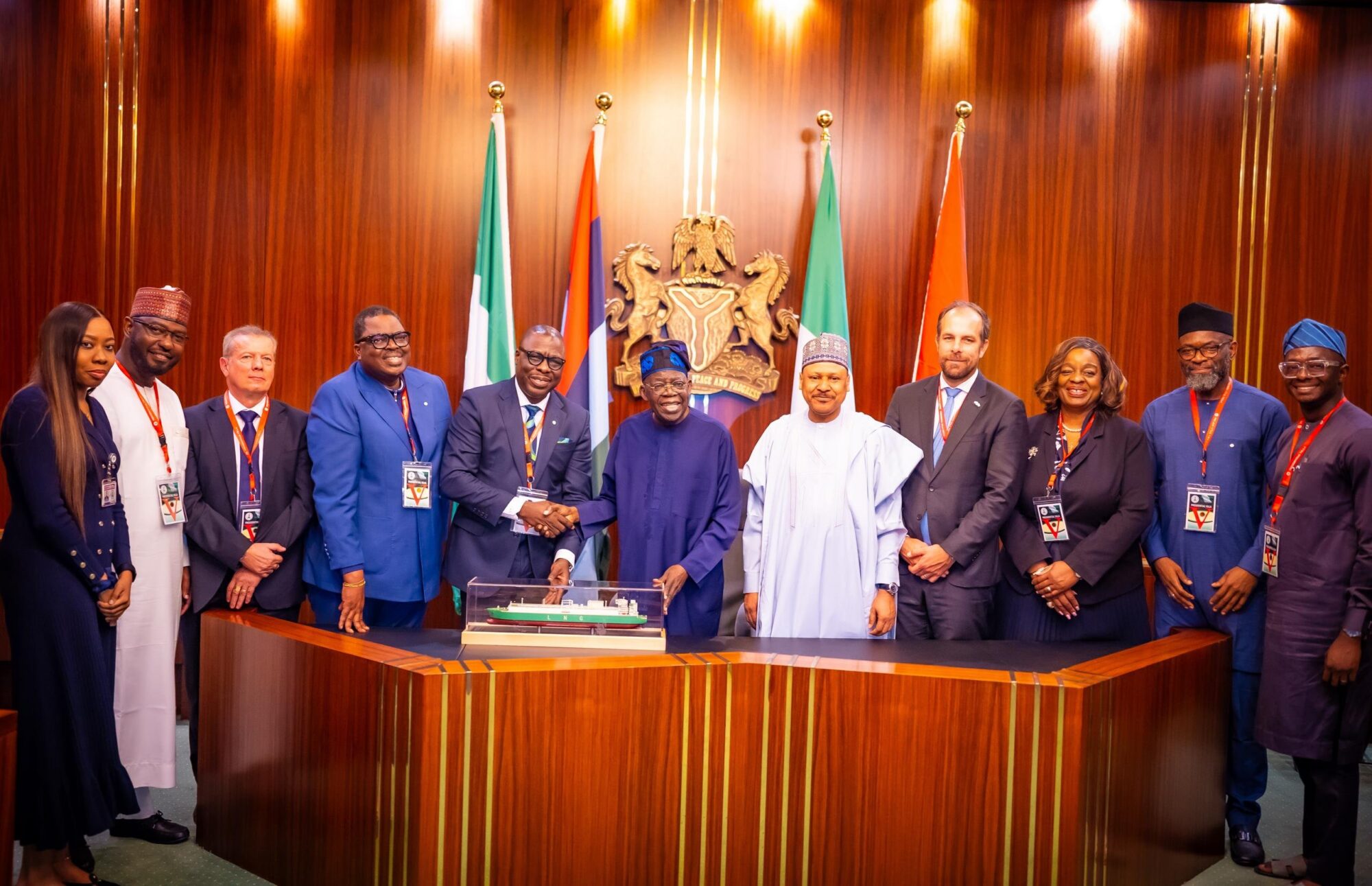
President Bola Tinubu has charged the management of Nigeria Liquefied Natural Gas (NLNG) to turn the nation’s gas reserves into economic benefits after Nigeria flared more than 203.9 billion standard cubic feet of natural gas in 2025.
The President stated this on Wednesday at the State House, according to a statement by Bayo Onanuga, Special Adviser to the President on Information and Strategy, on Wednesday, August 26, 2026.
He was said to have received members of the NLNG Board, led by its Managing Director and Chief Executive Officer, Engineer Adeleye Falade.
What they are saying
The President urged NLNG to do everything within its powers to ensure Nigeria derives maximum benefits from its gas reserves rather than allowing them to be flared.
Also Read
- “I am inspired to understand that you are not limiting yourself to the gradual objective of upgrading.
- “My major concern is the domestic utilisation, where you must be able to take out the flaring and convert potential environmental liability to what could be strategically and economically beneficial to the consumers in the country,” the President added.
The President acknowledged that NLNG is doing a great job of boosting the country’s revenue by taking advantage of international interest so that Nigeria can derive benefits, but he advised the company to “help us back home.”
He commended the company for ensuring a good return on investment while assuring the team that he would do whatever was within his power to incentivise it to maximise the organisation’s potential for Nigerians’ benefit.
He charged the company to think about the domestication of some energy requirements and pricing mechanisms so that the ordinary man would feel the impact.
In his remarks, the Managing Director and Chief Executive Officer of NLNG, Engineer Adeleye Falade, told the President that the board visited to brief him on the company’s operations since he assumed office in April this year.
- According to him, “NLNG has generated over $150 billion since inception, with shareholders, including Nigeria, receiving about $47 billion as dividends,” while “Nigeria has a 49 per cent stake in the organisation.”
He said NLNG had earlier been operating at about 60 per cent capacity because the country could not produce crude optimally, resulting in the use of only four of the six available trains.
- “Due to increased oil production from positive developments in the oil and gas sector, capacity has been increased to five trains, with more improvements expected,” he was quoted as saying.
He told the President that, for now, all LPG production, commonly known as cooking gas, is concentrated on the domestic market.
Get up to speed
According to the Nigerian Upstream Petroleum Regulatory Commission’s (NUPRC) full-year 2025 Gas Production Status Report, the country flared more than 203.9 billion standard cubic feet of natural gas in 2025, even as overall gas utilisation remained above 92 per cent.
- NUPRC data showed that total gas production in 2025 stood at about 2.71 trillion standard cubic feet, comprising 1.46 trillion scf of associated gas and 1.25 trillion scf of non-associated gas. Of this volume, roughly 2.50 trillion scf was utilised across field operations, domestic supply, and exports.
- The gas flared in 2025 represented 7.54 per cent of total gas produced during the year.
The development marked an increase from the 192.9 billion scf recorded in 2024, despite regulatory pressure and flare commercialisation initiatives.
What you should know
Flaring gas in large volumes carries major environmental and economic consequences for Nigeria.
Gas flaring contributes to greenhouse gas emissions, local air pollution, and health risks in host communities.
In 2025, Nigeria remained one of the world’s leading gas-flaring countries, following a 12 per cent increase in flared gas volumes in 2024, the second-largest rise globally.