Follow Us on Google Discover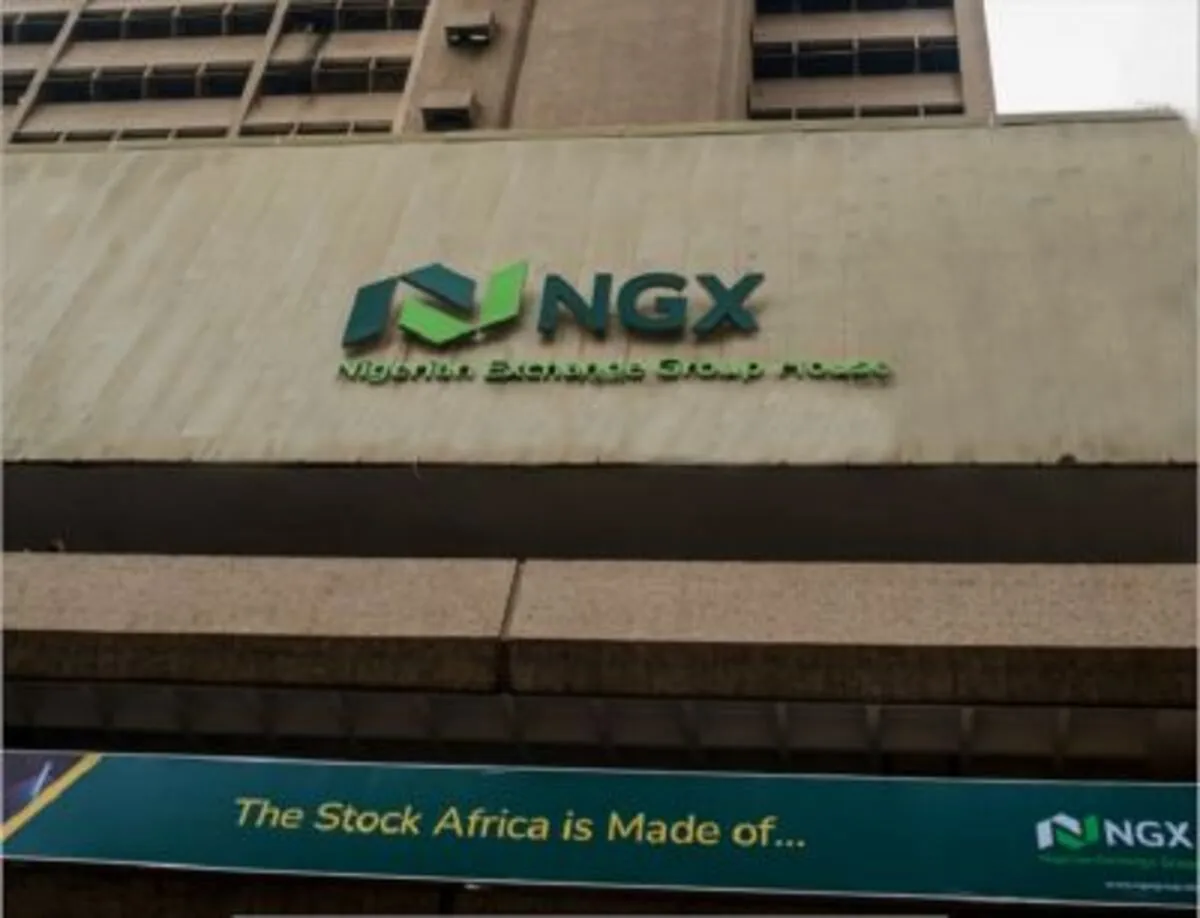
The Nigerian Exchange (NGX) postponed the scheduled August launch of its new pricing methodology as market participants called for more time to absorb the impact of recent reforms, particularly the transition to T+1 settlement cycle, while investors prepare for the Dangote Refinery’s planned N2.15 trillion initial public offering (IPO).
Nairametrics learnt that capital market operators said the number of reforms taking place simultaneously could complicate implementation and urged the Exchange to allow the market to absorb existing changes before introducing another operational adjustment.
According to market participants familiar with the matter, the Securities and Exchange Commission (SEC) also directed the NGX to undertake wider stakeholder consultations for about three months before proceeding.
When contacted, NGX Head of Corporate Communications Clifford Akpolo said: “There’s no comment on that for now,” promising to revert to Nairametrics.
Also Read
What was expected to be launched:
The proposed NGX’s new pricing methodology is designed to address a structural liquidity and price-discovery challenge created by highly priced equities.
- The proposed three-tier structure would require 10,000 shares for stocks priced at N1,000 and above.
- 50,000 shares for stocks priced between N500 and N999.99, and 100,000 shares for stocks below N500.
- The corresponding minimum price movements would be 10 kobo, 5 kobo and 1 kobo respectively.
- Under the existing framework, the volume required to produce a publicly reported price movement is broadly uniform 100,000 units across stocks.
As prices of some stocks rise substantially, however, the naira value required to generate even a small price movement became increasingly large.
David Adonri, Chief Executive Officer of Highcap Securities Limited, said the old methodology was appropriate previously but is no longer adequate for highly priced stocks.
- “Before now, the old pricing methodology was appropriate,” Adonri said. “But today, we have a lot of stocks that are highly priced and have gone beyond the range that the old methodology can properly support. That is the essence of the reform.”
What market operators are saying:
Adonri said the strongest argument against the immediate launch was sequencing, particularly the need to allow investors to adjust to T+1.
- “I think they had to reconsider the timing; because there was a pushback from a section of the investing public, particularly foreign investors, who felt that it was not the right time to introduce such a programme,” he said.
Charles Fakrogha, Chief Executive Officer of ECL Asset Management Limited, similarly pointed to the volume of reforms confronting the market.
- “So many things are coming up at the same time,” Fakrogha said. “We should just hold on a bit. Let’s absorb some of all these things that are coming up, absorb them very well, then we can get to the public and start implementing.”
The concern has gained another dimension with the Dangote Refinery IPO scheduled to open on September 14.
Abiodun Ogunniyi, Head of Research at GTI Securities Limited, said the market does not need the pricing change immediately, given the scale of activity surrounding the refinery offer.
- “I think it should be suspended. The market has been very, very active. We have a lot of things going on. And the biggest thing right now is Dangote Refinery IPO, which is opening on Monday, September 14,” Ogunniyi said.
He suggested that the methodology could instead be considered toward the end of the year or in January 2027.
Ogunniyi also raised a potential volatility concern around the expected return of foreign portfolio inflows.
He noted that lowering the quantity required to move large-cap stocks could amplify price swings when substantial foreign capital begins entering the market.
More insights: The core technical issue
Aruna Kebira, Chief Executive Officer of Globalview Capital Limited, offered a more direct explanation for why the timing could be sensitive. He argued that requiring only 10,000 shares to move the prices of highly valued stocks such as Aradel Holdings, Seplat Energy and Dangote Cement could magnify both upward and downward movements.
- “Yes, in a bear market, in a bad market,” Kebira said when asked whether the methodology could result in a sharp decline.
- “It can lead both to a rise, it can lead to a fall, because we will now need less quantity to move the prices of those large cap stocks up or down.”
- Kebira also recalled that the Exchange previously operated a three-tier pricing methodology beginning in January 2018, before cancelling it in October 2019 and returning to a universal 100,000-share threshold.
- The 2019 reversal followed concerns that smaller trades could influence quoted prices disproportionately.
- Under the universal threshold, trades below 100,000 shares were treated as small trades and did not change the reported price. The Exchange retained a maximum daily price movement of 10%, while the amendment did not alter tick sizes.
These earlier experiences remain relevant as the market weighs whether differentiated thresholds can improve liquidity without encouraging excessive price swings.
When the previous methodology was withdrawn, the then NSE Chief Executive Officer, Oscar Onyema, said the change was intended to ensure that price-improving transactions were material enough to make the market more efficient and attractive.
- “We will continue to review our rules and rule-making processes to boost investor confidence in our market, while ensuring that NSE rules comply with international best practice,” Onyema said then.
When will the methodology launch?
The timing remains uncertain. Adonri said the methodology may not be implemented this year but would eventually be introduced because it represents a major market-microstructure reform.
- “It may not happen this year, but in due course, it will still be launched because it is a major market reform,” he said.
Another market operator said wider consultation was necessary because the reform could affect companies positively or negatively.
- “They will actually do much wider consultation,” the operator explained. “It could affect a lot of companies positively or negatively. So, there is need to engage widely.”
What you need to know:
The postponement comes amid a broader wave of reforms reshaping Nigeria’s capital market, including the June 1 transition to T+1 settlement, just as NGX engaged global custodians and institutional investors over settlement-related concerns and prepares for the Dangote Refinery IPO.
- The proposed methodology could improve liquidity and price discovery in high-priced equities by reducing the quantity needed to change their publicly reported prices.
- However, the views of Ogunniyi and Kebira highlight the possibility that the same mechanism could intensify volatility, particularly during periods of heavy foreign inflows or market weakness.
- For now, the delay suggests that regulators and the Exchange are prioritising consultation, market stability and operational readiness.
The reform remains significant, but its eventual launch again will likely depend on whether stakeholders can reach sufficient consensus that the benefits of better price discovery outweigh the risks of sharper price swings.