Follow Us on Google Discover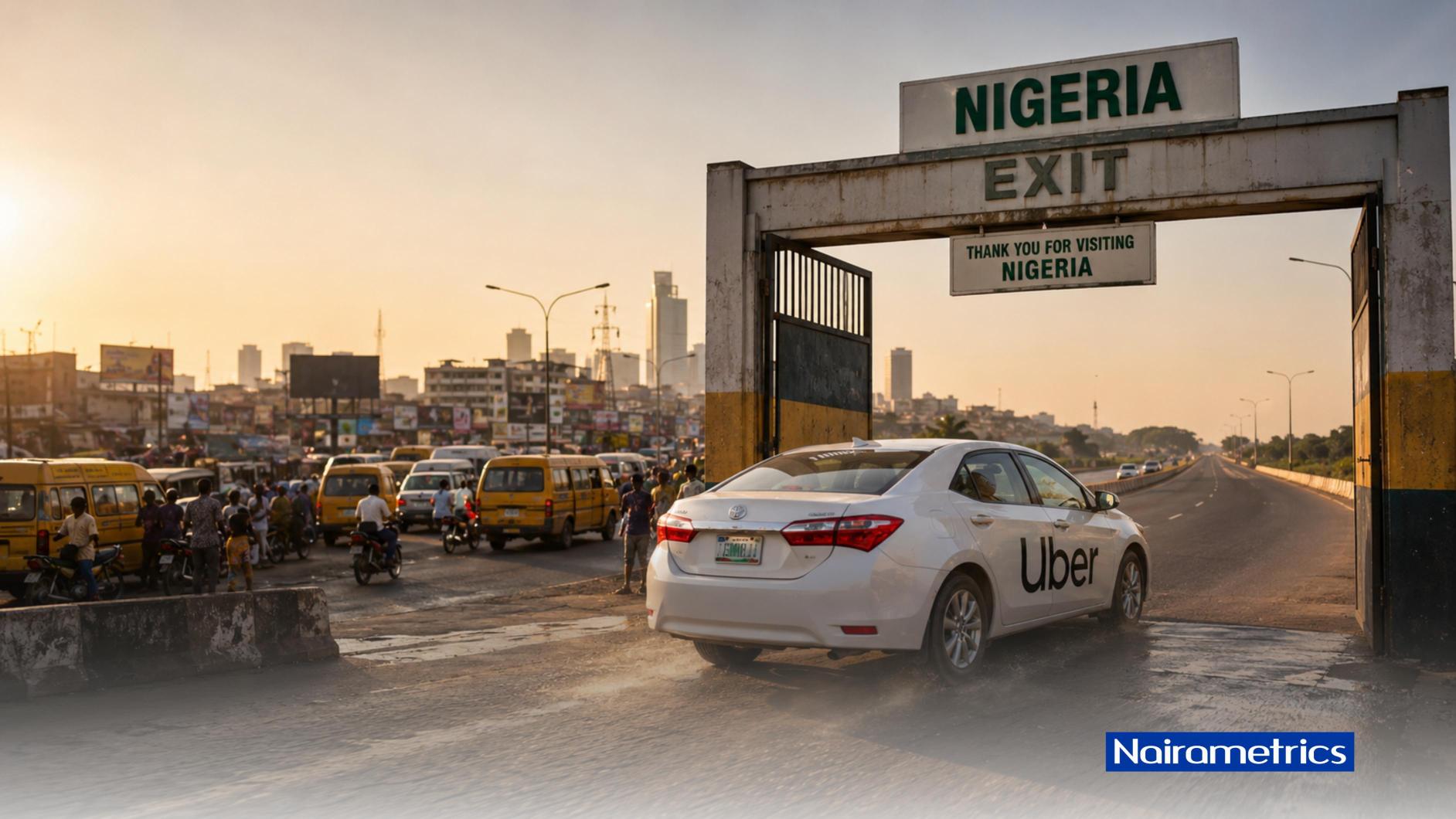
Uber’s decision to exit Nigeria adds another prominent multinational to the growing list of foreign businesses that have either left the country, sold their local operations or significantly changed their business models since 2023.
The ride-hailing company said its decision to leave Nigeria and Uganda followed a “thorough review” of its operations, as it focuses investments on African markets where it believes it can create the most value for drivers and provide earning opportunities at scale.
But Uber’s departure is bigger than Uber.
GSK, Procter & Gamble, Sanofi, Kimberly-Clark, Diageo, Pick n Pay and others have all exited, divested or materially restructured their Nigerian operations in recent years.
Also Read
The circumstances behind these decisions differ, and it would be simplistic to attribute every departure to one government policy or economic reform. But collectively, they expose a fundamental weakness in the Nigerian investment proposition: a huge population does not necessarily translate into a huge consumer market.
Nigeria has more than 200 million people, but what matters to a company such as Uber is not simply how many people live in the country. It is how many can afford its service regularly and at a price that allows the company, its drivers and other participants in the ecosystem to earn acceptable returns.
That is where the numbers become uncomfortable.
Nigeria remains a relatively low-income economy with widespread poverty, high unemployment and underemployment, and a very young population. Millions of Nigerians may represent potential consumers statistically, but their disposable incomes severely constrain what they can actually consume.
If consumers cannot spend, businesses cannot earn.
This problem is compounded by Nigeria’s underdeveloped consumer credit market.
In developed economies, households routinely finance cars, homes, electronics, education and other purchases with credit. Consumption can therefore be spread across future income rather than funded entirely from today’s cash flow.
Nigeria remains overwhelmingly a cash economy.
Cars are largely purchased with cash. Rent is often demanded one or two years upfront. Clothes, school fees, transportation and many other expenses are funded directly from current income.
Even where consumer lending exists, many Nigerians borrow to meet basic living expenses or finance small businesses rather than fund discretionary consumption.
The result is that households with already limited incomes must devote a significant portion of their cash flow to essential expenditure, leaving considerably less for convenience services such as ride-hailing.
This is where Uber’s economics become difficult.
Uber needs more than population. It needs a sufficiently large and expanding middle class willing to pay for convenient transportation frequently enough to generate attractive unit economics for both the platform and its drivers.
That middle class has been severely squeezed.
President Bola Tinubu’s economic reforms were arguably necessary. Fuel subsidies were fiscally expensive, the foreign exchange regime was dysfunctional and multiple exchange rates created enormous distortions.
But reforms have consequences.
Fuel prices have risen sharply, the naira has depreciated significantly, inflation has eroded real wages and households have had to devote an increasing share of their incomes to food, transportation, housing and energy.
Macroeconomic stabilisation may ultimately provide the foundation for sustainable economic growth. But between reform and recovery lies a dangerous period when businesses must survive weakened consumer purchasing power.
That is one of the uncomfortable realities of Tinubunomics.
Uber also operates in an intensely competitive market. Local and regional ride-hailing platforms can sometimes operate with lower overheads and adapt their models more aggressively to Nigerian market realities.
Drivers themselves have struggled with rising fuel prices, vehicle maintenance and spare parts costs. Some demand payments above official app fares, while others persuade passengers to cancel trips and complete them offline to avoid platform commissions.
What helps the driver survive ultimately hurts the platform. Uber loses commissions, control over the transaction and, eventually, the economics that justify remaining in the market.
As a US-listed multinational, Uber also has shareholders, compliance requirements, global technology infrastructure, corporate governance standards and return expectations. Its Nigerian operation must therefore compete for capital against opportunities in markets where consumers have considerably greater spending power.
For foreign investors, Uber’s exit offers another lesson about Nigeria.
Businesses targeting the Nigerian mass market must either operate at extremely low price points while retaining attractive margins or sell products that consumers consider essential enough for demand to remain resilient despite declining purchasing power.
Nigeria’s telecommunications companies demonstrate the first model remarkably well. They sell relatively small units of airtime and data to tens of millions of customers, generating enormous volumes from relatively small individual transactions.
Businesses operating in sectors with high barriers to entry or relatively inelastic demand, such as banking, telecommunications and cement, also have greater capacity to withstand Nigeria’s difficult operating environment.
Businesses dependent on a large discretionary-spending middle class face a much tougher proposition.
That should concern a government actively seeking foreign direct investment.
Nigeria can improve its foreign exchange market, stabilise the naira, reduce fiscal deficits and accumulate foreign reserves. These are important achievements, but macroeconomic stability is ultimately a means to an end.
The end must be higher productivity, employment, rising real wages and stronger household purchasing power.
If economic reforms stabilise government finances without eventually improving household finances, they will struggle to produce the investment boom policymakers expect.
Foreign investors do not invest in population statistics. They invest in addressable markets.
And an addressable market is ultimately determined by how many people can actually afford to buy what a company is selling.
By our records, close to a dozen major foreign businesses have exited, divested or materially restructured their Nigerian operations since 2023. Uber now joins that uncomfortable list.
Expanding responsible consumer credit is one place to start, but credit alone will not solve the problem.
Ultimately, Nigeria needs more people earning enough money to have something meaningful left after paying for the necessities of life.
Until that happens, Nigeria’s famous 200-million-plus population will continue to look far more impressive in investor presentations than it does on the income statements of some of the foreign companies trying to sell to it.