Follow Us on Google Discover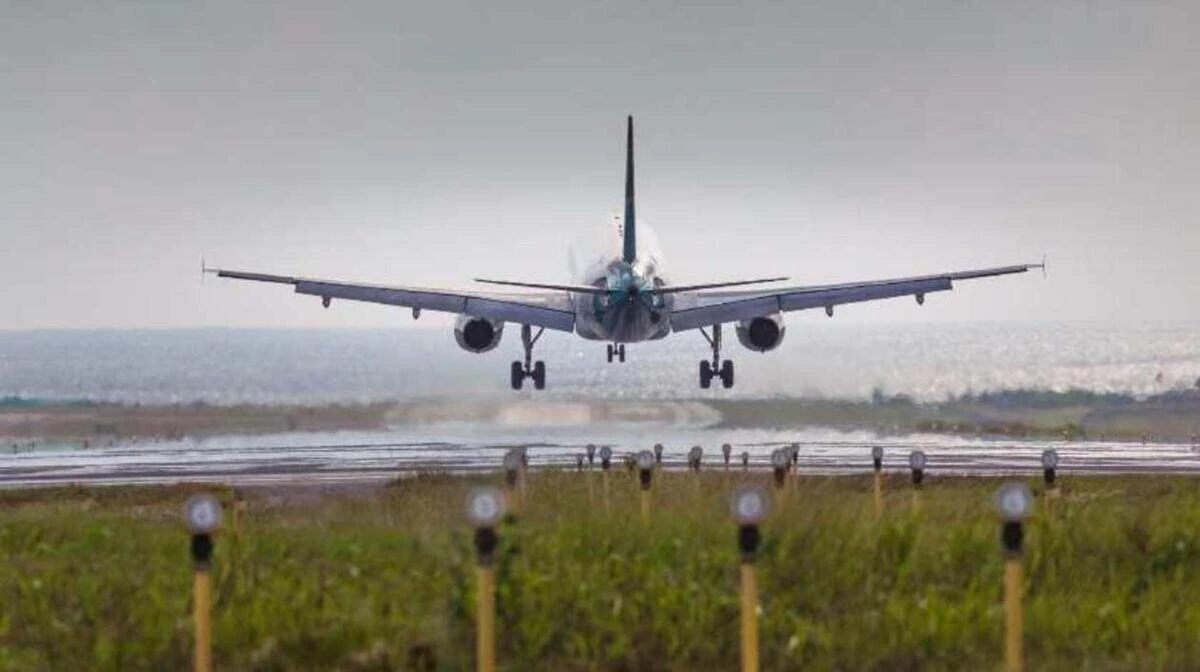
Africa’s huge population accounts for just 2% of global air traffic despite representing 18% of the world’s population, according to a report by the Atlantic Council.
The report, titled Opening Africa’s Skies to Trade, Growth, and Jobs, said Africa remains the world’s most expensive, least connected and most underserved aviation market.
It said the disparity is driven mainly by the high cost and inconvenience of air travel within the continent, rather than a lack of demand.
What the report is saying
The report said limited connectivity and expensive airfares are preventing Africa from fully developing its aviation market.
Also Read
- “Africa is home to 18 percent of the world’s population, but only 2 percent of its air transport activity,” the report stated,
- “Cost relative to income and inconvenience are the main drivers of this disparity, rather than demand,” it added.
Passengers can sometimes pay more and spend longer travelling between African countries than on longer journeys outside the continent.
- A Nigerian travelling to Kinshasa could fly twice as far to London, twice as fast and for half the price. A Ghanaian travelling about 600 miles to São Tomé and Príncipe could pay at least $400 for a one-way ticket via Lisbon.
Less than 20% of African airline traffic operates on intra-African routes, compared with about 60% within Europe.
The report also noted that 21 million Africans lived in another African country as of 2020, with about 80% of African migrants remaining within the continent.
Restrictive rules limit connectivity
More than 70% of Africa’s air service agreements are restrictive, limiting flight frequencies, aircraft types and routes, while some restrict airlines from carrying passengers onward to third countries.
The report said these restrictions are about twice the level in Asia and have contributed to Africa’s fragmented aviation market.
- Low-cost carriers account for only 5% of Africa’s seat capacity, compared with more than one-third of flights in Europe.
- Aviation reforms across 12 African countries could reduce airfares by 25% to 35%.
- The reforms could attract about five million additional passengers.
- They could also generate $1.3 billion in additional tourism spending.
The report recommended greater implementation of the African Union’s Single African Air Transport Market, removal of capacity restrictions and stronger competition among airlines.
Aviation has wider economic impact
Stronger air connectivity could support the African Continental Free Trade Area by making it easier to move people and high-value, time-sensitive goods across borders.
The sector currently contributes about $75 billion to Africa’s GDP and supports an estimated 8.1 million jobs, according to the report.
- Each aviation job supports another 22 jobs across the wider economy.
- Every $1 generated directly by aviation creates another $5.30 elsewhere.
- Greater air connectivity could support trade and tourism across African markets.
The report said removing barriers to intra-African air travel could therefore unlock wider economic opportunities beyond the aviation sector.
Get up to speed
The African Union (AU) unveiled a $30 billion plan in October 2025 to modernise airports and airspace systems across the continent over the next decade, as African countries seek to address infrastructure gaps that have limited air connectivity.
The plan is aimed at improving aviation safety and efficiency while strengthening connectivity across African markets.
- $10 billion is earmarked for airport upgrades, $8 billion for communication, navigation and meteorological systems, and $12 billion for institutional reforms and attracting private investment.
- A joint study by the AU, AFCAC, ICAO and the World Bank estimated that Africa will need between $25 billion and $30 billion over the next decade to meet rising aviation demand.
- Passenger traffic is projected to increase from 160 million in 2024 to nearly 500 million by 2050.
The AU plans to mobilise $10 billion in public funding and attract an additional $20 billion from private and institutional investors.
The modernisation strategy also includes digital and green technologies such as Airport Collaborative Decision-Making (A-CDM), System-Wide Information Management (SWIM) and renewable energy solutions.
What you should know
- The programme aims to modernise the continent’s aviation sector and strengthen implementation of the Single African Air Transport Market (SAATM).
- It also focuses on improving aviation safety oversight and developing aviation skills.
- SAATM is an African Union initiative under Agenda 2063 aimed at liberalising air transport and improving connectivity between African countries.
Nigeria is among the African countries that have signed up to the initiative, with the Federal Government expressing support for its implementation.
The focus on infrastructure, connectivity and market liberalisation comes against the backdrop of Africa accounting for just 2% of global air transport activity despite having 18% of the world’s population.