Follow Us on Google Discover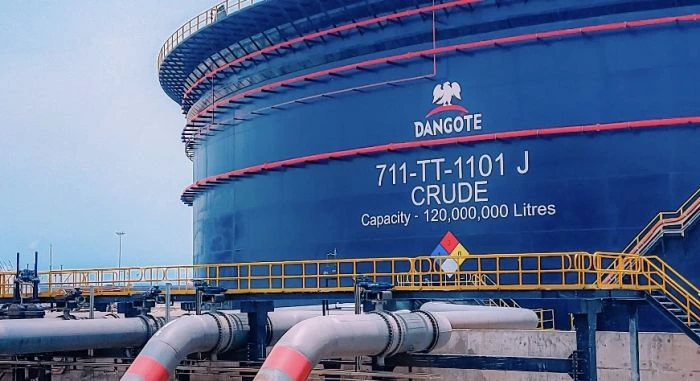
Nigeria’s seaborne refined petroleum exports to Europe surged by about 767% to 130,000 barrels per day (b/d) in the second quarter of 2026, from 15,000 b/d in 2023, as increased output from the Dangote refinery reshapes the country’s petroleum trade.
The increase was disclosed by the U.S. Energy Information Administration (EIA) in an analysis published on Monday, August 24, 2026, using petroleum shipping data from Vortexa.
The shift is particularly notable for Europe, which has historically been an important source of Nigeria’s imported refined petroleum products.
In 2023, for instance, Nigeria imported petroleum products worth about $5.8 billion from Belgium and $2.6 billion from the Netherlands, according to World Bank WITS data.
Also Read
What they are saying
The Dangote refinery on the outskirts of Lagos now has a 700,000 b/d crude oil distillation capacity following maintenance completed in February 2026, allowing Nigeria to process more crude domestically and increase the volume of refined products available for both domestic distribution and exports.
Before the Dangote refinery came on stream, Nigeria’s state-owned refineries were shipping less than 100,000 b/d of petroleum products by sea to domestic locations and foreign markets.
The scale of the change is reflected in Vortexa’s shipping data. The EIA said:
- “Nigeria’s seaborne petroleum product exports to Europe averaged 130,000 b/d in 2Q26, up from 40,000 b/d in 2025 and 15,000 b/d in 2023.”
At the same time, intra-Nigerian petroleum shipments climbed to 211,000 b/d in Q2 2026, from 81,000 b/d in 2025 and 33,000 b/d in 2023, while seaborne imports fell from nearly 400,000 b/d in 2023 to less than 130,000 b/d in Q2 2026.
Nigeria’s refined petroleum exports are spreading beyond Africa to other continents
The EIA’s destination data shows that the growth in Nigerian refined petroleum exports is not concentrated in a single market.
- Europe accounted for about 130,000 b/d of Nigerian seaborne refined-product exports in Q2 2026, making it one of the largest regional destinations. That compares with just 15,000 b/d in 2023, meaning shipments to Europe increased by roughly 8.7 times over the period.
- African markets received almost 120,000 b/d, up from 89,000 b/d in 2025. This indicates that Nigeria’s growing refining capacity is simultaneously serving two markets: replacing imported products at home and supplying fuel to markets across the continent and Europe.
Exports to Asia and Oceania were estimated at around 110,000 b/d as the country exported a total of 350,000 b/d in the second quarter of the year.
Get up to speed
While Nigeria’s state-owned refineries had remained inactive, with President Bola Tinubu promising to make them operational again, the boost in export of refined petroleum is directly linked to the Dangote refinery, owned by Africa’s richest man, Aliko Dangote.
- However, Dangote is not stopping at the refinery’s current 700,000 b/d capacity. The company plans to add another 750,000 b/d crude distillation unit, which would take the refinery’s overall capacity to about 1.45 million b/d. The additional unit is targeted for 2028.
- The expansion comes as Dangote Petroleum Refinery and Petrochemicals moves closer to a planned public listing in Nigeria.
- The refinery has secured a $1 billion underwriting programme ahead of its planned Initial Public Offering. The programme consists of a completed and funded $600 million private placement and an additional $400 million underwriting commitment to support the IPO, subject to regulatory and market conditions.
The planned listing is expected to take place on the Nigerian stock market by October, subject to regulatory approval and other conditions.
What you should know
Dangote’s refining ambitions also extend beyond Nigeria.
- The industrialist is planning another large-scale refinery in Kenya, with the project expected to be located in Lamu. The proposed facility, which is expected to cost $17 billion, and could take up to five years to build, is part of Dangote’s broader strategy of expanding refining capacity across Africa.
The project has also been structured with potential participation from East African governments. Dangote has offered countries in the region a combined 30% equity stake in the proposed refinery, with Kenya considering a 10% stake and Ethiopia and Rwanda also expressing interest, according to Kenyan presidential economic adviser David Ndii.