Follow Us on Google Discover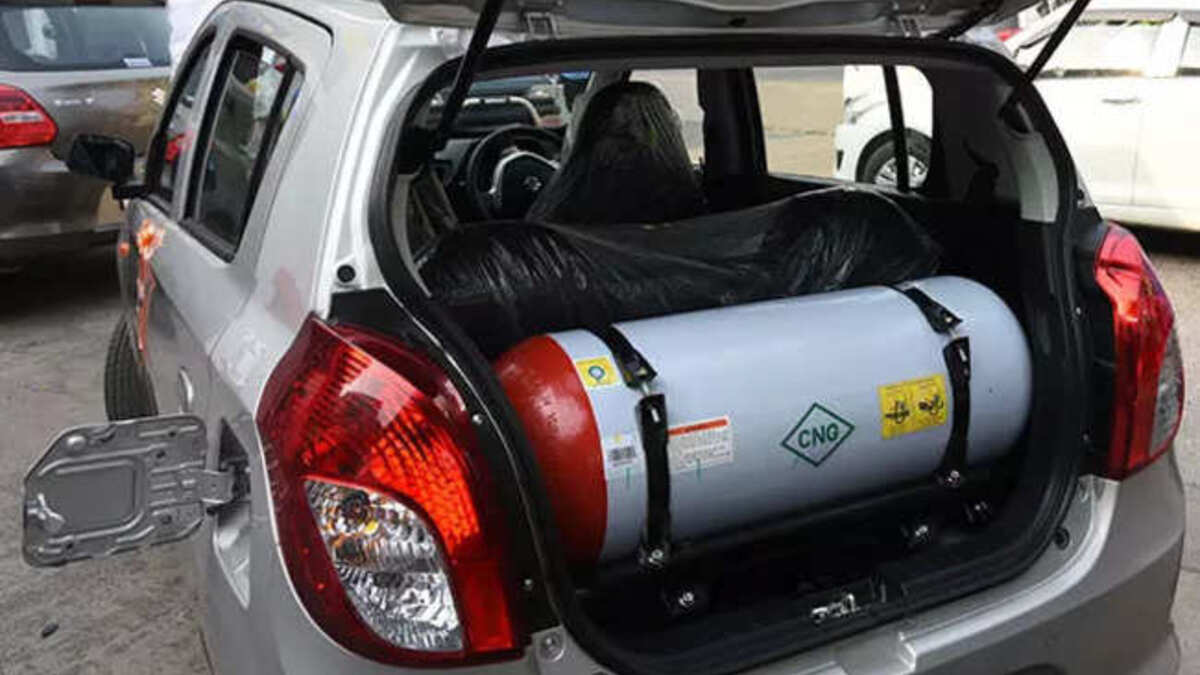
The adoption of Compressed Natural Gas (CNG) is gaining momentum among vehicle owners and commuters as petrol price volatility makes the alternative fuel increasingly attractive.
Oil marketers also said some financial institutions are partnering with vehicle owners and interested buyers to finance CNG cylinder installations.
They noted that transport companies are also increasingly turning to CNG as a cheaper alternative to petrol amid rising fuel costs.
The development comes after petrol prices rose sharply following supply disruptions and higher global crude oil prices, prompting concerns among marketers about falling sales volumes and rising operating costs.
Also Read
Recall that last month, some fuel marketers in the country suspended the purchase of fresh petrol from major depots, with the ex-depot price hitting N1,220 at depots in Lagos.
They attributed the situation to Dangote Refinery’s suspension of loading of petrol from its facility, leading to market volatility, with petrol selling at over N1,300 per litre, up from an average of N1,080 per litre in Lagos and its environs. This has recently dropped to an average of N1,230 per litre.
What they are saying
Oil marketers said the increasing cost of petrol is encouraging more vehicle owners and transport companies to consider CNG as an alternative, with some financial institutions now supporting the cost of vehicle conversions.
- Chinedu Ukadike, National Publicity Secretary of the Independent Petroleum Marketers Association of Nigeria (IPMAN), said, “Most vehicles and commuters have drastically switched over to CNG. Some financial institutions are now partnering with commuters and interested buyers of CNG to finance the installation of CNG cylinders in their vehicles at a payable when able rate.
- ‘’So this has enabled some people to adopt CNG. The testimonies I have received about CNG are that once you install it in your vehicle, you can be rest assured that the fuel will last for days, depending on your movement.”
An independent CNG station operator in Abuja, Paul Anjoma, said more people are coming to buy CNG, while transport companies are buying more CNG and hybrid vehicles to reduce fuel costs.
- Anjoma said, ‘’We are seeing more people coming to buy CNG. Transport companies are also buying more CNG and hybrid vehicles because they want to reduce their fuel costs.’’
Ukadike said the feedback he had received from CNG users showed that the gas could last for days after installation, depending on the vehicle owner’s movement.
The increased interest in CNG comes as petrol prices remain relatively high, encouraging consumers and businesses to seek alternatives that can reduce transportation and operating costs.
The development follows renewed calls for investment in Nigeria’s gas infrastructure to support the expansion of CNG distribution across the country.
The Petroleum Products Retail Outlets Owners Association of Nigeria (PETROAN) had urged the Federal Government to channel gains from the surge in global oil prices into investments in Nigeria’s gas infrastructure.
PETROAN National President, Dr Billy Gillis-Harry, said expanding gas infrastructure would enable petroleum marketers to establish more CNG daughter stations.
He said the expansion would also ensure adequate availability of mother stations to support gas supply and distribution across the country.
Anjoma said more transport organisations are focusing on CNG vehicles, helping to drive demand.
Ukadike said the Presidential Committee on CNG Initiative had distributed CNG cylinders and conversion kits at subsidised rates and was collaborating with IPMAN to make them available at service stations.
President Bola Tinubu had in August 2023 announced plans to deploy CNG buses across states and local governments as part of efforts to reduce the impact of the removal of fuel subsidies.
The President said the Federal Government had provided N100 billion to acquire 3,000 units of 20-seater CNG-powered buses for mass transit.
What you should know
CNG adoption has fluctuated alongside changes in petrol prices, with motorists previously switching back to petrol when petroleum product prices declined.
- In June 2026, Nairametrics reported that Ukadike said some vehicle owners who had installed CNG systems could return to petrol as petroleum product prices declined.
- He said lower petrol prices could reduce the incentive for consumers to continue using CNG and LPG.
- Marketers had also expected increased patronage at filling stations as petrol prices declined.
The decline followed a peace deal between the United States and Iran, which pushed crude oil prices lower from as high as $120 per barrel to about $77 per barrel.
The latest increase in interest in CNG highlights how fluctuations in petrol prices continue to influence the fuel choices of vehicle owners, commuters and transport operators.