Follow Us on Google Discover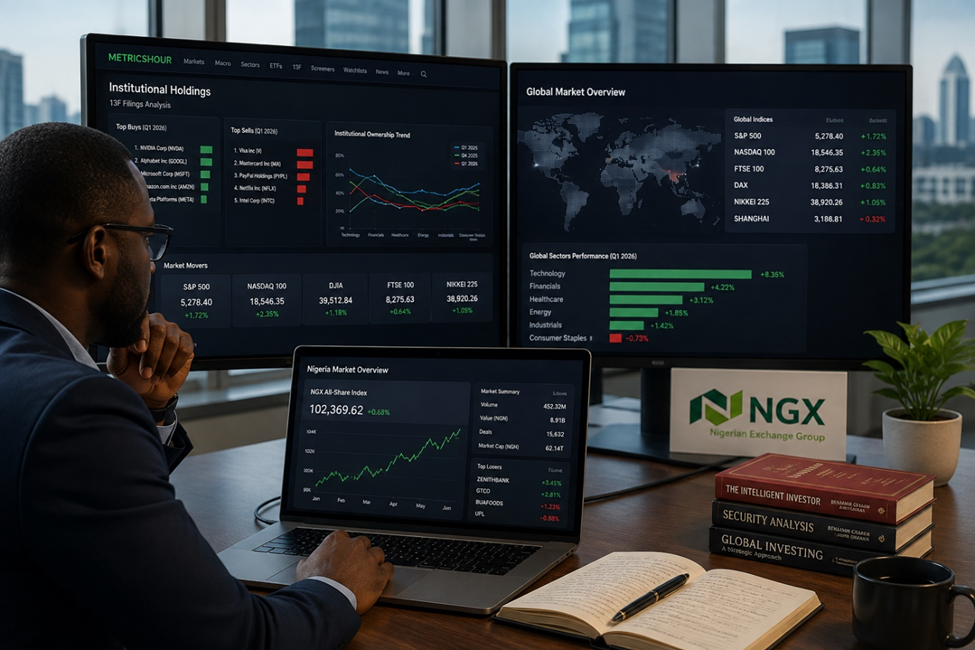
In 2026, the retail investor is drowning in noise. Between the relentless 24-hour news cycle, shifting Central Bank of Nigeria (CBN) rate decisions, and the volatile swings of emerging markets, building a stable portfolio can feel like navigating a storm without a compass.
Yet, while retail markets react emotionally to daily headlines, institutional “smart money”—the hedge funds, family offices, and sovereign wealth funds managing billions—moves with calculated precision.
For Nigerian investors managing dual portfolios across the NGX and global markets, the secret to long-term survival isn’t in trading faster; it’s in watching where the giants are placing their capital.
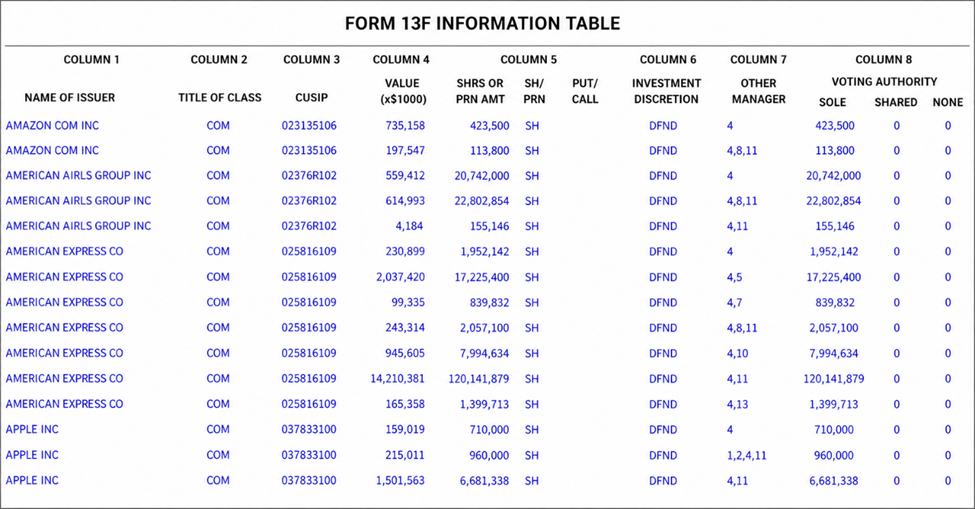
This is where the 13F filing becomes an invaluable tool. In the United States, the Securities and Exchange Commission (SEC) requires all institutional investment managers with over $100 million in qualifying assets to disclose their U.S. equity holdings every quarter via Form 13F. While these filings represent a delayed snapshot of the market, they offer retail investors a rare look into the structural convictions of the world’s most successful managers.
Also Read
For instance, the most recent Q1 2026 filings revealed massive, concentrated bets on AI infrastructure from funds like Altimeter Capital and Appaloosa Management, alongside a noticeable pivot away from consumer internet stocks. When you can see that Warren Buffett’s Berkshire Hathaway, in Greg Abel’s first quarter running the portfolio, nearly tripled its stake in Alphabet while entirely exiting Visa and Mastercard, you stop guessing about market sentiment and start analysing structural shifts in capital allocation.
Critics often dismiss 13F filings because of their inherent delay; institutions have up to 45 days after the end of a quarter to file their reports. A retail trader looking to scalp a quick profit will find this data stale. However, institutional accumulation is rarely a short-term trade.
When a fund managing $50 billion decides to build a position in a specific sector, it takes months to deploy that capital without spiking the underlying asset’s price. By tracking these filings, you are not trying to day-trade alongside billionaires; you are identifying the macroeconomic themes they are betting on for the next three to five years.
For readers who want to check a claim like this against the primary source, 13F filings themselves are freely searchable through the SEC’s EDGAR database, though the raw filings are dense, compliance-oriented spreadsheets rather than anything built for readability.
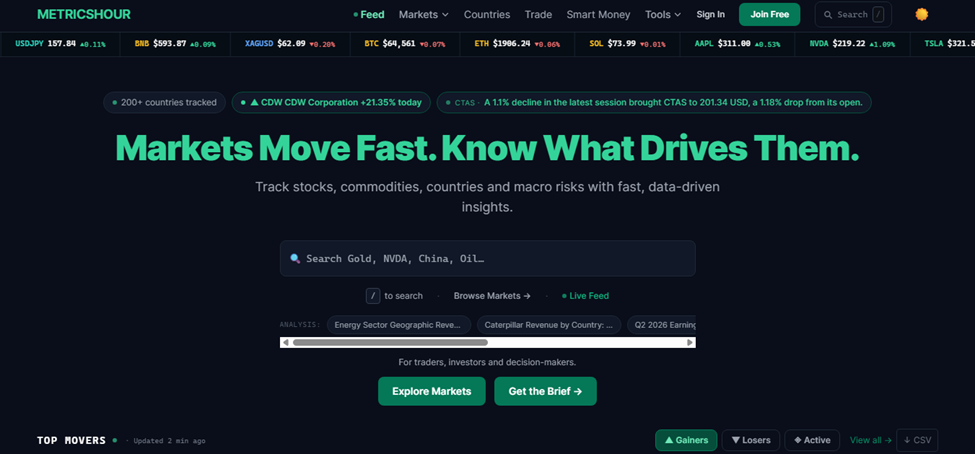
Aggregator sites such as WhaleWisdom and HedgeFollow repackage the same underlying data into holdings comparisons and quarter-over-quarter change reports, which is a reasonable starting point for spot-checking a claim before acting on it.
Applying the Strategy Locally: Navigating the 2026 Nigerian Market
While 13F equivalents don’t exist in the same structured format on the Nigerian Exchange (NGX), the core philosophy of tracking institutional conviction is more critical than ever. In 2026, the Nigerian retail investor faces a complex domestic environment.
With the CBN maintaining its Monetary Policy Rate (MPR) at a steep 26.5% as of July, aiming to manage an inflation rate that recently moderated slightly to 15.91% in June, the cost of capital remains exceptionally high. In this environment, following speculative retail trends is dangerous. Instead, the focus must shift to how institutional capital is reacting to these macroeconomic conditions.
For Nigerian investors managing global portfolios via platforms like Bamboo, Trove, or Chaka, 13F filings are a direct cheat code. They reveal which sectors the world’s largest asset managers believe can withstand prolonged high interest rates globally. For instance, if 13F data shows a mass institutional rotation out of cyclical consumer goods and into defensive infrastructure ETFs, that is a clear signal of anticipated economic headwinds, one worth weighing against your own portfolio’s risk exposure.
Even for purely domestic investors, the principle holds. While you cannot access a 13F for the NGX, you can track the footprints of foreign portfolio investment (FPI) and local Pension Fund Administrators (PFAs). Nigerian PFAs control trillions of Naira in assets and represent the true whales of the domestic market.
When yields on government securities skyrocket due to the CBN’s aggressive tightening, PFAs naturally rotate capital out of equities and into fixed income to guarantee returns for retirees. Conversely, when you observe sustained block trades or institutional accumulation in specific domestic sectors, such as tier-1 banking during a recapitalisation phase or upstream oil and gas adapting to global supply dynamics, you are witnessing the local equivalent of a 13F move.
Aligning your capital with the “smart money” as it navigates the CBN’s tight monetary policy is fundamentally safer than reacting to social media sentiment. The recently concluded bank recapitalisation exercise is a useful case study in this kind of institutional signal: by the March 31, 2026 deadline, Nigerian lenders had collectively raised roughly ₦4.65 trillion in fresh capital, with more than 70 percent of it sourced domestically, and the banks that moved earliest to shore up their balance sheets were often the same names already attracting sustained PFA and foreign portfolio inflows in the months beforehand.
The Tooling: Automating Market Intelligence
The challenge, however, is not the availability of this data, but the speed and efficiency of its processing. Financial data in 2026 is heavily fragmented. A thorough analysis requires pulling SEC database filings, cross-referencing global ETF inflow and outflow reports, and tracking domestic CBN inflation metrics.
The traditional approach of manually downloading quarterly reports, building isolated spreadsheets, and attempting to synthesise this disparate information is simply too slow for the modern market. By the time a retail investor manually evaluates this fragmented intelligence, the opportunity has often passed, and the market has already priced in the institutional shifts.
This is where automated data architecture becomes the differentiator between surviving and thriving. Successful modern traders rely on programmatic pipelines to filter noise, normalise fragmented data sets, and surface actionable signals instantly. It’s the exact gap MetricsHour was built to close, aggregating 13F filings, institutional money flows, and global macroeconomic indicators into a single dashboard. Hence, investors see structural shifts as they happen, not weeks later. The result: less time hunting for data, more time applying it to portfolio strategy
None of this should be mistaken for a guarantee. Institutional managers get things wrong too, and a 13F only shows what a fund bought or sold last quarter, not why, and not what it plans to do next. The filings are best treated as a starting point for asking sharper questions about where capital is flowing, not a substitute for your own risk assessment, particularly in a market as rate-sensitive as Nigeria’s currently is.
Conclusion: Evolving Beyond the Noise
The Nigerian investor of 2026 cannot afford to rely on sentiment or outdated manual research methods. The markets, both domestic and global, are moving too quickly, driven by algorithmic execution and rapid macroeconomic shifts.
By understanding and tracking institutional movements through 13F filings and adapting that mindset to the realities of the NGX, you move from reactive to predictive investing. Combine that framework with automated data intelligence, and market noise becomes a structural advantage.
The smart money is always leaving a trail. The only question is whether you have the proper infrastructure to follow it.