Follow Us on Google Discover
The Nigerian Midstream and Downstream Petroleum Regulatory Authority (NMDPRA) has said it is “exploring pathways for establishing a credible African reference price benchmark” that reflects regional market realities and supports transparent pricing mechanisms.
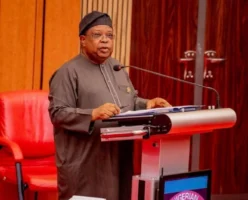
Rabiu Umar, the Chief Executive of the NMDPRA, made this known at a press briefing in Abuja on Thursday, attended by Nairametrics.
The development comes days after lawyers urged the NMDPRA’s current leadership to pursue amendments to the Petroleum Industry Act (PIA) and address issues relating to regulatory overlap and stakeholder engagement.
What the Authority Chief is saying
Umar explained that while Africa produces significant volumes of oil and gas, much of the pricing for its commodities is determined outside the continent.
Also Read
- “Whether you’re talking about Europe, Northwest Europe, or America, they have their own benchmarks. Whether you talk about the Mediterranean or you go to the Gulf countries, everywhere you go, there’s a trading index. It is a global index, but there is a specific index for that region.”
He stressed that these benchmarks and indices exist because the pricing process begins with price discovery, which takes many factors into consideration.
- “For example, demand and supply, what is the logistics cost to bring the product into that region? All that goes into defining the reference price,” he added.
He expressed optimism that the regulator would leverage every available forum to facilitate the exchange of knowledge and insights on current market dynamics, evolving trends, and emerging opportunities within the African energy sector.
Umar explained that Europe has successfully developed the Amsterdam-Rotterdam-Antwerp trading hub, adding that it serves as the principal pricing and supply centre for much of the continent.
He urged West African countries to pursue a similar model to strengthen regional trade and improve price discovery.
- “The whole point of having regional pricing is to be able to create a hub where all the activities within a given region are going to be coming out of that place.
- “It has a lot to do with logistics costs, how much it costs to bring in the product, whether you have more supply than demand or more demand than supply. All that goes into improving market discovery and arriving at a price that is right for the market,” he said.
He added that increased refining alone would not guarantee efficient supply without corresponding investments in transportation and logistics.
Backstory
Recall that President Bola Ahmed Tinubu appointed Umar after removing his predecessor, Saidu Mohammed.
The Presidency said the leadership change was pursuant to the provisions of the Petroleum Industry Act (PIA) 2021.
The Presidency also urged Umar to strengthen oversight of the oil and gas sector and improve regulatory performance.
What you should know
In 2025, the House of Representatives disclosed that the enactment of the Petroleum Industry Act (PIA) 2021 yielded remarkable results, attracting more than $16 billion in investment commitments and significantly improving oil production.
Deputy Speaker Benjamin Kalu said that, based on available data at the time, Nigeria earned ₦50.88 trillion in revenue from crude oil and gas exports in 2024.