Follow Us on Google Discover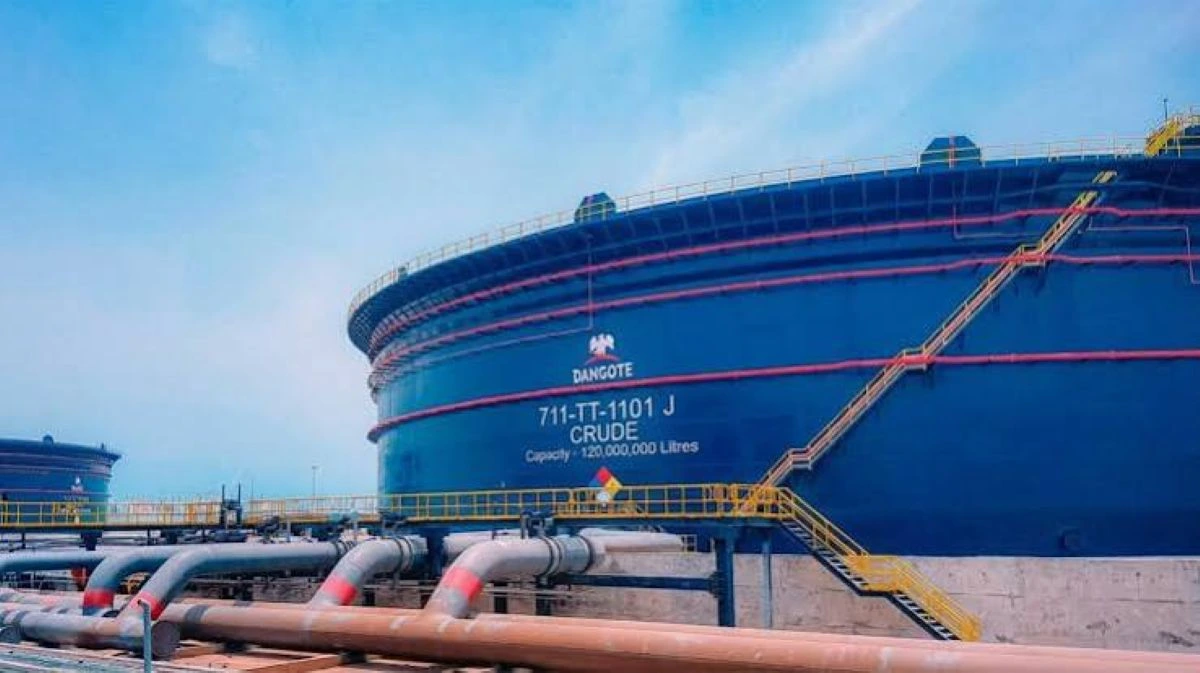
GTI Research has put Dangote Petroleum Refinery and Petrochemicals’ (DPRP) probability-weighted fair value at approximately N493 per share, below the N525 offer price at which the company is currently selling shares in Africa’s largest-ever public share sale.
This is according to a 22-page valuation report by GTI Research analysts led by Mr. Abiodun Ogunniyi, which was published on Wednesday, September 16, 2026 and obtained by Nairametrics.
The report comes as the N2.15 trillion IPO remains open for subscription through October 13, 2026, and follows a wave of institutional analysis attempting to reconcile the refinery’s dramatic earnings turnaround with the price investors are being asked to pay.
GTI’s conclusion is that at N525, the offer sits above both the firm’s central estimate and its base case, a premium the report attributes to what it calls “that unearned premium,” implying that the pricing already reflects much of the refinery’s future growth rather than just its current earnings power.
Also Read
What the data is saying:
GTI’s valuation range spans a wide spectrum, reflecting genuine uncertainty about how the refinery’s economics will evolve; and in conclusion explicitly labels the offer as “FULLY VALUED.”
- Conservative case: N328
- Base case: N503
- Bull case: N640
- Probability-weighted fair value: N493
Against the N525 offer, GTI’s weighted valuation implies the IPO is priced about 6.1% above its central estimate and 4.4% above its base case, even as it remains roughly 21.9% below the firm’s bull-case scenario.
In comparison to similar companies, GTI looked at five other companies like Dangote Refinery and worked out what investors typically pay for them.
On average, those companies trade at about 4.79 times their earnings before interest, tax, depreciation and amortization (a common measure of a company’s core profitability), and about 8.54 times their profits (P/E).
Dangote Refinery’s N525 IPO price, by comparison, works out to about 8.9 times that same profitability measure, and 12.6 times profits.
In other words, investors buying into the IPO are paying roughly 86% more per unit of profitability, and 47% more per unit of earnings, than they would typically pay for a comparable refining company elsewhere.
- GTI’s own response to this is basically: “yes, it looks expensive next to its peers — but that comparison is misleading, because none of those peer companies are about to double their production capacity.”
Dangote Refinery has a plan to expand from 700,000 barrels a day to 1.4 million barrels a day by 2029.
A simple peer comparison only looks at what a company is earning right now — it doesn’t give any credit for that future growth. For this reason, GTI didn’t rely mainly on the peer comparison to reach its N493 fair value estimate.
Instead, GTI built a blended model where the bulk of the valuation (70%) comes from methods that try to capture the refinery’s future growth, not just its current profits which is why GTI landed close to the IPO price (N493 vs N525) rather than concluding the offer was wildly overpriced. So, the peer-comparison method — the one that makes the IPO look most expensive — only accounts for a quarter of GTI’s final number.
Backstory: from heavy losses to a $1.82 billion half-year profit
GTI’s valuation analysis comes against a genuinely dramatic financial turnaround. DPRP’s net loss narrowed from $1.51 billion in FY2024 to $475.8 million in FY2025, before the company swung to a $1.82 billion net profit in H1 2026 alone — a shift GTI describes as “DPRP has undergone a fundamental step-change.”
- H1 2026 revenue reached $13.91 billion, already exceeding the company’s entire FY2025 revenue of $12.33 billion by roughly $1.58 billion, driven by full-capacity operations beginning in March 2026 and stronger crack spreads.
- Gross margin improved from -9.46% in FY2024 to 1.86% in FY2025, before reaching 18.56% in H1 2026 — evidence, GTI argues, of “the leverage inherent in high-complexity refining once capacity utilization reaches steady-state.”
The refinery generated $1.51 billion in operating cash flow during H1 2026 alone, with closing cash of $4.27 billion.
More insights: the risks behind the premium
GTI’s report flags several structural risks that temper its optimism on the refinery’s growth story. Crude supply remains a material weakness:
- DPRP sources 60–70% of its crude domestically through the Naira-for-crude arrangement with NNPC, but only about 46% of allocated volumes were delivered in Q1 2026, forcing costlier international spot purchases.
- A currency mismatch compounds the risk: 56% of operational cash flows are collected in naira, while roughly 70% of crude inputs must be settled in foreign currencies — what GTI calls a “forex structural mismatch.”
- The planned $14.3 billion Phase 2 expansion, which targets an increase in capacity from 700,000 bpd to 1.4 million bpd by FY2029, is a major potential value driver but also a significant execution risk, given construction, financing, procurement and contractor uncertainties.
GTI also flags a thin post-listing free float as a source of potential volatility, given Aliko Dangote’s beneficial ownership is estimated to remain at roughly 84.4% after the offer.
What you should know:
The IPO opened September 14 and closes October 13, 2026, comprising 4.1 billion ordinary shares at N525 each, with a minimum subscription of 10 shares (N5,250), giving the offer an indicative post-offer market capitalisation of N65.22 trillion, or about $47.83 billion.
- GTI’s caution echoes a broader divergence among analysts. Two other Nigerian investment firms, CardinalStone Research and Chapel Hill Denham, have independently valued the refinery considerably higher, at between N77.7 trillion and N82.62 trillion — above the N65.22 trillion indicative market cap at the offer price, suggesting some analysts see the IPO as underpriced rather than overpriced.
- Analysts on Nairametrics’ Drinks and Mics podcast — including Samson Esemuede of Zrosk, Tunji Andrews of Awabah, and Arnold Dublin-Green of Renaissance Capital Africa — have separately expressed differing views on valuation while broadly agreeing the transaction will deepen Nigeria’s capital market and attract a new generation of investors.
- Only 3.30% of the post-offer company is being made available to public investors, after PanAfrican Refinery Investment SPV (Mauritius) acquired 1.04 billion shares worth approximately $400 million through a subscription commitment agreement signed August 28, 2026 — underscoring GTI’s free-float concern.
With GTI describing the investment as “a 3-5 year holding proposition, not a short-term trade,” the firm’s assessment suggests the eventual case for or against the N525 price will depend less on Monday’s opening-day demand and more on whether the refinery can sustain current refining margins and successfully execute its Phase 2 expansion over the coming years.